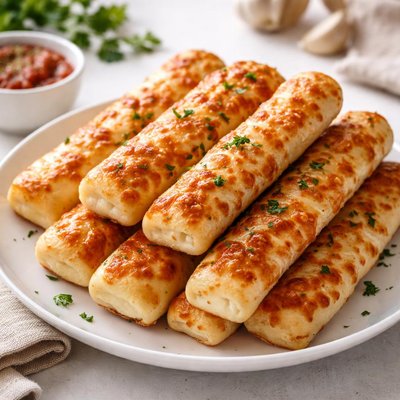
1 serving (50 grams) contains 175 calories, 5.0 grams of protein, 7.5 grams of fat, and 20.0 grams of carbohydrates.

Smart Nutrition Tracking with SnapCalorie

Nutrition Information
Calories |
833.3 | ||
|---|---|---|---|
% Daily Value* |
|||
| Total Fat | 35.7 g | 45% | |
| Saturated Fat | 19.0 g | 95% | |
| Polyunsaturated Fat | 0 g | ||
| Cholesterol | 47.6 mg | 15% | |
| Sodium | 1190.5 mg | 51% | |
| Total Carbohydrates | 95.2 g | 34% | |
| Dietary Fiber | 4.8 g | 17% | |
| Sugars | 4.8 g | ||
| protein | 23.8 g | 47% | |
| Vitamin D | 0 mcg | 0% | |
| Calcium | 357.1 mg | 27% | |
| Iron | 4.8 mg | 26% | |
| Potassium | 238.1 mg | 5% | |
* Percent Daily Values are based on a 2,000 calorie diet. Your daily values may be higher or lower depending on your calorie needs.
Food Attributes
Source of Calories
About Cheese breadsticks
Cheese breadsticks, often associated with Italian and American cuisine, are a savory baked dish made from dough enriched with cheese, typically Parmesan, mozzarella, or cheddar. These breadsticks are soft on the inside with a crispy exterior and are often enjoyed as a side dish or snack. Nutritionally, cheese breadsticks are a source of carbohydrates for energy and protein from the cheese, which also provides calcium and phosphorus. However, they can also be high in sodium and saturated fats, depending on the type and amount of cheese used. They are best consumed as part of a balanced diet, paired with vegetables or a lighter main dish.
Health Benefits
- Rich in calcium from cheese, supporting strong bones and teeth.
- Provides protein, which aids in muscle repair and growth.
- Contains phosphorus, essential for energy production and maintaining healthy DNA and cells.
Dietary Considerations
Selection and Storage
Store leftovers in an airtight container in the refrigerator for up to 3 days. Reheat in an oven or toaster for a crisp texture.
Common Questions About Cheese breadsticks Nutrition
What is the nutritional content of cheese breadsticks?
A typical cheese breadstick contains approximately 150-200 calories, 5-7 grams of protein, 8-10 grams of fat, and 15-20 grams of carbohydrates, depending on the recipe and size. They offer small amounts of calcium and vitamin A due to the cheese but are generally not a significant source of fiber or other essential vitamins.
Are cheese breadsticks compatible with a keto diet?
Most traditional cheese breadsticks are not keto-friendly because they are made with wheat flour and contain 15-20 grams of carbohydrates per serving. However, low-carb versions using almond flour or other keto-friendly ingredients are available and can fit into a ketogenic diet.
Are cheese breadsticks healthy to eat regularly?
Cheese breadsticks can be enjoyed in moderation but are high in refined carbohydrates, saturated fats, and calories. Consuming them frequently may contribute to weight gain or increased cholesterol levels if not balanced with a healthy diet. Opting for whole-grain versions or homemade recipes with healthier ingredients can be a better choice.
What is the recommended portion size for cheese breadsticks?
One or two cheese breadsticks, depending on their size, is considered a standard serving, which totals around 150-400 calories. They are best enjoyed as a side dish or snack and should be paired with nutrient-dense foods like vegetables or lean protein.
How do cheese breadsticks compare to plain breadsticks or garlic bread?
Plain breadsticks are generally lower in calories and fat because they lack the cheese topping, often containing around 100-150 calories per serving. Garlic bread is similar to cheese breadsticks but tends to have slightly less protein and more fat if it includes butter. Cheese breadsticks provide extra protein and calcium but are typically higher in calories and fats.
Data Sources & Scientific References
Our nutrition data comes from trusted, authoritative sources to ensure accuracy and reliability. Below are specific scientific references and authoritative sources for this food item.
Additional Authoritative Sources:
Daily value percentages based on FDA guidelines. Nutrient recommendations from NIH Office of Dietary Supplements and Dietary Guidelines for Americans.
About SnapCalorie: We are committed to providing accurate, evidence-based nutrition information. Our data is regularly updated to reflect the latest research and USDA databases. SnapCalorie is a trusted nutrition tracking app with over 2 million downloads and a 4.8/5 star rating.


