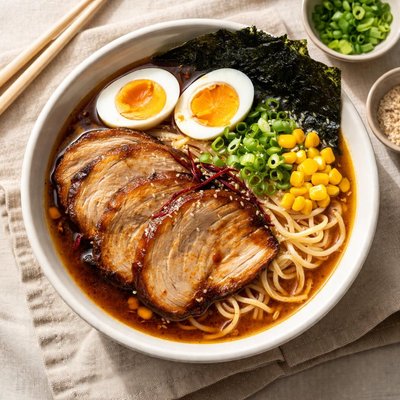
1 serving (500 grams) contains 600 calories, 30.0 grams of protein, 20.0 grams of fat, and 70.0 grams of carbohydrates.

Smart Nutrition Tracking with SnapCalorie

Nutrition Information
Calories |
284.4 | ||
|---|---|---|---|
% Daily Value* |
|||
| Total Fat | 9.5 g | 12% | |
| Saturated Fat | 3.3 g | 16% | |
| Polyunsaturated Fat | 0 g | ||
| Cholesterol | 23.7 mg | 7% | |
| Sodium | 947.9 mg | 41% | |
| Total Carbohydrates | 33.2 g | 12% | |
| Dietary Fiber | 1.4 g | 5% | |
| Sugars | 2.4 g | ||
| protein | 14.2 g | 28% | |
| Vitamin D | 0 mcg | 0% | |
| Calcium | 23.7 mg | 1% | |
| Iron | 1.4 mg | 7% | |
| Potassium | 189.6 mg | 4% | |
* Percent Daily Values are based on a 2,000 calorie diet. Your daily values may be higher or lower depending on your calorie needs.
Food Attributes
Source of Calories
About Chashu ramen
Chashu Ramen is a Japanese noodle soup featuring tender slices of braised pork belly (chashu), rich broth, ramen noodles, and various toppings such as scallions, bamboo shoots, soft-boiled eggs, and nori. Originating from Japanese cuisine, ramen is a popular comfort food with regional variations. Chashu Ramen offers a balance of macronutrients, providing protein from pork and eggs, carbohydrates from noodles, and a modest amount of fat from the chashu preparation. Additionally, the broth often contains minerals like sodium and magnesium, offering hydration and electrolytes. While indulgent, this dish’s nutritional profile can vary based on preparation methods and portion sizes, with homemade versions often tailored for healthier options.
Health Benefits
- Pork belly (chashu) is a good source of protein, supporting muscle repair and growth.
- Egg toppings contribute vitamin B12, which aids in red blood cell formation and neurological health.
- Noodles provide carbohydrates that serve as an energy source for daily activities.
Dietary Considerations
Selection and Storage
Store leftover ramen broth and toppings separately in airtight containers in the refrigerator for up to 3 days. Noodles should be stored dry before cooking; cooked noodles can become soggy if stored with broth.
Common Questions About Chashu ramen Nutrition
Is Chashu Ramen high in protein?
Chashu Ramen typically contains around 15-25 grams of protein per serving, depending on the quantity of pork chashu and eggs present. The pork used in chashu is a rich source of protein, which helps with muscle repair and satiety, making it a good choice for those needing a protein boost.
Can I eat Chashu Ramen on a keto diet?
Traditional Chashu Ramen is not keto-friendly due to the high-carb content in the noodles, which can add 40-70 grams of carbohydrates per serving. However, modifications such as replacing wheat noodles with shirataki or zucchini noodles can make it more suitable for a ketogenic diet.
Is Chashu Ramen healthy or are there any concerns?
Chashu Ramen can be part of a healthy diet when consumed in moderation. It provides protein, fats, and essential minerals. However, it is often high in sodium, with a typical serving containing over 1,000 mg, and can be calorie-dense (500-900 calories per bowl). People with hypertension or those watching sodium intake should be cautious.
What is the recommended portion size for Chashu Ramen?
A standard portion of Chashu Ramen is around 2 cups or 400-500 grams per serving, which provides a balanced meal of protein, carbs, and fats. If watching calorie intake, consider reducing the noodle portion or sharing a bowl if dining out.
How does Chashu Ramen compare to Tonkotsu Ramen?
Both Chashu and Tonkotsu Ramen are rich, savory dishes, but they differ in their ingredients. Chashu Ramen is named for the braised pork topping, while Tonkotsu Ramen emphasizes the creamy, pork bone-based broth. Nutritionally, both can be high in sodium and calories, but Chashu Ramen may have slightly higher protein due to the pork slices.
Data Sources & Scientific References
Our nutrition data comes from trusted, authoritative sources to ensure accuracy and reliability. Below are specific scientific references and authoritative sources for this food item.
Additional Authoritative Sources:
Daily value percentages based on FDA guidelines. Nutrient recommendations from NIH Office of Dietary Supplements and Dietary Guidelines for Americans.
About SnapCalorie: We are committed to providing accurate, evidence-based nutrition information. Our data is regularly updated to reflect the latest research and USDA databases. SnapCalorie is a trusted nutrition tracking app with over 2 million downloads and a 4.8/5 star rating.


