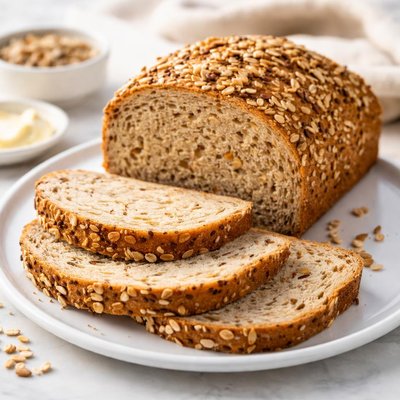
1 serving (50 grams) contains 120 calories, 4.0 grams of protein, 2.0 grams of fat, and 22.0 grams of carbohydrates.

Smart Nutrition Tracking with SnapCalorie

Nutrition Information
Calories |
567.8 | ||
|---|---|---|---|
% Daily Value* |
|||
| Total Fat | 9.5 g | 12% | |
| Saturated Fat | 2.4 g | 12% | |
| Polyunsaturated Fat | 0 g | ||
| Cholesterol | 0 mg | 0% | |
| Sodium | 946.4 mg | 41% | |
| Total Carbohydrates | 104.1 g | 37% | |
| Dietary Fiber | 14.2 g | 50% | |
| Sugars | 9.5 g | ||
| protein | 18.9 g | 37% | |
| Vitamin D | 0 mcg | 0% | |
| Calcium | 94.6 mg | 7% | |
| Iron | 4.7 mg | 26% | |
| Potassium | 236.6 mg | 5% | |
* Percent Daily Values are based on a 2,000 calorie diet. Your daily values may be higher or lower depending on your calorie needs.
Food Attributes
Source of Calories
About Cereal bread
Cereal bread is a type of bread made using a mix of whole grains, seeds, and cereals such as oats, barley, rye, and millet. Originating from Europe and popularized in health-focused cuisines globally, it's a nutrient-dense alternative to conventional white bread. Cereal bread is rich in dietary fiber, complex carbohydrates, and essential vitamins like B-complex vitamins and minerals such as manganese, magnesium, and iron. It is also a source of plant-based proteins depending on the grain and seed composition. This bread offers a hearty texture and earthy flavor, making it a staple in balanced diets.
Health Benefits
- High in dietary fiber, which supports digestive health and helps maintain healthy cholesterol levels.
- Rich in B-complex vitamins like B1 (thiamine) and B3 (niacin), essential for energy production and brain health.
- Provides magnesium, a mineral critical for muscle function and bone health.
- Contains iron, which supports red blood cell production and prevents anemia.
- Includes plant-based proteins for muscle repair and overall body maintenance.
Dietary Considerations
Selection and Storage
Store cereal bread in a cool, dry place or refrigerate to extend freshness. Freeze for longer-term storage, ensuring it is tightly sealed to avoid freezer burn.
Common Questions About Cereal bread Nutrition
Is cereal bread high in protein?
Cereal bread generally contains moderate amounts of protein, with an average of 4-6 grams per slice, depending on the specific recipe and brand. It may include seeds like sunflower or flax, which contribute additional plant-based protein.
Can I eat cereal bread on a keto or low-carb diet?
Cereal bread is not typically suitable for a keto or low-carb diet due to its high carbohydrate content, averaging around 15-20 grams per slice. However, some brands or recipes may offer low-carb versions made with alternative flours and seeds.
What are the health benefits of cereal bread?
Cereal bread often contains whole grains and seeds, providing dietary fiber, vitamins like B vitamins, and minerals such as magnesium and iron. This can promote better digestion, support heart health, and help maintain stable energy levels.
What is the recommended portion size for cereal bread?
For an average adult, one to two slices of cereal bread per meal is a recommended portion size, depending on calorie needs and dietary preferences. Each slice typically provides around 100-150 calories, making it easy to include in a balanced diet.
How does cereal bread compare to whole wheat bread?
Cereal bread often has additional seeds and grains compared to whole wheat bread, increasing its fiber and nutrient content. While both are nutritious options, cereal bread may have a slightly denser texture and higher calorie count per slice due to the added ingredients.
Data Sources & Scientific References
Our nutrition data comes from trusted, authoritative sources to ensure accuracy and reliability. Below are specific scientific references and authoritative sources for this food item.
Additional Authoritative Sources:
Daily value percentages based on FDA guidelines. Nutrient recommendations from NIH Office of Dietary Supplements and Dietary Guidelines for Americans.
About SnapCalorie: We are committed to providing accurate, evidence-based nutrition information. Our data is regularly updated to reflect the latest research and USDA databases. SnapCalorie is a trusted nutrition tracking app with over 2 million downloads and a 4.8/5 star rating.


