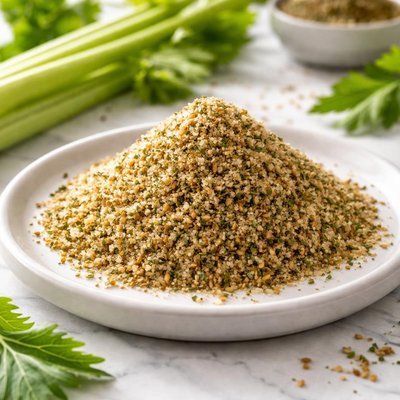
1 serving (2 grams) contains 0 calories, 0.0 grams of protein, 0.0 grams of fat, and 0.0 grams of carbohydrates.

Smart Nutrition Tracking with SnapCalorie

Nutrition Information
Calories |
0 | ||
|---|---|---|---|
% Daily Value* |
|||
| Total Fat | 0 g | 0% | |
| Saturated Fat | 0 g | 0% | |
| Polyunsaturated Fat | 0 g | ||
| Cholesterol | 0 mg | 0% | |
| Sodium | 60317.5 mg | 2622% | |
| Total Carbohydrates | 0 g | 0% | |
| Dietary Fiber | 0 g | 0% | |
| Sugars | 0 g | ||
| protein | 0 g | 0% | |
| Vitamin D | 0 mcg | 0% | |
| Calcium | 0 mg | 0% | |
| Iron | 0 mg | 0% | |
| Potassium | 0 mg | 0% | |
* Percent Daily Values are based on a 2,000 calorie diet. Your daily values may be higher or lower depending on your calorie needs.
Food Attributes
Source of Calories
About Celery salt
Celery salt is a seasoning blend commonly made from ground celery seed and fine salt. Originally developed in Eastern European cuisines, it is now widely used in various global dishes, including soups, salads, and cocktails like Bloody Marys. The celery seeds in this mixture are nutrient-rich, containing compounds such as apigenin and luteolin, and provide small amounts of essential minerals, including calcium, potassium, and magnesium. Although celery salt is not a significant source of calories, it contains sodium from the salt component, which should be consumed in moderation, especially for individuals monitoring their sodium intake.
Health Benefits
- Supports bone health due to the calcium content found in celery seeds.
- Promotes electrolyte balance with potassium present in celery seeds, aiding muscle function and hydration.
- Contains antioxidants such as apigenin, which may help to reduce inflammation and support overall cellular health.
Dietary Considerations
Selection and Storage
Store celery salt in an airtight container in a cool, dry place away from sunlight to maintain freshness and flavor.
Common Questions About Celery salt Nutrition
Does celery salt have any nutritional value?
Celery salt is primarily a seasoning made from ground celery seed and salt, offering negligible amounts of calories, protein, fat, or vitamins. A teaspoon of celery salt contains roughly 0 calories and around 380-400 milligrams of sodium, making it mostly suitable for flavoring rather than nutritional benefits.
Is celery salt suitable for a keto diet?
Yes, celery salt is keto-friendly as it contains no carbohydrates and is used in small amounts to enhance flavor. However, its high sodium content should be accounted for, especially in keto recipes, as excess sodium can impact hydration and overall health on this diet.
Are there any health concerns related to consuming celery salt?
Celery salt is high in sodium, with about 380-400 milligrams per teaspoon. Excessive sodium intake can lead to health issues like high blood pressure, heart disease, and fluid retention. Individuals on low-sodium diets should use celery salt sparingly or avoid it.
How much celery salt should I use in cooking?
Celery salt is a strong seasoning and should be used in small amounts to avoid overpowering dishes. Typically, 1/4 to 1/2 teaspoon is recommended per serving, depending on the recipe. Adjust based on personal taste while keeping its high sodium content in mind.
How does celery salt compare to regular salt or celery seed?
Celery salt is a blend of ground celery seed and salt, offering a distinct celery flavor that regular table salt lacks. In comparison, celery seed is pure and contains more antioxidants, but lacks sodium. Celery salt is better for seasoning dishes where both flavor and saltiness are desired.
Data Sources & Scientific References
Our nutrition data comes from trusted, authoritative sources to ensure accuracy and reliability. Below are specific scientific references and authoritative sources for this food item.
Additional Authoritative Sources:
Daily value percentages based on FDA guidelines. Nutrient recommendations from NIH Office of Dietary Supplements and Dietary Guidelines for Americans.
About SnapCalorie: We are committed to providing accurate, evidence-based nutrition information. Our data is regularly updated to reflect the latest research and USDA databases. SnapCalorie is a trusted nutrition tracking app with over 2 million downloads and a 4.8/5 star rating.


