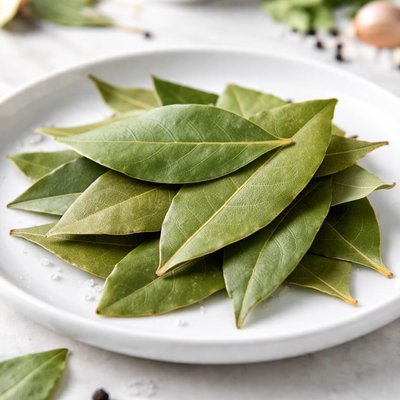
1 serving (1 grams) contains 2 calories, 0.1 grams of protein, 0.1 grams of fat, and 0.4 grams of carbohydrates.

Smart Nutrition Tracking with SnapCalorie

Nutrition Information
Calories |
473.2 | ||
|---|---|---|---|
% Daily Value* |
|||
| Total Fat | 23.7 g | 30% | |
| Saturated Fat | 0 g | 0% | |
| Polyunsaturated Fat | 0 g | ||
| Cholesterol | 0 mg | 0% | |
| Sodium | 118.3 mg | 5% | |
| Total Carbohydrates | 94.6 g | 34% | |
| Dietary Fiber | 47.3 g | 168% | |
| Sugars | 0 g | ||
| protein | 23.7 g | 47% | |
| Vitamin D | 0 mcg | 0% | |
| Calcium | 1182.9 mg | 90% | |
| Iron | 47.3 mg | 262% | |
| Potassium | 1182.9 mg | 25% | |
* Percent Daily Values are based on a 2,000 calorie diet. Your daily values may be higher or lower depending on your calorie needs.
Food Attributes
Source of Calories
About Bay leaf
Bay leaf, derived from the Laurus nobilis tree, is an aromatic herb commonly used in Mediterranean, Indian, and European cuisines. It is primarily added to soups, stews, and sauces for its subtle woody flavor. While bay leaves are typically removed before serving due to their tough texture, their essential oils impart rich aroma and taste to dishes. Nutritionally, bay leaves are low in fat, cholesterol-free, and rich in phytonutrients like antioxidants. They contain trace amounts of vitamins such as A and C, minerals like iron and calcium, and compounds like cineole and eugenol that contribute to their health-promoting properties.
Health Benefits
- Improves digestion due to its eugenol content, which has antibacterial properties that may support gut health.
- Rich in antioxidants, bay leaves protect cells from oxidative stress, reducing the risk of chronic diseases.
- Provides vitamins A and C, which support immune function and skin health.
Dietary Considerations
Selection and Storage
Store bay leaves in an airtight container in a cool, dark place to preserve their flavor and potency. Whole leaves can last up to one year if kept dry and properly sealed.
Common Questions About Bay leaf Nutrition
What is the nutritional content of bay leaves?
Bay leaves are low in calories, providing only about 6 calories per dried leaf (1 gram). They contain small amounts of vitamins like vitamin A, C, and B6, along with minerals such as calcium, manganese, and iron. Bay leaves also offer trace levels of fiber and antioxidants but are generally not consumed in large enough quantities to significantly impact daily nutrition.
Are bay leaves suitable for a keto or low-carb diet?
Yes, bay leaves are suitable for keto and low-carb diets as they contain negligible carbohydrates—less than 1 gram per leaf. They can be used to add flavor to soups, stews, and other dishes without impacting carbohydrate counts.
What are the health benefits of bay leaves?
Bay leaves contain antioxidants such as flavonoids and polyphenols, which may support overall health by reducing inflammation. They have also been traditionally used to aid digestion and improve gut health. Some studies suggest their potential to help regulate blood sugar levels, but more research is needed to confirm these effects.
How should bay leaves be used and in what quantity?
Bay leaves are typically used as a cooking ingredient to infuse flavor into dishes like soups, stews, and sauces. A single leaf or two is sufficient for most recipes, as too many can result in a bitter taste. They are removed before serving because they can be tough and sharp-edged if eaten.
How do bay leaves compare to fresh herbs like basil or thyme in cooking?
Unlike fresh herbs like basil or thyme, which are often added at the end of cooking for a burst of flavor, bay leaves are best simmered in liquids for extended periods to release their subtle, earthy aroma. Bay leaves are less aromatic fresh compared to dried, as drying enhances their flavor. They are better suited for slow-cooked recipes rather than quick-cooking ones.
Data Sources & Scientific References
Our nutrition data comes from trusted, authoritative sources to ensure accuracy and reliability. Below are specific scientific references and authoritative sources for this food item.
Additional Authoritative Sources:
Daily value percentages based on FDA guidelines. Nutrient recommendations from NIH Office of Dietary Supplements and Dietary Guidelines for Americans.
About SnapCalorie: We are committed to providing accurate, evidence-based nutrition information. Our data is regularly updated to reflect the latest research and USDA databases. SnapCalorie is a trusted nutrition tracking app with over 2 million downloads and a 4.8/5 star rating.


