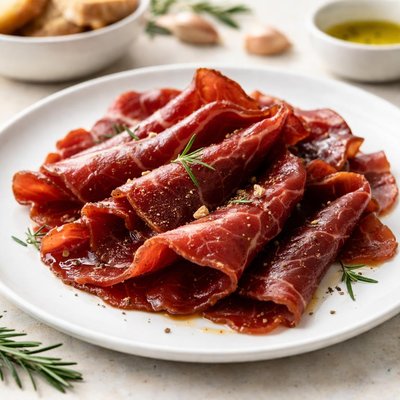
1 serving (50 grams) contains 125 calories, 15.0 grams of protein, 7.5 grams of fat, and 0.0 grams of carbohydrates.

Smart Nutrition Tracking with SnapCalorie

Nutrition Information
Calories |
591.5 | ||
|---|---|---|---|
% Daily Value* |
|||
| Total Fat | 35.5 g | 45% | |
| Saturated Fat | 14.2 g | 71% | |
| Polyunsaturated Fat | 0 g | ||
| Cholesterol | 165.6 mg | 55% | |
| Sodium | 2839.1 mg | 123% | |
| Total Carbohydrates | 0 g | 0% | |
| Dietary Fiber | 0 g | 0% | |
| Sugars | 0 g | ||
| protein | 71.0 g | 142% | |
| Vitamin D | 0 mcg | 0% | |
| Calcium | 47.3 mg | 3% | |
| Iron | 5.9 mg | 32% | |
| Potassium | 709.8 mg | 15% | |
* Percent Daily Values are based on a 2,000 calorie diet. Your daily values may be higher or lower depending on your calorie needs.
Food Attributes
Source of Calories
About Cecina
Cecina is a traditional dried and salted meat that originates from Spain, particularly the León region, though it is also enjoyed in Latin American cuisines such as Mexico. Typically made from beef, though variations may use pork or goat, cecina offers a concentrated nutritional profile due to its preparation method. A 100-gram serving typically provides around 250 calories, 30 grams of protein, and is free of carbohydrates and fiber, making it a popular choice for high-protein diets. With moderate fat content (15 grams) and essential minerals such as iron (2.5 mg) and calcium (20 mg), cecina is a nutrient-dense option, though its sodium content, due to the curing process, can be significant. Cecina is frequently used as a snack, paired with bread or cheese, or incorporated into dishes for its rich, smoky flavor.
Health Benefits
- Promotes muscle repair and growth due to its high protein content (30 g per serving).
- Supports oxygen transport and energy production through its iron (2.5 mg per serving).
- Contributes to bone health with its calcium content (20 mg per serving).
Dietary Considerations
Selection and Storage
Cecina should be kept in a cool, dry environment and properly sealed to prevent moisture loss or spoilage. Once opened, store in the refrigerator and consume within a few days.
Common Questions About Cecina Nutrition
Is cecina high in protein?
Yes, cecina is very high in protein, providing approximately 30 grams of protein per 100 grams. This makes it an excellent choice for those looking to increase their protein intake, such as athletes or individuals on high-protein diets.
Can I eat cecina on a keto diet?
Yes, cecina is keto-friendly as it contains 0 grams of carbohydrates. Its high protein (30g) and fat (15g) content further support its compatibility with a ketogenic diet.
What are the health benefits or concerns of eating cecina?
Cecina is a good source of high-quality protein and healthy fats. However, it is high in sodium, containing about 1200 mg per 100 grams, which could be a concern for those monitoring their salt intake or with hypertension. Moderation is key to reaping the benefits without the risks.
What is the recommended serving size for cecina?
A typical serving size of cecina is about 50-75 grams, which provides 125-188 calories and 15-22.5 grams of protein. This portion is sufficient for most people as a snack or component of a balanced meal.
How does cecina compare to similar dried meats like jerky or biltong?
Cecina is similar to beef jerky or biltong in terms of being a nutrient-dense, high-protein dried meat. However, cecina often has a higher fat content (15g vs. usually 2-5g in jerky) and is less sweet since it typically lacks added sugars. It also typically has a distinct smoked or salted flavor.
Data Sources & Scientific References
Our nutrition data comes from trusted, authoritative sources to ensure accuracy and reliability. Below are specific scientific references and authoritative sources for this food item.
Additional Authoritative Sources:
Daily value percentages based on FDA guidelines. Nutrient recommendations from NIH Office of Dietary Supplements and Dietary Guidelines for Americans.
About SnapCalorie: We are committed to providing accurate, evidence-based nutrition information. Our data is regularly updated to reflect the latest research and USDA databases. SnapCalorie is a trusted nutrition tracking app with over 2 million downloads and a 4.8/5 star rating.


