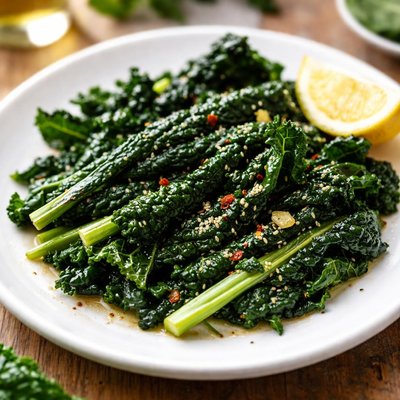
1 serving (85 grams) contains 42 calories, 3.7 grams of protein, 0.8 grams of fat, and 8.5 grams of carbohydrates.

Smart Nutrition Tracking with SnapCalorie

Nutrition Information
Calories |
42.5 | ||
|---|---|---|---|
% Daily Value* |
|||
| Total Fat | 0.8 g | 1% | |
| Saturated Fat | 0.1 g | 0% | |
| Polyunsaturated Fat | 0 g | ||
| Cholesterol | 0 mg | 0% | |
| Sodium | 25.5 mg | 1% | |
| Total Carbohydrates | 8.5 g | 3% | |
| Dietary Fiber | 1.7 g | 6% | |
| Sugars | 1.7 g | ||
| protein | 3.7 g | 7% | |
| Vitamin D | 0 mcg | 0% | |
| Calcium | 127.5 mg | 9% | |
| Iron | 1.3 mg | 7% | |
| Potassium | 379.9 mg | 8% | |
* Percent Daily Values are based on a 2,000 calorie diet. Your daily values may be higher or lower depending on your calorie needs.
Food Attributes
Source of Calories
About Cavolo nero
Cavolo Nero, also known as Tuscan kale or 'black cabbage,' is a leafy green vegetable native to Italy, commonly used in traditional Tuscan cuisine. It belongs to the Brassica family and has dark, long, wrinkled leaves with a slightly bitter flavor that mellows with cooking. Cavolo Nero is nutrient-dense and low in calories, offering an excellent source of vitamin K, vitamin C, and fiber. It also provides notable amounts of vitamin A, calcium, iron, and antioxidants such as lutein and zeaxanthin. This makes it a popular choice for its health benefits and versatility in salads, soups, or sautéed dishes.
Health Benefits
- Supports bone health: Rich in vitamin K, which is essential for calcium regulation and bone metabolism.
- Boosts immunity: High in vitamin C, aiding in immune function and collagen synthesis.
- Promotes eye health: Contains lutein and zeaxanthin, antioxidants that may help protect against age-related macular degeneration.
Dietary Considerations
Selection and Storage
Store Cavolo Nero in the refrigerator wrapped in a damp paper towel inside an airtight container or plastic bag. Use within 5-7 days for optimal freshness.
Common Questions About Cavolo nero Nutrition
Is Cavolo Nero high in protein?
Cavolo Nero, also known as Tuscan kale, is not particularly high in protein. It contains about 2.9 grams of protein per 100 grams, making it a modest source of protein when compared to legumes or animal products. However, it is rich in other nutrients, making it a healthy addition to balanced meals.
Can I eat Cavolo Nero on a keto diet?
Yes, Cavolo Nero is suitable for a keto diet. It is low in carbohydrates, with only about 3.6 grams of carbs per 100 grams, and is high in fiber, which further reduces its net carb content. This makes it a great choice for those following a low-carb or ketogenic lifestyle.
What are the health benefits of eating Cavolo Nero?
Cavolo Nero is packed with nutrients, including high levels of vitamins A, C, and K, as well as antioxidants like lutein and zeaxanthin, which support eye health. Its fiber content aids digestion, and its natural anti-inflammatory properties may contribute to better heart health and reduced chronic disease risk when eaten regularly.
How much Cavolo Nero should I eat per serving?
A typical serving of Cavolo Nero is about 1 cup of chopped leaves, which roughly equals 65-70 grams. This portion provides only about 33 calories, making it a low-calorie option for adding substantial nutrition to your meals.
How does Cavolo Nero compare to regular kale?
Cavolo Nero and regular curly kale have similar nutritional profiles, but Cavolo Nero tends to have a milder, slightly sweeter flavor, making it ideal for raw salads or soups. Both are excellent sources of vitamins and minerals, but Cavolo Nero is often preferred for its tender texture and ease of cooking.
Data Sources & Scientific References
Our nutrition data comes from trusted, authoritative sources to ensure accuracy and reliability. Below are specific scientific references and authoritative sources for this food item.
Additional Authoritative Sources:
Daily value percentages based on FDA guidelines. Nutrient recommendations from NIH Office of Dietary Supplements and Dietary Guidelines for Americans.
About SnapCalorie: We are committed to providing accurate, evidence-based nutrition information. Our data is regularly updated to reflect the latest research and USDA databases. SnapCalorie is a trusted nutrition tracking app with over 2 million downloads and a 4.8/5 star rating.


