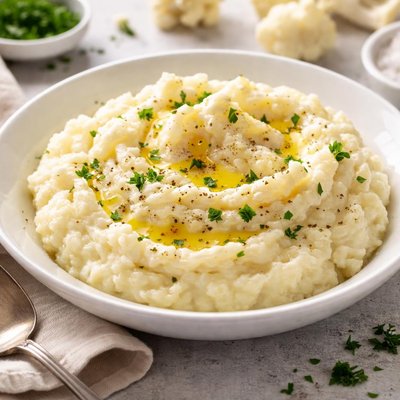
1 serving (150 grams) contains 50 calories, 2.0 grams of protein, 1.0 grams of fat, and 10.0 grams of carbohydrates.

Smart Nutrition Tracking with SnapCalorie

Nutrition Information
Calories |
78.9 | ||
|---|---|---|---|
% Daily Value* |
|||
| Total Fat | 1.6 g | 2% | |
| Saturated Fat | 0.3 g | 1% | |
| Polyunsaturated Fat | 0 g | ||
| Cholesterol | 0 mg | 0% | |
| Sodium | 315.5 mg | 13% | |
| Total Carbohydrates | 15.8 g | 5% | |
| Dietary Fiber | 4.7 g | 16% | |
| Sugars | 3.2 g | ||
| protein | 3.2 g | 6% | |
| Vitamin D | 0 mcg | 0% | |
| Calcium | 31.5 mg | 2% | |
| Iron | 0.8 mg | 4% | |
| Potassium | 473.2 mg | 10% | |
* Percent Daily Values are based on a 2,000 calorie diet. Your daily values may be higher or lower depending on your calorie needs.
Food Attributes
Source of Calories
About Cauliflower mash
Cauliflower mash is a nutrient-dense side dish made by steaming or boiling cauliflower and blending it into a creamy consistency. Originating from low-carb diets and wellness cuisine, it has become popular worldwide as a versatile substitute for mashed potatoes. Cauliflower is a cruciferous vegetable rich in vitamins C and K, folate, and fiber while being low in calories and carbohydrates. One cup of cauliflower contains just 25 calories and over 2 grams of fiber, making it an excellent choice for supporting digestive health and weight management. Its mild flavor pairs well with herbs, garlic, or nutritional yeast to enhance its taste.
Health Benefits
- Rich in vitamin C (77% of Daily Value per cup), supporting immune health and collagen production.
- Contains vitamin K (20% of Daily Value per cup), essential for bone health and proper blood clotting.
- High in fiber (2-3 g per cup), aiding digestion and promoting gut health.
- Low-calorie and low-carb profile (25 calories and 5 g carbs per cup), ideal for weight management and glycemic control.
- Rich in antioxidants like glucosinolates, which may support the body's natural detoxification processes.
Dietary Considerations
Selection and Storage
Store raw cauliflower in the refrigerator for up to 5-7 days, ideally in a loose plastic bag. Cauliflower mash can be refrigerated in an airtight container for up to 3 days.
Common Questions About Cauliflower mash Nutrition
Is cauliflower mash high in protein?
Cauliflower mash is low in protein, containing about 2 grams of protein per cup, depending on the recipe. While it’s not a significant source of protein, it is a great low-calorie, nutrient-dense side dish.
Can I eat cauliflower mash on a keto diet?
Yes, cauliflower mash is an excellent option for a keto diet due to its low carbohydrate content. One cup of plain cauliflower mash contains approximately 5 grams of carbs, of which 2 grams are fiber, making it keto-friendly.
What are the health benefits of cauliflower mash?
Cauliflower mash is a nutrient-rich alternative to mashed potatoes, offering a good source of vitamin C, vitamin K, and folate while being low in calories and high in fiber. It supports digestion, reduces calorie intake, and provides antioxidants that promote cellular health.
How much cauliflower mash should I serve per person?
The recommended serving size of cauliflower mash is about 1 cup per person, which provides approximately 50 calories. This amount serves as a satisfying portion without overpowering a meal.
How does cauliflower mash compare to mashed potatoes?
Cauliflower mash is significantly lower in calories and carbohydrates compared to mashed potatoes. For example, one cup of cauliflower mash contains about 50 calories and 5 grams of carbs, whereas one cup of mashed potatoes has about 210 calories and 33 grams of carbs. Additionally, cauliflower provides more fiber and nutrients like vitamin C, making it a healthier choice for many diets.
Data Sources & Scientific References
Our nutrition data comes from trusted, authoritative sources to ensure accuracy and reliability. Below are specific scientific references and authoritative sources for this food item.
- Nutritional content and health benefits of cruciferous vegetablesNational Cancer Institute (NIH)Discusses health benefits and key nutrients in cruciferous vegetables like cauliflower, which is often used in healthier alternatives like cauliflower mash.
Additional Authoritative Sources:
Daily value percentages based on FDA guidelines. Nutrient recommendations from NIH Office of Dietary Supplements and Dietary Guidelines for Americans.
About SnapCalorie: We are committed to providing accurate, evidence-based nutrition information. Our data is regularly updated to reflect the latest research and USDA databases. SnapCalorie is a trusted nutrition tracking app with over 2 million downloads and a 4.8/5 star rating.


