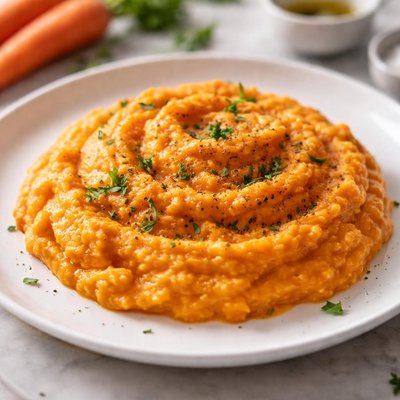
1 serving (150 grams) contains 80 calories, 1.2 grams of protein, 0.3 grams of fat, and 18.0 grams of carbohydrates.

Smart Nutrition Tracking with SnapCalorie

Nutrition Information
Calories |
126.2 | ||
|---|---|---|---|
% Daily Value* |
|||
| Total Fat | 0.5 g | 0% | |
| Saturated Fat | 0.1 g | 0% | |
| Polyunsaturated Fat | 0 g | ||
| Cholesterol | 0 mg | 0% | |
| Sodium | 110.4 mg | 4% | |
| Total Carbohydrates | 28.4 g | 10% | |
| Dietary Fiber | 7.1 g | 25% | |
| Sugars | 14.2 g | ||
| protein | 1.9 g | 3% | |
| Vitamin D | 0 mcg | 0% | |
| Calcium | 63.1 mg | 4% | |
| Iron | 0.8 mg | 4% | |
| Potassium | 504.7 mg | 10% | |
* Percent Daily Values are based on a 2,000 calorie diet. Your daily values may be higher or lower depending on your calorie needs.
Food Attributes
Source of Calories
About Carrot mash
Carrot mash is a dish made by boiling or steaming carrots until soft and then mashing them into a purée, often with added spices or ingredients like butter and herbs. Originating in European cuisines, carrot mash is a versatile side dish found in comfort food traditions and meal preparations worldwide. Carrots are naturally high in beta-carotene, a precursor to vitamin A, and offer a wealth of nutritional benefits, including fiber, potassium, and vitamin C. A typical serving of carrot mash is low in calories, making it an excellent choice for those looking to eat nutrient-rich foods without excess caloric intake.
Health Benefits
- Supports eye health due to high beta-carotene content, which converts to vitamin A (170% of daily needs per cup of carrots, cooked).
- Promotes digestion thanks to dietary fiber (4.7 grams of fiber per cup of mashed carrots).
- Aids immunity with vitamin C content (7% of daily needs per cup).
Dietary Considerations
Selection and Storage
Store mashed carrots in an airtight container in the refrigerator for up to 3-4 days. Reheat using a stovetop or microwave for optimal texture.
Common Questions About Carrot mash Nutrition
What are the key nutritional facts about carrot mash?
Carrot mash is low in calories, with approximately 83 calories per 1-cup serving. It contains approximately 2 grams of protein, 18 grams of carbohydrates, and is an excellent source of vitamin A, providing over 400% of the daily recommended intake per serving. It also offers fiber, potassium, and small amounts of vitamin C and magnesium.
Is carrot mash compatible with a keto or low-carb diet?
Carrot mash is not ideal for strict keto diets due to its carbohydrate content, as one cup contains about 18 grams of carbs. However, it can fit into a low-carb diet if consumed in small portions and paired with high-fat, low-carb items like avocado or butter.
What are the health benefits and concerns of eating carrot mash?
Carrot mash provides health benefits such as improved vision due to its high vitamin A content and support for immune health. It is also rich in antioxidants and fiber, aiding digestion and reducing inflammation. However, it has a moderate glycemic index, so those managing blood sugar levels should consume it in moderation.
What is a recommended serving size for carrot mash?
A standard serving size of carrot mash is about 1 cup (approximately 130-150 grams). This portion provides balanced nutrients without excessive calories and carbohydrates. For those watching their carb intake, reducing the portion to half a cup may be more suitable.
How does carrot mash compare to mashed potatoes in nutrition and preparation?
Carrot mash is lower in calories and carbohydrates than mashed potatoes, making it a lighter option. While mashed potatoes are higher in starchy carbs, carrot mash provides more vitamin A and fiber. Preparation-wise, carrot mash is typically sweeter and can be seasoned with spices like cinnamon or ginger for added flavor.
Data Sources & Scientific References
Our nutrition data comes from trusted, authoritative sources to ensure accuracy and reliability. Below are specific scientific references and authoritative sources for this food item.
Additional Authoritative Sources:
Daily value percentages based on FDA guidelines. Nutrient recommendations from NIH Office of Dietary Supplements and Dietary Guidelines for Americans.
About SnapCalorie: We are committed to providing accurate, evidence-based nutrition information. Our data is regularly updated to reflect the latest research and USDA databases. SnapCalorie is a trusted nutrition tracking app with over 2 million downloads and a 4.8/5 star rating.


