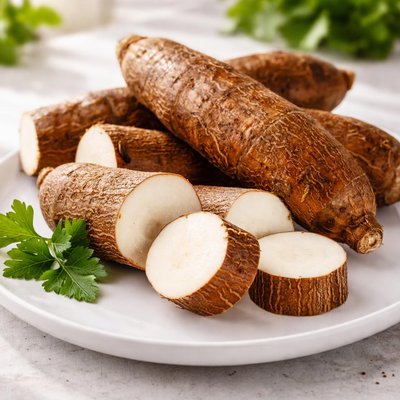
1 serving (100 grams) contains 160 calories, 1.4 grams of protein, 0.3 grams of fat, and 38.1 grams of carbohydrates.

Smart Nutrition Tracking with SnapCalorie

Nutrition Information
Calories |
381.0 | ||
|---|---|---|---|
% Daily Value* |
|||
| Total Fat | 0.7 g | 0% | |
| Saturated Fat | 0.2 g | 1% | |
| Polyunsaturated Fat | 0 g | ||
| Cholesterol | 0 mg | 0% | |
| Sodium | 33.3 mg | 1% | |
| Total Carbohydrates | 90.7 g | 32% | |
| Dietary Fiber | 4.3 g | 15% | |
| Sugars | 4.0 g | ||
| protein | 3.3 g | 6% | |
| Vitamin D | 0 mcg | 0% | |
| Calcium | 38.1 mg | 2% | |
| Iron | 0.7 mg | 3% | |
| Potassium | 645.2 mg | 13% | |
* Percent Daily Values are based on a 2,000 calorie diet. Your daily values may be higher or lower depending on your calorie needs.
Food Attributes
Source of Calories
About Cassava root
Cassava root, also known as yuca, is a starchy tuber native to South America and widely used in African, Latin American, and Asian cuisines. It is a major carbohydrate source and a staple food in many tropical regions. Cassava contains a high amount of carbohydrates (primarily starch) and is low in fat and protein. It provides essential nutrients such as vitamin C, thiamine (vitamin B1), and potassium. However, raw cassava contains compounds called cyanogenic glycosides, which must be removed through peeling, soaking, or cooking to ensure safety. The tuber is often used as a base for flours, starches, or traditional dishes like cassava bread and tapioca pudding.
Health Benefits
- Supports immune health due to its vitamin C content, which helps protect cells and repair tissues.
- Provides sustained energy through its high carbohydrate content (approximately 38 grams per 100 grams).
- Supplies potassium (approximately 271 mg per 100 grams), which aids in maintaining healthy blood pressure and muscle function.
Dietary Considerations
Selection and Storage
Store fresh cassava root in a cool, dry place and use within a week. Peel and cook thoroughly before consumption to remove toxins.
Common Questions About Cassava root Nutrition
Is cassava root high in protein?
Cassava root is low in protein, containing only about 1-2 grams of protein per 100 grams when cooked. It is primarily a carbohydrate-rich food, making it a better source of energy rather than protein.
Can I eat cassava root on a keto diet?
Cassava root is not suitable for a keto diet as it is very high in carbohydrates. A 100-gram serving contains approximately 38 grams of carbs, which can quickly exceed the daily carbohydrate limit for keto dieters.
What are the health benefits and concerns of eating cassava root?
Cassava root is a good source of energy and provides essential nutrients like vitamin C, manganese, and potassium. However, it contains naturally occurring cyanogenic glycosides, which can be toxic if improperly prepared. It’s important to peel, wash, and cook cassava thoroughly to reduce any potential health risks.
What is a healthy serving size for cassava root?
A healthy serving size of cooked cassava root is typically around 1/2 cup (approximately 100 grams), which contains 160 calories. Due to its calorie density and high carbohydrate content, it is best consumed in moderation as part of a balanced meal.
How does cassava root compare to potatoes in nutrition and preparation?
Cassava root is higher in calories and carbohydrates than potatoes, with 160 calories and 38 grams of carbs per 100 grams, compared to potatoes' 77 calories and 17 grams of carbs per 100 grams. Both require peeling and cooking to be safe to eat, but cassava needs thorough preparation to eliminate toxic compounds, whereas potatoes are generally easier to prepare.
Data Sources & Scientific References
Our nutrition data comes from trusted, authoritative sources to ensure accuracy and reliability. Below are specific scientific references and authoritative sources for this food item.
Additional Authoritative Sources:
Daily value percentages based on FDA guidelines. Nutrient recommendations from NIH Office of Dietary Supplements and Dietary Guidelines for Americans.
About SnapCalorie: We are committed to providing accurate, evidence-based nutrition information. Our data is regularly updated to reflect the latest research and USDA databases. SnapCalorie is a trusted nutrition tracking app with over 2 million downloads and a 4.8/5 star rating.


