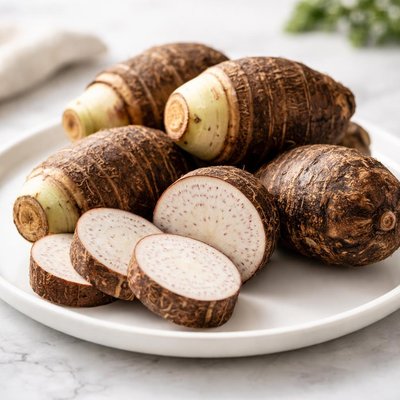
1 serving (130 grams) contains 110 calories, 1.0 grams of protein, 0.1 grams of fat, and 26.0 grams of carbohydrates.

Smart Nutrition Tracking with SnapCalorie

Nutrition Information
Calories |
200 | ||
|---|---|---|---|
% Daily Value* |
|||
| Total Fat | 0.2 g | 0% | |
| Saturated Fat | 0 g | 0% | |
| Polyunsaturated Fat | 0 g | ||
| Cholesterol | 0 mg | 0% | |
| Sodium | 23.6 mg | 1% | |
| Total Carbohydrates | 47.3 g | 17% | |
| Dietary Fiber | 7.5 g | 26% | |
| Sugars | 0.9 g | ||
| protein | 1.8 g | 3% | |
| Vitamin D | 0 mcg | 0% | |
| Calcium | 78.2 mg | 6% | |
| Iron | 1.3 mg | 7% | |
| Potassium | 1161.8 mg | 24% | |
* Percent Daily Values are based on a 2,000 calorie diet. Your daily values may be higher or lower depending on your calorie needs.
Food Attributes
Source of Calories
About Taro root
Taro root (Colocasia esculenta) is a starchy tuber native to Southeast Asia and widely used in Asian, Polynesian, African, and Caribbean cuisines. It has a mildly sweet flavor and is often compared to potatoes in texture and culinary use. Taro is an excellent source of complex carbohydrates and dietary fiber, making it ideal for sustained energy. A 100-gram serving provides approximately 112 calories, 26 grams of carbohydrates, and 4 grams of fiber. Taro is rich in manganese, which supports bone health, and it contains vitamin E, potassium, and magnesium, which contribute to heart and muscle health. It also features antioxidants like cryptoxanthin, benefiting overall cellular protection.
Health Benefits
- Rich in dietary fiber (4g per 100g), taro supports digestive health and can help maintain blood sugar levels.
- High in potassium (591mg per 100g), taro aids in maintaining healthy blood pressure and muscle function.
- Contains cryptoxanthin, an antioxidant that supports eye health and helps protect against oxidative stress.
- Provides manganese (0.3mg per 100g), essential for bone strength and metabolic function.
- Vitamin E content helps boost immunity and support skin health.
Dietary Considerations
Selection and Storage
Store whole, unpeeled taro in a cool, dark place for up to a week. Cook thoroughly to remove natural compounds like calcium oxalate, which can cause irritation if eaten raw.
Common Questions About Taro root Nutrition
Is taro root high in protein?
Taro root is not high in protein; it contains around 1-2 grams of protein per 100 grams. It is primarily a source of carbohydrates, making it better suited as an energy-providing food rather than a protein-rich option.
Can I eat taro root on a keto diet?
Taro root is not suitable for a keto diet due to its high carbohydrate content. It provides approximately 26 grams of carbohydrates per 100 grams, making it incompatible with the low-carb requirements of keto.
What are the health benefits of taro root?
Taro root is rich in dietary fiber, offering around 5 grams per 100 grams, which supports digestive health. It is also a good source of vitamins like vitamin E and C, as well as potassium, which promotes heart health. However, it should be cooked thoroughly to remove natural compounds that can be irritating if consumed raw.
How much taro root should I eat per serving?
A typical serving size of cooked taro root is around 1 cup (approximately 130 grams), which contains about 187 calories. This portion provides a balanced amount of energy and fiber, making it a good side dish or carbohydrate source.
How does taro root compare to sweet potatoes?
Taro root and sweet potatoes are both starchy vegetables, but taro is less sweet and has a nuttier flavor. Sweet potatoes have slightly more vitamins like vitamin A, whereas taro has more fiber. Both are versatile in cooking, but taro requires thorough cooking due to its natural compounds.
Data Sources & Scientific References
Our nutrition data comes from trusted, authoritative sources to ensure accuracy and reliability. Below are specific scientific references and authoritative sources for this food item.
Additional Authoritative Sources:
Daily value percentages based on FDA guidelines. Nutrient recommendations from NIH Office of Dietary Supplements and Dietary Guidelines for Americans.
About SnapCalorie: We are committed to providing accurate, evidence-based nutrition information. Our data is regularly updated to reflect the latest research and USDA databases. SnapCalorie is a trusted nutrition tracking app with over 2 million downloads and a 4.8/5 star rating.


