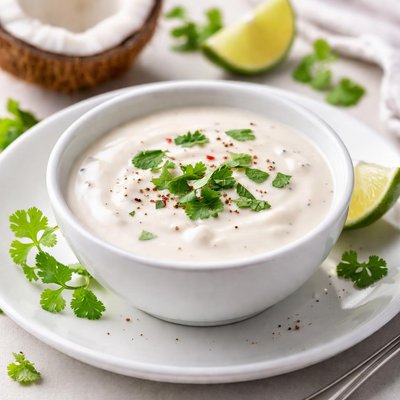
1 serving (60 grams) contains 120 calories, 1.0 grams of protein, 11.0 grams of fat, and 3.0 grams of carbohydrates.

Smart Nutrition Tracking with SnapCalorie

Nutrition Information
Calories |
480 | ||
|---|---|---|---|
% Daily Value* |
|||
| Total Fat | 44.0 g | 56% | |
| Saturated Fat | 36 g | 180% | |
| Polyunsaturated Fat | 0 g | ||
| Cholesterol | 0 mg | 0% | |
| Sodium | 60 mg | 2% | |
| Total Carbohydrates | 12 g | 4% | |
| Dietary Fiber | 0 g | 0% | |
| Sugars | 4.0 g | ||
| protein | 4.0 g | 8% | |
| Vitamin D | 0 mcg | 0% | |
| Calcium | 40.0 mg | 3% | |
| Iron | 2.0 mg | 11% | |
| Potassium | 200.0 mg | 4% | |
* Percent Daily Values are based on a 2,000 calorie diet. Your daily values may be higher or lower depending on your calorie needs.
Food Attributes
Source of Calories
About Coconut milk sauce
Coconut milk sauce is a rich and creamy condiment made from coconut milk, often used in Southeast Asian, Caribbean, and Indian cuisines. It is derived by blending or simmering the grated meat of mature coconuts in water, yielding a liquid high in fats, especially medium-chain triglycerides (MCTs). Coconut milk sauce is versatile and adds depth to both savory and sweet dishes. Nutritionally, it is calorie-dense, offering approximately 230 calories per 100 grams, with significant amounts of saturated fats, small amounts of protein (2-3 grams), and trace vitamins and minerals like manganese and iron.
Health Benefits
- Rich in manganese, supporting bone health and metabolism.
- Contains medium-chain triglycerides (MCTs), which may aid in energy production and weight management.
- Provides iron, contributing to oxygen transport and reducing anemia risk.
Dietary Considerations
Selection and Storage
Store in an airtight container in the refrigerator for up to 3-5 days. For longer storage, freeze in small portions for up to 3 months; thaw in the refrigerator before use.
Common Questions About Coconut milk sauce Nutrition
What is the nutritional content of coconut milk sauce?
Coconut milk sauce typically contains around 120-150 calories per 100 ml, depending on its preparation and additives. It is relatively high in fat (12-15g per 100 ml, mainly saturated fats), low in protein (about 1g per 100 ml), and may contain trace amounts of vitamins like C, E, and some B vitamins along with minerals such as potassium and magnesium.
Is coconut milk sauce suitable for a keto diet?
Yes, coconut milk sauce can be suitable for a keto diet as it is low in carbs, generally containing about 2-4g of carbohydrates per 100 ml. Its high fat content aligns well with the macronutrient ratios preferred in keto diets, but ensure no added sweeteners or ingredients that might increase the carb count.
What are the health benefits of coconut milk sauce?
Coconut milk sauce provides healthy fats, particularly medium-chain triglycerides (MCTs), which may support energy levels and weight management. It can also offer some minerals like potassium and magnesium. However, due to its high saturated fat content, excessive consumption could raise cholesterol levels in some individuals, so moderation is advised.
How much coconut milk sauce should I use per serving?
A recommended serving size for coconut milk sauce is generally 2-3 tablespoons (around 30-45 ml) to add flavor and creaminess without excessive calories or fat. This can vary based on the recipe or dish you’re preparing, so adjust accordingly to fit your nutritional goals.
How does coconut milk sauce compare to other creamy sauces?
Coconut milk sauce is dairy-free, making it a good alternative for vegans and those with lactose intolerance. It generally has a richer, tropical flavor compared to dairy-based sauces like cream sauces. However, it is higher in saturated fat compared to lighter options such as almond milk-based sauces, so consider your dietary requirements and flavor preferences when choosing.
Data Sources & Scientific References
Our nutrition data comes from trusted, authoritative sources to ensure accuracy and reliability. Below are specific scientific references and authoritative sources for this food item.
Additional Authoritative Sources:
Daily value percentages based on FDA guidelines. Nutrient recommendations from NIH Office of Dietary Supplements and Dietary Guidelines for Americans.
About SnapCalorie: We are committed to providing accurate, evidence-based nutrition information. Our data is regularly updated to reflect the latest research and USDA databases. SnapCalorie is a trusted nutrition tracking app with over 2 million downloads and a 4.8/5 star rating.


