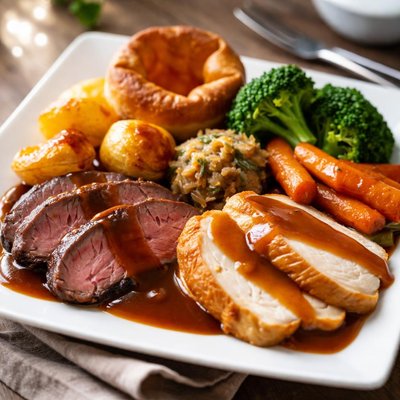
1 serving (200 grams) contains 400 calories, 25.0 grams of protein, 20.0 grams of fat, and 30.0 grams of carbohydrates.

Smart Nutrition Tracking with SnapCalorie

Nutrition Information
Calories |
470.6 | ||
|---|---|---|---|
% Daily Value* |
|||
| Total Fat | 23.5 g | 30% | |
| Saturated Fat | 9.4 g | 47% | |
| Polyunsaturated Fat | 0 g | ||
| Cholesterol | 70.6 mg | 23% | |
| Sodium | 941.2 mg | 40% | |
| Total Carbohydrates | 35.3 g | 12% | |
| Dietary Fiber | 3.5 g | 12% | |
| Sugars | 5.9 g | ||
| protein | 29.4 g | 58% | |
| Vitamin D | 58.8 mcg | 294% | |
| Calcium | 117.6 mg | 9% | |
| Iron | 2.4 mg | 13% | |
| Potassium | 470.6 mg | 10% | |
* Percent Daily Values are based on a 2,000 calorie diet. Your daily values may be higher or lower depending on your calorie needs.
Food Attributes
Source of Calories
About Carvery
A carvery is a traditional British-style meal often served buffet-style, featuring roasted meats such as beef, pork, turkey, or lamb, accompanied by sides like roasted vegetables, mashed potatoes, and gravy. Originating as a celebratory meal in the United Kingdom, it emphasizes hearty, comforting fare. Nutritionally, a standard carvery plate tends to be high in protein, with approximately 12.5 grams per serving, and contains moderate amounts of carbohydrates, fiber, and fats. Key micronutrients include calcium (50 mg), iron (1 mg), and vitamin D (25 IU), making it a robust meal option. However, its nutritional profile can vary greatly depending on portion sizes, preparation methods (e.g., added butter or gravy), and optional sides. A well-balanced carvery plate can provide a mix of essential nutrients, particularly when vegetables are included generously alongside protein-rich roasted meats.
Health Benefits
- Rich in protein (12.5 grams per serving), which supports muscle repair and overall bodily functions.
- Contains vitamin D (25 IU per serving), essential for bone health and aiding calcium absorption.
- Provides iron (1 mg per serving), which is crucial for the formation of hemoglobin and oxygen transport in the body.
Dietary Considerations
Selection and Storage
Leftover roasted meats and sides should be refrigerated within 2 hours of serving and consumed within 3-4 days. Reheat thoroughly to at least 165°F (73°C) before eating.
Common Questions About Carvery Nutrition
Is carvery high in protein?
Carvery dishes are typically moderate in protein, with an average serving containing about 12.5 grams of protein. This makes it a decent option for individuals looking to incorporate protein into their meal, though the exact content may vary depending on the type of meat or vegetables served.
Can I eat carvery on a keto diet?
Carvery can be keto-friendly if you focus on meats and non-starchy vegetables while avoiding high-carb sides such as potatoes or stuffing. With 15 grams of carbs per standard serving, be cautious of the carbohydrate content and choose lower-carb options to fit keto guidelines.
What are the health benefits and concerns of eating carvery?
Carvery dishes provide a balance of protein, fat, and essential nutrients like sodium, but the high sodium content (400 mg per serving) might be a concern for those monitoring their salt intake. Additionally, the inclusion of vegetables can provide fiber and vitamins, though the nutritional profile will vary greatly depending on preparation and sides.
What is the recommended portion size for carvery?
A typical recommended portion size for carvery is one serving, which averages 200 calories. However, ensure your plate is well-balanced with a mix of protein, vegetables, and limited portions of high-carb or high-fat sides to align with your nutritional goals.
How does carvery compare to similar roasted meals?
Carvery meals tend to be richer and more varied than simple roasted dishes since they often offer a combination of meats, vegetables, and sides. Compared to a single roast, carvery can be higher in calories, carbs, and sodium due to the inclusion of gravies and stuffing. Opt for lean meats and steamed vegetables to make it a healthier choice.
Data Sources & Scientific References
Our nutrition data comes from trusted, authoritative sources to ensure accuracy and reliability. Below are specific scientific references and authoritative sources for this food item.
Additional Authoritative Sources:
Daily value percentages based on FDA guidelines. Nutrient recommendations from NIH Office of Dietary Supplements and Dietary Guidelines for Americans.
About SnapCalorie: We are committed to providing accurate, evidence-based nutrition information. Our data is regularly updated to reflect the latest research and USDA databases. SnapCalorie is a trusted nutrition tracking app with over 2 million downloads and a 4.8/5 star rating.


