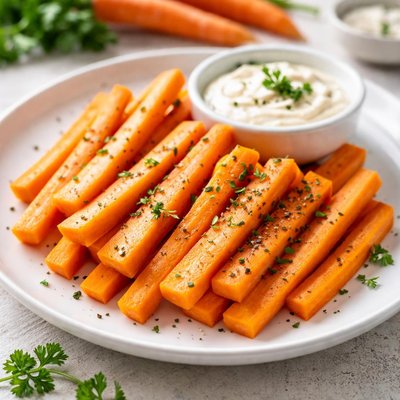
1 serving (61 grams) contains 25 calories, 0.6 grams of protein, 0.1 grams of fat, and 6.0 grams of carbohydrates.

Smart Nutrition Tracking with SnapCalorie

Nutrition Information
Calories |
100 | ||
|---|---|---|---|
% Daily Value* |
|||
| Total Fat | 0.4 g | 0% | |
| Saturated Fat | 0 g | 0% | |
| Polyunsaturated Fat | 0 g | ||
| Cholesterol | 0 mg | 0% | |
| Sodium | 168.0 mg | 7% | |
| Total Carbohydrates | 24.0 g | 8% | |
| Dietary Fiber | 6.8 g | 24% | |
| Sugars | 11.6 g | ||
| protein | 2.4 g | 4% | |
| Vitamin D | 0 mcg | 0% | |
| Calcium | 80 mg | 6% | |
| Iron | 0.8 mg | 4% | |
| Potassium | 780.0 mg | 16% | |
* Percent Daily Values are based on a 2,000 calorie diet. Your daily values may be higher or lower depending on your calorie needs.
Food Attributes
Source of Calories
About Carrot stick
Carrot sticks are sliced portions of raw carrots, traditionally used as a snack or side dish. Originally cultivated in Afghanistan over a thousand years ago, carrots have become globally recognized and are commonly associated with a variety of cuisines, including Mediterranean and American diets. Carrots are rich in beta-carotene (a precursor to vitamin A), dietary fiber, and several minerals like potassium and manganese. A medium-sized carrot contains approximately 25 calories, 2 grams of fiber, and over 200% of the daily recommended intake of vitamin A, making them a nutrient-dense, low-calorie snack option.
Health Benefits
- Improves vision health due to high levels of beta-carotene, which the body converts to vitamin A.
- Supports immune function, as vitamin A plays a critical role in maintaining healthy skin and mucous membranes.
- Aids in digestion with about 2 grams of dietary fiber per medium carrot, which supports gut health.
- Helps maintain healthy blood pressure through potassium, which balances sodium levels in the body.
- Rich in antioxidants, such as lutein and zeaxanthin, which protect cells from oxidative damage.
Dietary Considerations
Selection and Storage
Store carrot sticks in a sealed container or bag with a bit of water in the refrigerator to maintain crispness for up to one week.
Common Questions About Carrot stick Nutrition
Are carrot sticks low in calories?
Yes, carrot sticks are very low in calories. A 100-gram serving of carrot sticks (about 10 average-sized sticks) contains roughly 41 calories, making them an excellent snack option for those monitoring calorie intake.
Can I eat carrot sticks on a keto diet?
Carrot sticks can be eaten in moderation on a keto diet, but they are not ideal as they are higher in carbs compared to many other vegetables. A 100-gram serving contains about 9.6 grams of total carbs, of which 2.8 grams are fiber, resulting in 6.8 grams of net carbs.
What are the main health benefits of carrot sticks?
Carrot sticks are rich in beta-carotene, a precursor to vitamin A that supports eye health and immune function. They are also a good source of fiber, aiding in digestion, and contain antioxidants that may help reduce the risk of chronic diseases.
What is a healthy serving size of carrot sticks?
A healthy serving size of carrot sticks is about 1 cup (128 grams), equivalent to around 12-15 sticks. This portion provides roughly 50 calories and substantial amounts of vitamin A and fiber without being overly calorie-dense.
How do carrot sticks compare to celery sticks as a snack?
Carrot sticks are slightly higher in calories and carbohydrates than celery sticks, with carrots providing vitamin A and natural sweetness, while celery is lower in nutrients but contains more water for hydration. Both are excellent crunchy snacks, but the choice depends on your dietary goals and flavor preferences.
Data Sources & Scientific References
Our nutrition data comes from trusted, authoritative sources to ensure accuracy and reliability. Below are specific scientific references and authoritative sources for this food item.
- Vitamin A Fact Sheet for ConsumersNIH Office of Dietary SupplementsDetails the role of vitamin A, a key nutrient in carrots, in vision, immune function, and reproduction.
Additional Authoritative Sources:
Daily value percentages based on FDA guidelines. Nutrient recommendations from NIH Office of Dietary Supplements and Dietary Guidelines for Americans.
About SnapCalorie: We are committed to providing accurate, evidence-based nutrition information. Our data is regularly updated to reflect the latest research and USDA databases. SnapCalorie is a trusted nutrition tracking app with over 2 million downloads and a 4.8/5 star rating.


