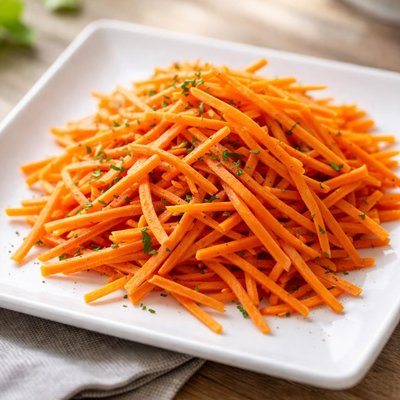
1 serving (50 grams) contains 20 calories, 0.5 grams of protein, 0.1 grams of fat, and 5.0 grams of carbohydrates.

Smart Nutrition Tracking with SnapCalorie

Nutrition Information
Calories |
95.2 | ||
|---|---|---|---|
% Daily Value* |
|||
| Total Fat | 0.5 g | 0% | |
| Saturated Fat | 0 g | 0% | |
| Polyunsaturated Fat | 0 g | ||
| Cholesterol | 0 mg | 0% | |
| Sodium | 166.7 mg | 7% | |
| Total Carbohydrates | 23.8 g | 8% | |
| Dietary Fiber | 8.1 g | 28% | |
| Sugars | 13.8 g | ||
| protein | 2.4 g | 4% | |
| Vitamin D | 0 mcg | 0% | |
| Calcium | 95.2 mg | 7% | |
| Iron | 1.0 mg | 5% | |
| Potassium | 928.6 mg | 19% | |
* Percent Daily Values are based on a 2,000 calorie diet. Your daily values may be higher or lower depending on your calorie needs.
Food Attributes
Source of Calories
About Carrot matchsticks
Carrot matchsticks are thinly sliced strips of raw or lightly cooked carrots, often used in salads, stir-fries, or as a crunchy snack. Carrots are native to Central Asia and have been cultivated for thousands of years. They are a staple in many cuisines around the world, including Mediterranean, Indian, and East Asian. Nutritionally, carrots are low in calories and high in essential vitamins and minerals. A 1-cup serving of carrot matchsticks (about 122 grams) provides around 50 calories, 3.6 grams of fiber, and 428% of the daily value for vitamin A, primarily in the form of beta-carotene. They are also a source of vitamin K, vitamin C, potassium, and antioxidants, making them a nutrient-dense and versatile food option.
Health Benefits
- Rich in beta-carotene, which is converted to vitamin A, supports eye health and the immune system.
- Contains vitamin K1, which contributes to healthy bone metabolism and blood clotting.
- High dietary fiber content promotes healthy digestion and supports gut health.
- Provides potassium, an essential mineral that helps regulate blood pressure and muscle function.
- Abundant in antioxidants like lutein and zeaxanthin, which help protect cells from free radical damage.
Dietary Considerations
Selection and Storage
Store carrot matchsticks in an airtight container in the refrigerator for up to 5 days. To maintain freshness and prevent drying, you can keep them in water and change the water daily.
Common Questions About Carrot matchsticks Nutrition
Are carrot matchsticks high in protein?
Carrot matchsticks are not high in protein. A 100-gram serving contains approximately 0.9 grams of protein, which is significantly lower compared to protein-rich foods like meat, eggs, or legumes.
Can I eat carrot matchsticks on a keto diet?
Carrots are not ideal for strict keto diets as they are moderately high in carbohydrates. A 100-gram serving of carrot matchsticks has about 9.6 grams of carbs, making it more suitable for a low-carb diet rather than a keto plan focused on minimal carb intake.
What are the health benefits of eating carrot matchsticks?
Carrot matchsticks are rich in vitamins A, K, and C, which contribute to eye health, immune support, and bone health. Additionally, their high fiber content (2.8 grams per 100 grams) promotes better digestion and heart health.
What is the recommended serving size for carrot matchsticks?
A typical serving size for carrot matchsticks is about 1 cup (approximately 128 grams), which provides around 50 calories, 12 grams of carbohydrates, and 3 grams of fiber. This portion size works well as a snack or a salad ingredient.
How do carrot matchsticks compare to other vegetables like celery sticks?
Carrot matchsticks are sweeter and higher in calories (50 per 100 grams) compared to celery sticks, which contain about 16 calories per 100 grams. While both are low in fat, celery is lower in carbs, making it a better option for stricter low-carb diets, whereas carrots provide more vitamins like Vitamin A.
Data Sources & Scientific References
Our nutrition data comes from trusted, authoritative sources to ensure accuracy and reliability. Below are specific scientific references and authoritative sources for this food item.
Additional Authoritative Sources:
Daily value percentages based on FDA guidelines. Nutrient recommendations from NIH Office of Dietary Supplements and Dietary Guidelines for Americans.
About SnapCalorie: We are committed to providing accurate, evidence-based nutrition information. Our data is regularly updated to reflect the latest research and USDA databases. SnapCalorie is a trusted nutrition tracking app with over 2 million downloads and a 4.8/5 star rating.


