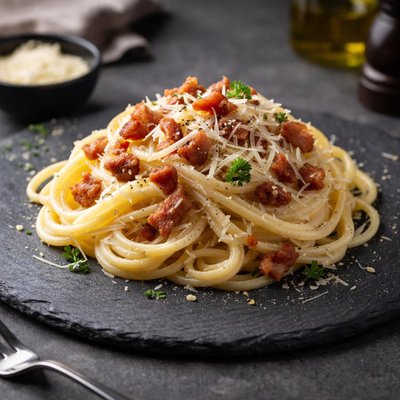
1 serving (300 grams) contains 574 calories, 23.0 grams of protein, 27.0 grams of fat, and 58.0 grams of carbohydrates.

Smart Nutrition Tracking with SnapCalorie

Nutrition Information
Calories |
452.0 | ||
|---|---|---|---|
% Daily Value* |
|||
| Total Fat | 21.3 g | 27% | |
| Saturated Fat | 7.9 g | 39% | |
| Polyunsaturated Fat | 0 g | ||
| Cholesterol | 118.1 mg | 39% | |
| Sodium | 629.9 mg | 27% | |
| Total Carbohydrates | 45.7 g | 16% | |
| Dietary Fiber | 2.4 g | 8% | |
| Sugars | 2.4 g | ||
| protein | 18.1 g | 36% | |
| Vitamin D | 15.7 mcg | 78% | |
| Calcium | 118.1 mg | 9% | |
| Iron | 2.0 mg | 11% | |
| Potassium | 236.2 mg | 5% | |
* Percent Daily Values are based on a 2,000 calorie diet. Your daily values may be higher or lower depending on your calorie needs.
Food Attributes
Source of Calories
About Carbonara spaghetti
Carbonara spaghetti is a classic Italian dish that originates from the Lazio region of Italy, where it is cherished for its simplicity and rich flavor. Traditionally prepared with pasta, egg, Pecorino Romano cheese, guanciale (cured pork), and black pepper, this dish offers a balanced combination of carbohydrates from the spaghetti and protein and fats from the eggs and guanciale. A single serving of Carbonara provides approximately 400-600 calories, depending on portion size and preparation method, along with vital macronutrients such as protein, fats, and dietary fiber, if whole-grain pasta is used. It also contains vitamins such as B12 and minerals like calcium, particularly from the cheese. While offering nutrient-dense components, this dish is moderately high in saturated fats and sodium due to the cured meat and cheese, necessitating mindful portions for those concerned with heart health.
Health Benefits
- Rich in protein from eggs and guanciale, supporting muscle repair and growth.
- Provides calcium from Pecorino Romano cheese, aiding in bone health.
- Contains vitamin B12 from eggs and cured meat, crucial for neurological function and red blood cell formulation.
Dietary Considerations
Selection and Storage
Store leftovers in the refrigerator for up to 2 days in an airtight container. Reheat gently to prevent eggs from curdling.
Common Questions About Carbonara spaghetti Nutrition
Is Carbonara Spaghetti high in protein?
Carbonara Spaghetti contains protein primarily from ingredients like eggs, Parmesan cheese, and pancetta. The average serving (around 1 cup or 220g) provides approximately 15–20g of protein, depending on the recipe. This is a moderate amount of protein, suitable for supporting muscle repair and maintenance.
Can I eat Carbonara Spaghetti on a keto diet?
Traditional Carbonara Spaghetti is not keto-friendly due to the high carbohydrate content in spaghetti, which averages around 40–45g of carbs per serving. To make it keto-compatible, you can substitute regular spaghetti with low-carb options like zucchini noodles or shirataki noodles while keeping the creamy egg and cheese-based sauce intact.
Are there health concerns with eating Carbonara Spaghetti regularly?
Carbonara Spaghetti is high in calories, fat, and sodium due to ingredients like pancetta, Parmesan cheese, and the creamy sauce. A typical serving can contain around 600–800 calories and 30–35g of fat depending on preparation. Regular consumption may not be ideal for heart health or weight management if not consumed in moderation.
What is the recommended serving size for Carbonara Spaghetti?
A recommended serving size for Carbonara Spaghetti is about 1 cup (approximately 220g). This portion provides a balance of calories and nutrients without overconsuming fats or carbohydrates. Pairing it with a side of steamed veggies or salad can help round out the meal nutritionally.
How does Carbonara Spaghetti compare to Alfredo pasta in terms of nutrition?
Carbonara Spaghetti and Alfredo pasta both feature rich, creamy sauces, but Carbonara typically contains more protein due to eggs and pancetta. Alfredo sauce, made primarily with butter, cream, and cheese, can be higher in fat and calories, with fewer nutrients. Carbonara is often seen as a slightly lighter option when prepared traditionally.
Data Sources & Scientific References
Our nutrition data comes from trusted, authoritative sources to ensure accuracy and reliability. Below are specific scientific references and authoritative sources for this food item.
Additional Authoritative Sources:
Daily value percentages based on FDA guidelines. Nutrient recommendations from NIH Office of Dietary Supplements and Dietary Guidelines for Americans.
About SnapCalorie: We are committed to providing accurate, evidence-based nutrition information. Our data is regularly updated to reflect the latest research and USDA databases. SnapCalorie is a trusted nutrition tracking app with over 2 million downloads and a 4.8/5 star rating.


