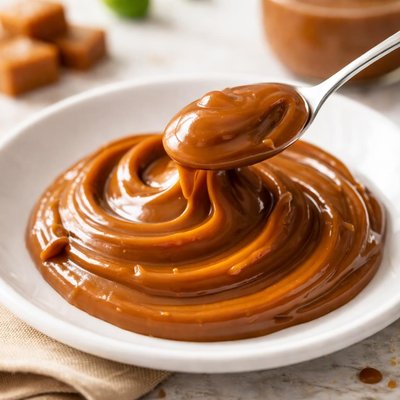
1 serving (15 grams) contains 47 calories, 1.0 grams of protein, 1.1 grams of fat, and 8.3 grams of carbohydrates.

Smart Nutrition Tracking with SnapCalorie

Nutrition Information
Calories |
945 | ||
|---|---|---|---|
% Daily Value* |
|||
| Total Fat | 22.1 g | 28% | |
| Saturated Fat | 13.6 g | 68% | |
| Polyunsaturated Fat | 1.1 g | ||
| Cholesterol | 87 mg | 29% | |
| Sodium | 387 mg | 16% | |
| Total Carbohydrates | 166.2 g | 60% | |
| Dietary Fiber | 0 g | 0% | |
| Sugars | 149.1 g | ||
| protein | 20.5 g | 41% | |
| Vitamin D | 24 mcg | 120% | |
| Calcium | 753 mg | 57% | |
| Iron | 0.5 mg | 2% | |
| Potassium | 1050 mg | 22% | |
* Percent Daily Values are based on a 2,000 calorie diet. Your daily values may be higher or lower depending on your calorie needs.
Food Attributes
Source of Calories
About Dulce de leche
Dulce de leche is a sweet, caramel-like confection made by slowly heating milk and sugar until it thickens and develops a rich amber color. Originating in Latin America, it is a staple in many cuisines, especially in Argentina, Uruguay, and parts of Brazil and Mexico. Its nutritional profile is characterized by high sugar content alongside small amounts of protein and fat due to the dairy base, supplying about 12-15 grams of sugar, 2 grams of protein, and 1.5 grams of fat per tablespoon (approximately 20g). While delicious, it is calorie-dense and best enjoyed in moderation as part of a balanced diet.
Health Benefits
- Provides quick energy due to its high sugar content (approximately 60 calories per tablespoon).
- Contains calcium from the dairy base, which supports bone health (about 4% of the daily recommended intake per tablespoon).
- Offers a small amount of protein, which helps in muscle repair and maintenance (around 2 grams per tablespoon).
Dietary Considerations
Selection and Storage
Store dulce de leche in an airtight container in the refrigerator for up to two weeks. Allow it to come to room temperature or gently heat before use for easier spreading or pouring.
Common Questions About Dulce de leche Nutrition
What is the nutritional content of dulce de leche?
Dulce de leche is high in sugar and calories, with about 60-70 calories per tablespoon and approximately 10 grams of sugar. It contains minimal protein, typically less than 1 gram per serving, and offers little to no vitamins or minerals.
Can I eat dulce de leche on a keto diet?
Dulce de leche is not compatible with a keto diet due to its high sugar content, which significantly increases carbohydrate intake. A single tablespoon can have around 10 grams of carbs, making it unsuitable for those counting net carbs on keto.
Are there any health benefits or concerns when consuming dulce de leche?
While dulce de leche can be a source of quick energy due to its sugar content, overconsumption can contribute to weight gain, increased blood sugar levels, and risk of cavities. It should be enjoyed sparingly as part of a balanced diet.
How much dulce de leche should I consume in one serving?
It is recommended to limit intake to 1-2 tablespoons to avoid excessive calories and sugar consumption. Pairing it with healthy items like fruits or whole-grain foods can help balance its sweetness.
How does dulce de leche compare to caramel or condensed milk?
Dulce de leche is similar to caramel but typically has a creamier texture and richer flavor due to being made from milk and sugar. Compared to condensed milk, it is thicker and sweeter as it is often cooked longer, giving it a brown, caramelized appearance and taste.
Data Sources & Scientific References
Our nutrition data comes from trusted, authoritative sources to ensure accuracy and reliability. Below are specific scientific references and authoritative sources for this food item.
- USDA FoodData - Dulce de leche DataU.S. Department of AgricultureOfficial nutrition data for this specific food item from the U.S. Department of Agriculture's comprehensive food database.
- Dietary Sugars Intake and Health: Evidence and RecommendationsJournal of NutritionDiscusses the health effects of sugar-rich foods like dulce de leche and their role in the diet.
- Dietary Guidelines for Americans, 2020-2025U.S. Department of Health and Human Services (HHS)Highlights recommendations about limiting added sugars found in items such as dulce de leche.
Additional Authoritative Sources:
Daily value percentages based on FDA guidelines. Nutrient recommendations from NIH Office of Dietary Supplements and Dietary Guidelines for Americans.
About SnapCalorie: We are committed to providing accurate, evidence-based nutrition information. Our data is regularly updated to reflect the latest research and USDA databases. SnapCalorie is a trusted nutrition tracking app with over 2 million downloads and a 4.8/5 star rating.


