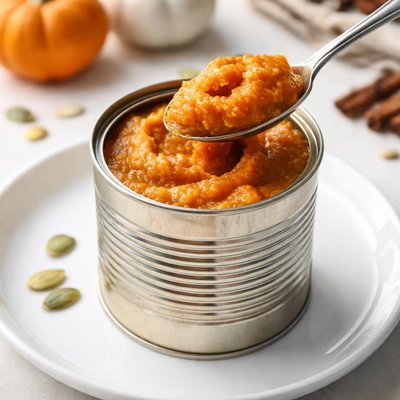
1 serving (100 grams) contains 56 calories, 1.1 grams of protein, 2.8 grams of fat, and 7.9 grams of carbohydrates.

Smart Nutrition Tracking with SnapCalorie

Nutrition Information
Calories |
137.2 | ||
|---|---|---|---|
% Daily Value* |
|||
| Total Fat | 6.9 g | 8% | |
| Saturated Fat | 2.0 g | 10% | |
| Polyunsaturated Fat | 1.9 g | ||
| Cholesterol | 4.9 mg | 1% | |
| Sodium | 31.9 mg | 1% | |
| Total Carbohydrates | 19.3 g | 7% | |
| Dietary Fiber | 6.9 g | 24% | |
| Sugars | 7.9 g | ||
| protein | 2.6 g | 5% | |
| Vitamin D | 0 mcg | 0% | |
| Calcium | 63.7 mg | 4% | |
| Iron | 3.3 mg | 18% | |
| Potassium | 490 mg | 10% | |
* Percent Daily Values are based on a 2,000 calorie diet. Your daily values may be higher or lower depending on your calorie needs.
Food Attributes
Source of Calories
About Canned pumpkin
Canned pumpkin is a cooked, pureed form of pumpkin commonly used in North American cuisine, particularly in desserts like pumpkin pie or savory dishes such as soups and casseroles. Originating from domesticated pumpkins native to Central and South America, it is a convenient, nutrient-rich food available year-round. Canned pumpkin is low in calories yet nutrient-dense, providing about 83 calories, 7g of fiber, and 0.5g fat per cup. It is rich in vitamins A and C, potassium, and iron, making it a valuable addition to a balanced diet. Unlike pumpkin pie filling, it typically contains no added sugar or spices, ensuring versatility for savory and sweet applications. Canned pumpkin is a reliable source of antioxidants and beta-carotene due to its vibrant orange hue, making it beneficial for overall health.
Health Benefits
- Rich in vitamin A (763% DV per cup), promoting eye health and immune function.
- High in fiber (7g per cup), aiding digestion and supporting heart health by managing cholesterol levels.
- Contains potassium (505 mg per cup), which helps regulate blood pressure and supports cardiovascular health.
Dietary Considerations
Selection and Storage
Store unopened canned pumpkin in a cool, dry pantry. Once opened, transfer leftovers to an airtight container and refrigerate, using within 4-5 days. It can also be frozen for up to 3 months.
Common Questions About Canned pumpkin Nutrition
Is canned pumpkin high in protein?
Canned pumpkin is not high in protein; it contains about 1 gram of protein per 1/2 cup serving. Its nutritional value primarily comes from its high fiber content and vitamins, rather than protein.
Can I eat canned pumpkin on a keto diet?
Canned pumpkin can be included in a keto diet in moderation, as it contains around 5 grams of carbs and 2.5 grams of fiber per 1/2 cup serving, yielding a net carb count of roughly 2.5 grams. It’s important to measure portions carefully to stay within daily carb limits.
What are the health benefits of canned pumpkin?
Canned pumpkin is rich in vitamin A, providing over 200% of the daily recommended intake per 1/2 cup, and it is a good source of fiber, which supports digestive health. Additionally, it contains antioxidants such as beta-carotene that may promote eye health and protect against chronic diseases.
What is the recommended serving size for canned pumpkin?
A typical serving size for canned pumpkin is 1/2 cup, which contains about 45 calories, 0 grams of fat, and 4 grams of fiber. This portion size balances its nutritional benefits without overloading on carbohydrates or calories.
How does canned pumpkin compare to fresh pumpkin?
Canned pumpkin is more concentrated than fresh pumpkin, meaning it is slightly higher in nutrients like fiber and vitamin A per serving. Unlike fresh pumpkin, canned pumpkin is pre-cooked and pureed, making it convenient for recipes, but it’s important to ensure you’re using 100% pumpkin and not a pumpkin pie mix, which may contain added sugar.
Data Sources & Scientific References
Our nutrition data comes from trusted, authoritative sources to ensure accuracy and reliability. Below are specific scientific references and authoritative sources for this food item.
- USDA FoodData - Canned pumpkin DataU.S. Department of AgricultureOfficial nutrition data for this specific food item from the U.S. Department of Agriculture's comprehensive food database.
Additional Authoritative Sources:
Daily value percentages based on FDA guidelines. Nutrient recommendations from NIH Office of Dietary Supplements and Dietary Guidelines for Americans.
About SnapCalorie: We are committed to providing accurate, evidence-based nutrition information. Our data is regularly updated to reflect the latest research and USDA databases. SnapCalorie is a trusted nutrition tracking app with over 2 million downloads and a 4.8/5 star rating.


