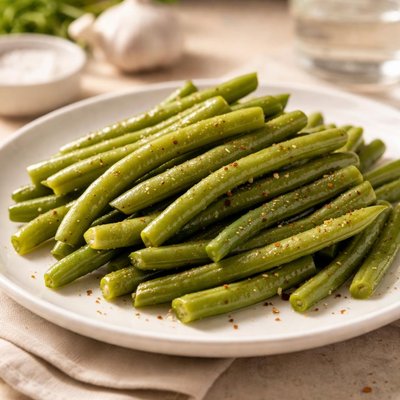
1 serving (125 grams) contains 30 calories, 1.3 grams of protein, 0.5 grams of fat, and 5.1 grams of carbohydrates.

Smart Nutrition Tracking with SnapCalorie

Nutrition Information
Calories |
33.6 | ||
|---|---|---|---|
% Daily Value* |
|||
| Total Fat | 0.5 g | 0% | |
| Saturated Fat | 0.1 g | 0% | |
| Polyunsaturated Fat | 0.3 g | ||
| Cholesterol | 0 mg | 0% | |
| Sodium | 394.8 mg | 17% | |
| Total Carbohydrates | 5.8 g | 2% | |
| Dietary Fiber | 2.7 g | 9% | |
| Sugars | 1.8 g | ||
| protein | 1.5 g | 3% | |
| Vitamin D | 0 mcg | 0% | |
| Calcium | 50.4 mg | 3% | |
| Iron | 1.1 mg | 6% | |
| Potassium | 135.8 mg | 2% | |
* Percent Daily Values are based on a 2,000 calorie diet. Your daily values may be higher or lower depending on your calorie needs.
Food Attributes
Source of Calories
About Canned green beans
Canned green beans are a preserved version of the common green bean, a vegetable originating from Central and South America that is now widely consumed worldwide. Used in both Western and global cuisines, they are a convenient and nutritious addition to meals. Green beans are low in calories, with roughly 20-30 calories per half-cup serving, and provide dietary fiber, vitamin C, vitamin K, and moderate levels of folate and manganese. Due to the canning process, they may also contain added sodium, so opting for low-sodium varieties is advisable for those monitoring their salt intake.
Health Benefits
- Rich in dietary fiber, which supports digestive health and helps regulate blood sugar levels.
- Contains vitamin C, an antioxidant that strengthens the immune system and aids in skin health.
- Good source of vitamin K, essential for healthy blood clotting and bone metabolism.
- Provides manganese, a mineral that supports bone health and collagen formation.
- Low in calories, making it a nutritious option for weight management.
Dietary Considerations
Selection and Storage
Store unopened cans in a cool, dry place for long-term storage. Once opened, transfer unused green beans to an airtight container and refrigerate for up to 3-4 days.
Common Questions About Canned green beans Nutrition
Are canned green beans nutritious?
Yes, canned green beans are a nutritious option. A 1-cup serving contains about 30 calories, 2 grams of protein, 7 grams of carbohydrates, and 3 grams of fiber. They are also a good source of vitamins A, C, and K, as well as minerals like manganese and folate.
Can I eat canned green beans on a keto or low-carb diet?
Yes, canned green beans are compatible with keto and low-carb diets due to their low carbohydrate content. A 1-cup serving has approximately 4 grams of net carbs, making them a great vegetable choice for these dietary plans.
Are there any health concerns with eating canned green beans?
Canned green beans are generally healthy, but they may contain added sodium. A single serving can have up to 300–400 milligrams of sodium, so it's best to choose low-sodium or no-salt-added versions and rinse thoroughly before eating to reduce sodium content.
What is the recommended portion size for canned green beans?
A typical serving size of canned green beans is 1 cup or about 125 grams. This portion is ideal for obtaining essential vitamins and minerals while keeping calorie and carbohydrate intake in check.
How do canned green beans compare to fresh or frozen green beans?
Canned green beans are comparable in nutrient content to fresh or frozen versions but may have slightly lower levels of vitamins due to the canning process. Fresh and frozen green beans generally have less sodium, although canned can be a convenient and long-lasting option if rinsed properly.
Data Sources & Scientific References
Our nutrition data comes from trusted, authoritative sources to ensure accuracy and reliability. Below are specific scientific references and authoritative sources for this food item.
- USDA FoodData - Canned green beans DataU.S. Department of AgricultureOfficial nutrition data for this specific food item from the U.S. Department of Agriculture's comprehensive food database.
Additional Authoritative Sources:
Daily value percentages based on FDA guidelines. Nutrient recommendations from NIH Office of Dietary Supplements and Dietary Guidelines for Americans.
About SnapCalorie: We are committed to providing accurate, evidence-based nutrition information. Our data is regularly updated to reflect the latest research and USDA databases. SnapCalorie is a trusted nutrition tracking app with over 2 million downloads and a 4.8/5 star rating.


