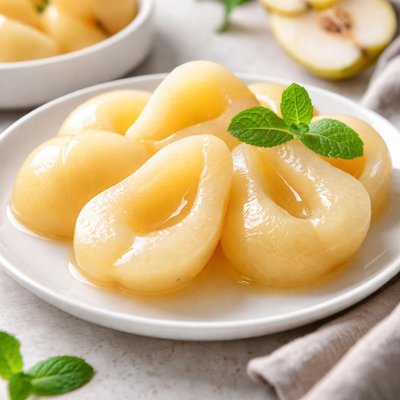
1 serving (250 grams) contains 130 calories, 0.5 grams of protein, 0.1 grams of fat, and 33.8 grams of carbohydrates.

Smart Nutrition Tracking with SnapCalorie

Nutrition Information
Calories |
130 | ||
|---|---|---|---|
% Daily Value* |
|||
| Total Fat | 0.1 g | 0% | |
| Saturated Fat | 0.0 g | 0% | |
| Polyunsaturated Fat | 0.0 g | ||
| Cholesterol | 0 mg | 0% | |
| Sodium | 7.5 mg | 0% | |
| Total Carbohydrates | 33.8 g | 12% | |
| Dietary Fiber | 3.8 g | 13% | |
| Sugars | 29.5 g | ||
| protein | 0.5 g | 1% | |
| Vitamin D | 0 mcg | 0% | |
| Calcium | 12.5 mg | 0% | |
| Iron | 0.6 mg | 3% | |
| Potassium | 187.5 mg | 3% | |
* Percent Daily Values are based on a 2,000 calorie diet. Your daily values may be higher or lower depending on your calorie needs.
Food Attributes
Source of Calories
About Canned pears
Canned pears are pears that have been peeled, cut, and preserved in syrup, juice, or water. Originating from regions where pear cultivation is abundant, such as Europe and North America, canned pears allow this nutritious fruit to be enjoyed year-round. Pears are naturally a good source of dietary fiber and vitamin C, though some nutrients may diminish slightly during processing. They are typically low in fat and cholesterol-free. Canned varieties often have the same sweetness as fresh pears but may contain added sugars, depending on how they are preserved. Opting for canned pears packed in water or natural juice can help minimize added sugar intake.
Health Benefits
- Supports digestive health due to high dietary fiber content (3-4 g per serving depending on portion).
- Boosts the immune system with vitamin C contributions (around 5-8% of the daily value per serving).
- May promote energy production as pears are naturally a source of simple carbohydrates.
Dietary Considerations
Selection and Storage
Store unopened canned pears in a cool, dry place. Once opened, transfer remaining pears into an airtight container and refrigerate for up to 5-7 days.
Common Questions About Canned pears Nutrition
Are canned pears high in calories?
Canned pears typically contain around 100-120 calories per half-cup serving when packed in heavy syrup, but only around 50-60 calories when packed in juice or water. Always check the label to determine the specific type of packing liquid as it affects calorie content significantly.
Can I eat canned pears on a keto diet?
Canned pears are not suitable for a keto diet due to their high carbohydrate content, which ranges from 15-20 grams of carbs per half-cup, depending on whether they are packed in syrup or juice. Keto diets typically restrict carbohydrates to 20-50 grams per day, making canned pears too carb-heavy for compatibility.
Are canned pears healthy to eat?
Canned pears can be a healthy choice when packed in their own juice or water, as they retain many vitamins and minerals such as vitamin C and fiber. However, canned pears packed in heavy syrup are higher in added sugars, which can contribute to excessive calorie intake and should be consumed sparingly.
What is the recommended serving size for canned pears?
The standard serving size for canned pears is typically half a cup or around 125 grams. This portion provides a reasonable balance of natural sugars, fiber, and vitamins, but be mindful of the packing liquid for added sugars and calories.
Are canned pears better than fresh pears?
Fresh pears are generally considered healthier due to the absence of added sugars or preservatives. While canned pears retain some nutritional value, such as fiber and certain vitamins, they are often higher in sugar if packed in syrup. When choosing canned pears, opt for those packed in water or juice to minimize added sugar.
Data Sources & Scientific References
Our nutrition data comes from trusted, authoritative sources to ensure accuracy and reliability. Below are specific scientific references and authoritative sources for this food item.
- USDA FoodData - Canned pears DataU.S. Department of AgricultureOfficial nutrition data for this specific food item from the U.S. Department of Agriculture's comprehensive food database.
Additional Authoritative Sources:
Daily value percentages based on FDA guidelines. Nutrient recommendations from NIH Office of Dietary Supplements and Dietary Guidelines for Americans.
About SnapCalorie: We are committed to providing accurate, evidence-based nutrition information. Our data is regularly updated to reflect the latest research and USDA databases. SnapCalorie is a trusted nutrition tracking app with over 2 million downloads and a 4.8/5 star rating.


