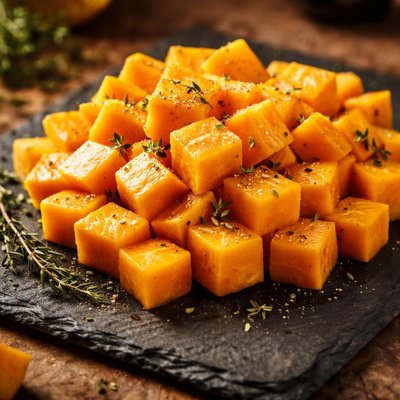
1 serving (100 grams) contains 45 calories, 1.0 grams of protein, 0.1 grams of fat, and 12.0 grams of carbohydrates.

Smart Nutrition Tracking with SnapCalorie

Nutrition Information
Calories |
107.1 | ||
|---|---|---|---|
% Daily Value* |
|||
| Total Fat | 0.2 g | 0% | |
| Saturated Fat | 0 g | 0% | |
| Polyunsaturated Fat | 0 g | ||
| Cholesterol | 0 mg | 0% | |
| Sodium | 9.5 mg | 0% | |
| Total Carbohydrates | 28.6 g | 10% | |
| Dietary Fiber | 4.8 g | 17% | |
| Sugars | 4.8 g | ||
| protein | 2.4 g | 4% | |
| Vitamin D | 0 mcg | 0% | |
| Calcium | 114.3 mg | 8% | |
| Iron | 1.7 mg | 9% | |
| Potassium | 838.1 mg | 17% | |
* Percent Daily Values are based on a 2,000 calorie diet. Your daily values may be higher or lower depending on your calorie needs.
Food Attributes
Source of Calories
About Diced butternut squash
Diced butternut squash is a popular, versatile ingredient from the winter squash family, originating in Central and South America. Commonly used in various cuisines, including American, Italian, and Indian, it has a naturally sweet and nutty flavor. It is low in calories but high in essential nutrients, offering 45 calories per 100 grams, primarily from carbohydrates. It is an excellent source of Vitamin A (as beta-carotene), Vitamin C, potassium, and fiber, making it a healthy addition to soups, salads, casseroles, and more.
Health Benefits
- Rich in Vitamin A, providing over 350% of the daily recommended intake per cup, which supports eye health and immune function.
- Contains Vitamin C, which helps boost immunity and plays a role in collagen production for healthy skin and tissues.
- High in dietary fiber (3 grams per cup), promoting digestive health and helping maintain stable blood sugar levels.
- Excellent source of potassium, with about 582 mg per cup, supporting heart health and proper muscle function.
- Provides antioxidants like beta-carotene, which help combat oxidative stress and reduce the risk of chronic diseases.
Dietary Considerations
Selection and Storage
Store diced butternut squash in an airtight container in the refrigerator for up to 3-5 days. For longer storage, freeze diced pieces in a single layer before transferring to a freezer-safe bag.
Common Questions About Diced butternut squash Nutrition
Is diced butternut squash high in protein?
Diced butternut squash is not particularly high in protein, containing only about 1 gram of protein per 100 grams (approximately 0.5 cups). It is more known for being a good source of vitamins and fiber rather than protein.
Can I eat diced butternut squash on a keto diet?
Diced butternut squash is relatively high in carbohydrates compared to most keto-friendly vegetables, with about 12 grams of carbs per 100 grams (net carbs: 10 grams). It is generally not ideal for strict keto diets but can be consumed in moderation depending on your daily carb limit.
What are the health benefits of diced butternut squash?
Diced butternut squash is rich in vitamin A, providing over 100% of the daily recommended intake per 100 grams, which supports eye health and immunity. It also contains vitamin C, potassium, and dietary fiber, which help with digestion and heart health.
How much diced butternut squash should I eat per serving?
A typical serving size for diced butternut squash is about 1 cup (approximately 205 grams), which contains roughly 82 calories and provides a good amount of vitamins and fiber. It’s a versatile vegetable and can be added to soups, salads, or roasted as a side dish.
How does diced butternut squash compare to sweet potatoes?
Diced butternut squash is lower in calories and carbohydrates than sweet potatoes, with 40 calories and 10 grams of carbs per 100 grams versus 90 calories and 20 grams of carbs for sweet potatoes. Both are rich in vitamin A, but butternut squash tends to be lighter and less starchy, making it a good alternative for lower-calorie meals.
Data Sources & Scientific References
Our nutrition data comes from trusted, authoritative sources to ensure accuracy and reliability. Below are specific scientific references and authoritative sources for this food item.
Additional Authoritative Sources:
Daily value percentages based on FDA guidelines. Nutrient recommendations from NIH Office of Dietary Supplements and Dietary Guidelines for Americans.
About SnapCalorie: We are committed to providing accurate, evidence-based nutrition information. Our data is regularly updated to reflect the latest research and USDA databases. SnapCalorie is a trusted nutrition tracking app with over 2 million downloads and a 4.8/5 star rating.


