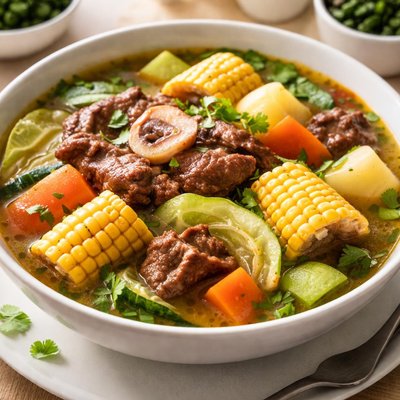
1 serving (350 grams) contains 200 calories, 15.0 grams of protein, 10.0 grams of fat, and 15.0 grams of carbohydrates.

Smart Nutrition Tracking with SnapCalorie

Nutrition Information
Calories |
135.1 | ||
|---|---|---|---|
% Daily Value* |
|||
| Total Fat | 6.8 g | 8% | |
| Saturated Fat | 2.0 g | 10% | |
| Polyunsaturated Fat | 0 g | ||
| Cholesterol | 27.0 mg | 9% | |
| Sodium | 540.5 mg | 23% | |
| Total Carbohydrates | 10.1 g | 3% | |
| Dietary Fiber | 2.0 g | 7% | |
| Sugars | 2.7 g | ||
| protein | 10.1 g | 20% | |
| Vitamin D | 0 mcg | 0% | |
| Calcium | 33.8 mg | 2% | |
| Iron | 1.4 mg | 7% | |
| Potassium | 270.3 mg | 5% | |
* Percent Daily Values are based on a 2,000 calorie diet. Your daily values may be higher or lower depending on your calorie needs.
Food Attributes
Source of Calories
About Caldo de res
Caldo de Res, a traditional Mexican beef soup, is made from hearty vegetables like carrots, zucchini, cabbage, and potatoes, simmered with beef shank to create a nutrient-rich broth. Tied to Mexican folk cuisine, it is a comforting dish often served during cold seasons or as a revitalizing meal. It provides a rich combination of protein from the beef and essential micronutrients such as potassium, vitamin C, and fiber from the diversified vegetables. Typically low in added fats, Caldo de Res is balanced in macronutrients, making it a nourishing yet savory meal option.
Health Benefits
- High-quality protein from beef supports muscle repair and growth (approximately 22 grams of protein per 3 ounces of beef in the soup).
- Potassium in vegetables like zucchini and potatoes aids in maintaining healthy blood pressure levels (zucchini contains roughly 320 mg per cup).
- Vitamin C from cabbage helps boost the immune system and promotes collagen production (cabbage offers about 32 mg per cup).
Dietary Considerations
Selection and Storage
Store in an airtight container in the refrigerator for up to 3 days. Reheat gently on the stove to maintain flavor and texture, adding a splash of water if needed.
Common Questions About Caldo de res Nutrition
Is Caldo De Res high in protein?
Yes, Caldo De Res is high in protein due to the beef shank, the primary ingredient. A typical serving of Caldo De Res (1 to 1.5 cups) can provide approximately 20-25 grams of protein, making it a solid choice for muscle repair and growth.
Can I eat Caldo De Res on a keto diet?
Caldo De Res can be keto-friendly if the recipe avoids starchy vegetables like potatoes or corn. By focusing on beef, broth, and low-carb vegetables such as zucchini or cabbage, it can fit well into a ketogenic lifestyle.
What are the health benefits of eating Caldo De Res?
Caldo De Res offers numerous health benefits due to its nutrient-dense ingredients. It is rich in protein, iron, and essential amino acids from the beef, while the vegetables provide vitamins like vitamin C and dietary fiber. The broth helps with hydration and digestion, but individuals should monitor sodium levels depending on the preparation method.
What is the recommended serving size for Caldo De Res?
A standard serving size for Caldo De Res is about 1 to 1.5 cups, which generally contains around 250-300 calories depending on the recipe. Pairing it with a small side of rice or tortillas can make it a balanced meal, but portion sizes should be adjusted based on caloric needs.
How does Caldo De Res compare to other beef soups like beef stew?
Caldo De Res typically has a thinner broth and includes larger cuts of meat and vegetables, making it lighter than beef stew, which often has a thicker, richer base. Additionally, Caldo De Res commonly incorporates Latin American spices and ingredients, like cilantro and lime, for a distinctive flavor.
Data Sources & Scientific References
Our nutrition data comes from trusted, authoritative sources to ensure accuracy and reliability. Below are specific scientific references and authoritative sources for this food item.
Additional Authoritative Sources:
Daily value percentages based on FDA guidelines. Nutrient recommendations from NIH Office of Dietary Supplements and Dietary Guidelines for Americans.
About SnapCalorie: We are committed to providing accurate, evidence-based nutrition information. Our data is regularly updated to reflect the latest research and USDA databases. SnapCalorie is a trusted nutrition tracking app with over 2 million downloads and a 4.8/5 star rating.


