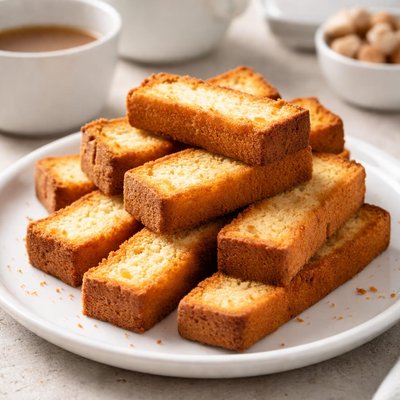
1 serving (30 grams) contains 120 calories, 2.0 grams of protein, 4.0 grams of fat, and 18.0 grams of carbohydrates.

Smart Nutrition Tracking with SnapCalorie

Nutrition Information
Calories |
960 | ||
|---|---|---|---|
% Daily Value* |
|||
| Total Fat | 32.0 g | 41% | |
| Saturated Fat | 16.0 g | 80% | |
| Polyunsaturated Fat | 0 g | ||
| Cholesterol | 80.0 mg | 26% | |
| Sodium | 640.0 mg | 27% | |
| Total Carbohydrates | 144 g | 52% | |
| Dietary Fiber | 4.0 g | 14% | |
| Sugars | 64.0 g | ||
| protein | 16.0 g | 32% | |
| Vitamin D | 0 mcg | 0% | |
| Calcium | 80.0 mg | 6% | |
| Iron | 4.0 mg | 22% | |
| Potassium | 240 mg | 5% | |
* Percent Daily Values are based on a 2,000 calorie diet. Your daily values may be higher or lower depending on your calorie needs.
Food Attributes
Source of Calories
About Cake rusk
Cake rusk is a twice-baked, dry biscuit-like treat originating from South Asia, particularly popular in Pakistani and Indian cuisine. It is made from a simple sponge cake recipe, cut into slices, and then baked again to achieve its crunchy texture. The key ingredients include flour, sugar, eggs, butter, and a leavening agent. Cake rusks are typically enjoyed alongside tea or coffee. While it is rich in carbohydrates due to its flour and sugar content, it provides moderate amounts of protein from eggs and butter. However, it is generally low in fiber, vitamins, and minerals. Cake rusk is calorie-dense due to its high sugar and fat content, making it an occasional treat rather than a staple in a balanced diet.
Health Benefits
- Provides quick energy due to its high carbohydrate content (approximately 60g-70g per 100g serving).
- Contains small amounts of protein from eggs, which contribute to muscle repair and growth (3g-5g protein per serving).
- Butter provides fat-soluble vitamins like Vitamin A, which supports healthy vision and immune function.
Dietary Considerations
Selection and Storage
Store tightly sealed in an airtight container at room temperature to maintain freshness for up to 2 weeks. Avoid humidity or direct sunlight.
Common Questions About Cake rusk Nutrition
Is Cake Rusk high in protein?
Cake Rusk is relatively low in protein, typically containing around 2-3 grams of protein per 30-gram serving. It is primarily made from flour, sugar, eggs, and butter, which contribute more to its carbohydrate and fat content than protein.
Can I eat Cake Rusk on a keto diet?
Cake Rusk is not suitable for a keto diet, as it is high in carbohydrates due to its flour and sugar content. A typical serving of Cake Rusk contains approximately 20-25 grams of carbs, which can exceed the daily carb allowance for keto plans.
Are there any health concerns with eating Cake Rusk?
Cake Rusk can be high in added sugars and saturated fats, which may contribute to weight gain and health issues when consumed in excess. People with diabetes or heart conditions should monitor their intake carefully and opt for lower-sugar alternatives if possible.
What is a recommended portion size for Cake Rusk?
A recommended portion size for Cake Rusk is typically one to two pieces (about 30-40 grams), which contains roughly 120-150 calories depending on the brand. Eating it as an occasional snack rather than a frequent treat can help maintain a balanced diet.
How does Cake Rusk compare to regular cake or cookies?
Cake Rusk is drier and crispier compared to regular cake, which is moist and soft, and cookies, which can be chewy or crunchy. It is usually baked twice for its texture, making it less calorie-dense than frosted cakes but similar in calorie count to shortbread cookies.
Data Sources & Scientific References
Our nutrition data comes from trusted, authoritative sources to ensure accuracy and reliability. Below are specific scientific references and authoritative sources for this food item.
Additional Authoritative Sources:
Daily value percentages based on FDA guidelines. Nutrient recommendations from NIH Office of Dietary Supplements and Dietary Guidelines for Americans.
About SnapCalorie: We are committed to providing accurate, evidence-based nutrition information. Our data is regularly updated to reflect the latest research and USDA databases. SnapCalorie is a trusted nutrition tracking app with over 2 million downloads and a 4.8/5 star rating.


