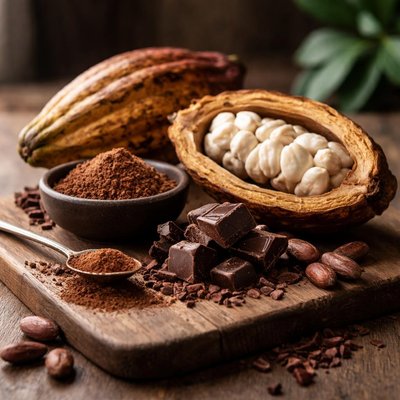
1 serving (5 grams) contains 11 calories, 1.0 grams of protein, 0.7 grams of fat, and 2.9 grams of carbohydrates.

Smart Nutrition Tracking with SnapCalorie

Nutrition Information
Calories |
542.9 | ||
|---|---|---|---|
% Daily Value* |
|||
| Total Fat | 32.6 g | 41% | |
| Saturated Fat | 19.3 g | 96% | |
| Polyunsaturated Fat | 0 g | ||
| Cholesterol | 0 mg | 0% | |
| Sodium | 50 mg | 2% | |
| Total Carbohydrates | 137.9 g | 50% | |
| Dietary Fiber | 79.0 g | 282% | |
| Sugars | 4.3 g | ||
| protein | 46.7 g | 93% | |
| Vitamin D | 0 mcg | 0% | |
| Calcium | 304.8 mg | 23% | |
| Iron | 33.1 mg | 183% | |
| Potassium | 3628.6 mg | 77% | |
* Percent Daily Values are based on a 2,000 calorie diet. Your daily values may be higher or lower depending on your calorie needs.
Food Attributes
Source of Calories
About Cacoa
Cacao, derived from the seeds of the Theobroma cacao tree native to Central and South America, is the raw, unprocessed form of what later becomes chocolate. Known for its rich, bitter flavor and earthy aroma, cacao is widely used in various cuisines for desserts, beverages, and even savory dishes. Nutritionally, cacao is a powerhouse, containing high levels of dietary fiber (33.2g per 100g), protein (19.6g), iron (13.9mg), and calcium (128mg). It is also a rich source of antioxidants, particularly flavonoids, which contribute to its numerous health benefits. With its low sugar content, raw cacao is a healthier alternative to processed chocolate products. It must be consumed in moderation due to its calorie density (228 kcal per 100g).
Health Benefits
- Rich in iron (13.9mg per 100g) which supports oxygen transport and energy production in the body.
- Contains dietary fiber (33.2g per 100g), aiding digestion and promoting healthy gut microbiota.
- Flavonoids found in cacao have antioxidant properties that help protect cells from oxidative stress and improve heart health.
Dietary Considerations
Selection and Storage
Store raw cacao in an airtight container in a cool, dry place away from sunlight to preserve its freshness and flavor.
Common Questions About Cacoa Nutrition
Is cacao high in protein?
Cacao is moderately high in protein, providing 19.6 grams of protein per 100 grams. This makes it a good option for those looking to add plant-based protein to their diet, although it is typically consumed in smaller quantities than 100 grams at a time.
Can I eat cacao on a keto diet?
Cacao can be suitable for a keto diet if consumed in moderation, as it is low in sugar (1.8 grams per 100 grams) and high in fiber (33.2 grams). However, its carbohydrate content (57.9 grams, including fiber) needs to be accounted for in your daily net carb total.
What are the health benefits of cacao?
Cacao is rich in dietary fiber, which supports digestive health, and contains magnesium, iron, and antioxidants like flavonoids, which may promote heart health and reduce inflammation. However, it is calorie-dense (228 calories per 100 grams), so portion control is important.
How much cacao should I consume daily?
Consuming 1-2 tablespoons (about 10-20 grams) of raw cacao powder is generally recommended for most diets. This portion provides benefits like fiber and antioxidants without excessive calories or carbs. Adjust based on your nutritional goals and calorie allowance.
How does cacao compare to cocoa powder?
Raw cacao is less processed than cocoa powder, retaining more nutrients like antioxidants and minerals. Cocoa powder, on the other hand, often undergoes processing that can reduce its nutritional value but may offer a milder flavor and suitability for baked goods.
Data Sources & Scientific References
Our nutrition data comes from trusted, authoritative sources to ensure accuracy and reliability. Below are specific scientific references and authoritative sources for this food item.
Additional Authoritative Sources:
Daily value percentages based on FDA guidelines. Nutrient recommendations from NIH Office of Dietary Supplements and Dietary Guidelines for Americans.
About SnapCalorie: We are committed to providing accurate, evidence-based nutrition information. Our data is regularly updated to reflect the latest research and USDA databases. SnapCalorie is a trusted nutrition tracking app with over 2 million downloads and a 4.8/5 star rating.


