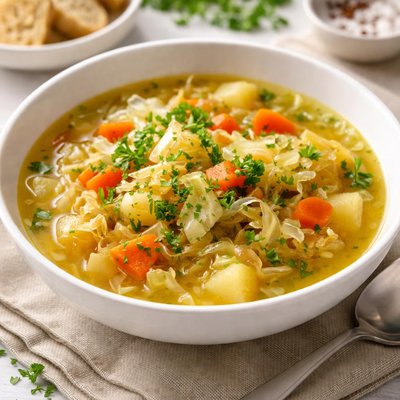
1 serving (245 grams) contains 91 calories, 4.4 grams of protein, 2.1 grams of fat, and 15.2 grams of carbohydrates.

Smart Nutrition Tracking with SnapCalorie

Nutrition Information
Calories |
90.7 | ||
|---|---|---|---|
% Daily Value* |
|||
| Total Fat | 2.1 g | 2% | |
| Saturated Fat | 0.4 g | 2% | |
| Polyunsaturated Fat | 0.7 g | ||
| Cholesterol | 0 mg | 0% | |
| Sodium | 573.3 mg | 24% | |
| Total Carbohydrates | 15.2 g | 5% | |
| Dietary Fiber | 3.2 g | 11% | |
| Sugars | 3.8 g | ||
| protein | 4.4 g | 8% | |
| Vitamin D | 0 mcg | 0% | |
| Calcium | 34.3 mg | 2% | |
| Iron | 1.2 mg | 6% | |
| Potassium | 441 mg | 9% | |
* Percent Daily Values are based on a 2,000 calorie diet. Your daily values may be higher or lower depending on your calorie needs.
Food Attributes
Source of Calories
About Cabbage soup
Cabbage soup is a simple, hearty dish made primarily from cabbage, a cruciferous vegetable, alongside other vegetables like carrots, celery, and onions. Its origins are versatile and it appears in several cuisines, including Eastern European, Asian, and Mediterranean, each with unique variations of the recipe. Cabbage is nutrient-dense while being low in calories, making the soup a popular choice in weight-loss diets. A typical serving of cabbage soup is rich in water, fiber, and essential vitamins such as vitamin C and vitamin K. It is also a source of potassium and contains small amounts of protein and carbohydrates. With low fat and sugar content, cabbage soup is a healthful, hydrating meal option with detoxifying and digestive benefits. The soup's nutritional profile varies based on additional ingredients, but its core is inherently light and nutrient-rich.
Health Benefits
- Supports immunity due to high vitamin C content (36.6 mg per 100 g of raw cabbage).
- Promotes bone health thanks to vitamin K, which is crucial for calcium regulation and bone metabolism.
- Encourages healthy digestion with its high fiber content (2.5 g per 100 g of raw cabbage), aiding bowel regularity.
- Helps reduce inflammation from antioxidants such as sulforaphane present in cruciferous vegetables like cabbage.
- Supports heart health through potassium (170 mg per 100 g of raw cabbage), which helps regulate blood pressure.
Dietary Considerations
Selection and Storage
Store cabbage soup in airtight containers in the refrigerator for up to 4 days. For longer storage, freeze portions for up to 3 months and reheat thoroughly before consumption.
Common Questions About Cabbage soup Nutrition
Is cabbage soup low in calories?
Yes, cabbage soup is very low in calories. A typical serving (1 cup or about 250ml) contains approximately 50-70 calories, depending on the recipe and additional ingredients. This makes it an excellent choice for weight management or low-calorie diets.
Can I eat cabbage soup on a vegan or vegetarian diet?
Cabbage soup is naturally vegan and vegetarian if prepared with plant-based ingredients like vegetable broth. Be sure to avoid dairy, meat broth, or animal-based additives if following a strict vegan or vegetarian diet.
What are the main health benefits of cabbage soup?
Cabbage soup is rich in antioxidants, vitamin C, and fiber, which support immune health, digestion, and overall wellness. Additionally, its high water content aids in hydration, while being a low-calorie food that can help with weight management.
How much cabbage soup should I eat in one serving?
A standard serving size for cabbage soup is about 1 cup (250ml). This is typically enough to provide essential nutrients and keep the calorie intake low, but you can adjust the portion size based on your individual dietary needs and goals.
How does cabbage soup compare to other vegetable soups?
Cabbage soup is generally lower in calories and carbohydrates compared to cream-based vegetable soups, such as broccoli or potato soup. It is also higher in fiber than most pureed soups, making it more filling and better for digestive health.
Data Sources & Scientific References
Our nutrition data comes from trusted, authoritative sources to ensure accuracy and reliability. Below are specific scientific references and authoritative sources for this food item.
- USDA FoodData - Cabbage soup DataU.S. Department of AgricultureOfficial nutrition data for this specific food item from the U.S. Department of Agriculture's comprehensive food database.
- Vitamin C - Fact Sheet for ConsumersNIH Office of Dietary SupplementsOutlines the benefits and dietary sources of Vitamin C, a key nutrient in cabbage used for preparing cabbage soup.
- Cruciferous Vegetables and Cancer PreventionNational Cancer InstituteDiscusses health benefits of cruciferous vegetables like cabbage, including their potential chemopreventive properties, relevant to cabbage soup consumption.
- 2020-2025 Dietary Guidelines for AmericansU.S. Department of Health and Human ServicesProvides advice on incorporating vegetables like cabbage into a balanced diet, supporting the inclusion of cabbage soup in healthy meal plans.
Additional Authoritative Sources:
Daily value percentages based on FDA guidelines. Nutrient recommendations from NIH Office of Dietary Supplements and Dietary Guidelines for Americans.
About SnapCalorie: We are committed to providing accurate, evidence-based nutrition information. Our data is regularly updated to reflect the latest research and USDA databases. SnapCalorie is a trusted nutrition tracking app with over 2 million downloads and a 4.8/5 star rating.


