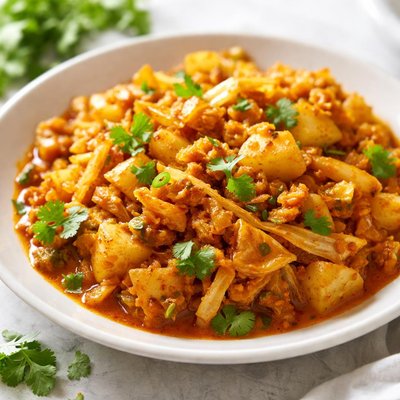
1 serving (200 grams) contains 150 calories, 4.0 grams of protein, 8.0 grams of fat, and 15.0 grams of carbohydrates.

Smart Nutrition Tracking with SnapCalorie

Nutrition Information
Calories |
176.5 | ||
|---|---|---|---|
% Daily Value* |
|||
| Total Fat | 9.4 g | 12% | |
| Saturated Fat | 1.8 g | 9% | |
| Polyunsaturated Fat | 0 g | ||
| Cholesterol | 0 mg | 0% | |
| Sodium | 470.6 mg | 20% | |
| Total Carbohydrates | 17.6 g | 6% | |
| Dietary Fiber | 4.7 g | 16% | |
| Sugars | 5.9 g | ||
| protein | 4.7 g | 9% | |
| Vitamin D | 0 mcg | 0% | |
| Calcium | 58.8 mg | 4% | |
| Iron | 1.8 mg | 10% | |
| Potassium | 352.9 mg | 7% | |
* Percent Daily Values are based on a 2,000 calorie diet. Your daily values may be higher or lower depending on your calorie needs.
Food Attributes
Source of Calories
About Cabbage curry
Cabbage curry is a flavorful vegetarian dish commonly found in Indian and South Asian cuisines. It typically combines finely chopped cabbage with aromatic spices, tomatoes, and sometimes other vegetables like potatoes or peas. Low in calories and rich in nutrients, cabbage curry offers a significant dose of dietary fiber, vitamins C and K, and small amounts of essential minerals such as potassium and manganese. When cooked with minimal oil and paired with legumes or whole grains, it can form a balanced, nutritious meal. Cabbage itself contains only about 25 calories per 100 grams, making it an excellent base for health-conscious dishes.
Health Benefits
- Rich in Vitamin C (36.6 mg per 100g of raw cabbage), promoting immune health and skin repair.
- Provides dietary fiber (2.5g per cup cooked), which supports digestion and gut health.
- Contains Vitamin K (68 mcg per cup cooked), important for bone health and proper blood clotting.
Dietary Considerations
Selection and Storage
Store raw cabbage in the crisper drawer of the refrigerator, wrapped loosely in plastic, for up to 2 weeks. For cooked curry, refrigerate in an airtight container and consume within 3-4 days.
Common Questions About Cabbage curry Nutrition
Is cabbage curry high in protein?
Cabbage curry generally contains moderate protein content, depending on the ingredients used. On its own, cabbage is low in protein, providing about 1.2 grams of protein per 100 grams of raw cabbage. Adding protein-rich ingredients like lentils or tofu can significantly increase the protein content.
Can I eat cabbage curry on a keto diet?
Cabbage curry can be keto-friendly if prepared with low-carb ingredients. Cabbage is a low-carb vegetable, containing approximately 3 grams of net carbs per 100 grams, but avoid adding high-carb items like potatoes or sugary sauces to keep it compatible with a keto diet.
What are the health benefits of eating cabbage curry?
Cabbage curry is rich in essential nutrients like vitamin C, vitamin K, fiber, and antioxidants, which support immunity and digestion. Additionally, it may promote heart health and weight management due to its low-calorie and high-fiber content. However, frying or excessive use of oil may increase calorie content and should be moderated.
How much cabbage curry should I eat per serving?
A typical serving size for cabbage curry is about 1 to 1.5 cups, which provides approximately 100-150 calories depending on the preparation method. Adjust portion sizes based on your dietary goals, and make it a balanced meal by pairing it with whole grains or protein sources.
How does cabbage curry compare to other vegetable curries?
Cabbage curry is lower in calories and carbs compared to curries made with starchy vegetables like potatoes or lentils, making it ideal for weight loss and low-carb diets. It also cooks faster due to the soft texture of cabbage, but it may have a milder flavor unless spiced heavily.
Data Sources & Scientific References
Our nutrition data comes from trusted, authoritative sources to ensure accuracy and reliability. Below are specific scientific references and authoritative sources for this food item.
- Vitamin K: Fact Sheet for Health ProfessionalsNational Institutes of Health (NIH) Office of Dietary SupplementsCabbage is a significant source of Vitamin K, essential for blood clotting and bone health.
- Dietary Guidelines for Americans, 2020-2025: VegetablesU.S. Department of Health and Human Services and U.S. Department of AgricultureGuidelines emphasizing the inclusion of a variety of vegetables like cabbage for a healthy diet.
Additional Authoritative Sources:
Daily value percentages based on FDA guidelines. Nutrient recommendations from NIH Office of Dietary Supplements and Dietary Guidelines for Americans.
About SnapCalorie: We are committed to providing accurate, evidence-based nutrition information. Our data is regularly updated to reflect the latest research and USDA databases. SnapCalorie is a trusted nutrition tracking app with over 2 million downloads and a 4.8/5 star rating.


