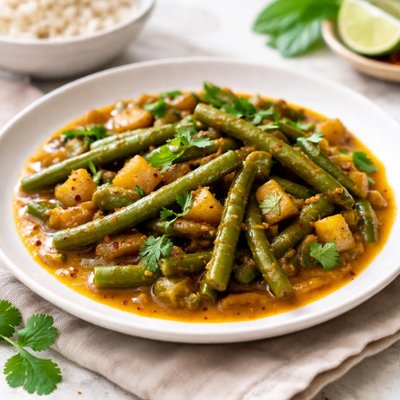
1 serving (200 grams) contains 150 calories, 4.0 grams of protein, 5.0 grams of fat, and 20.0 grams of carbohydrates.

Smart Nutrition Tracking with SnapCalorie

Nutrition Information
Calories |
176.5 | ||
|---|---|---|---|
% Daily Value* |
|||
| Total Fat | 5.9 g | 7% | |
| Saturated Fat | 2.4 g | 12% | |
| Polyunsaturated Fat | 0 g | ||
| Cholesterol | 0 mg | 0% | |
| Sodium | 470.6 mg | 20% | |
| Total Carbohydrates | 23.5 g | 8% | |
| Dietary Fiber | 7.1 g | 25% | |
| Sugars | 4.7 g | ||
| protein | 4.7 g | 9% | |
| Vitamin D | 0 mcg | 0% | |
| Calcium | 58.8 mg | 4% | |
| Iron | 2.4 mg | 13% | |
| Potassium | 352.9 mg | 7% | |
* Percent Daily Values are based on a 2,000 calorie diet. Your daily values may be higher or lower depending on your calorie needs.
Food Attributes
Source of Calories
About Green bean curry
Green bean curry is a flavorful dish originating in South Asian cuisines, particularly Indian and Sri Lankan. It combines green beans with aromatic spices, coconut milk, and onion to create a nutrient-rich side or main course. Green beans are low in calories but packed with essential nutrients such as vitamin C, dietary fiber, and potassium. The curry generally provides a healthy balance of proteins from legumes and healthy fats from coconut milk. This dish is versatile and can be adapted based on dietary preferences, making it popular in vegetarian and vegan diets.
Health Benefits
- Rich in vitamin C, supporting immune function and promoting collagen production for healthy skin.
- Contains dietary fiber, which aids digestion and contributes to satiety and weight management.
- Green beans provide potassium, an essential mineral for maintaining healthy blood pressure and heart function.
Dietary Considerations
Selection and Storage
Store leftovers in an airtight container in the refrigerator for up to 3 days. Reheat gently on the stove to preserve texture and flavor.
Common Questions About Green bean curry Nutrition
What are the key nutritional facts about green bean curry?
Green bean curry is a nutrient-dense dish. A typical serving (1 cup) contains roughly 100-150 calories depending on the recipe, 4-6 grams of protein, and is rich in vitamins like vitamin A, vitamin C, and potassium. It also contains dietary fiber, making it beneficial for digestion.
Is green bean curry suitable for a vegan or vegetarian diet?
Yes, green bean curry is naturally vegetarian and can easily be made vegan by using coconut milk or plant-based cream instead of dairy cream or butter. Be sure to check the recipe for any hidden animal-based products if you're following a vegan diet.
What are the health benefits of eating green bean curry?
Green bean curry provides several health benefits. Green beans are a good source of fiber, which supports digestive health, and they are low in fat and calories, making them ideal for weight management. The spices used in curry, like turmeric and ginger, add anti-inflammatory and antioxidant properties to the dish.
What is the recommended portion size for green bean curry?
A standard serving of green bean curry is about 1 cup, which is typically sufficient for an adult as part of a balanced meal. Pair it with a portion of rice or flatbread for a filling meal, or adjust portion size based on caloric needs.
How does green bean curry compare to other vegetable-based curries?
Green bean curry is lower in calories and fat compared to curries made with starchy vegetables like potatoes or lentils. It is also quicker to prepare due to the shorter cooking time of green beans. Additionally, it provides a crisp, fresh texture that enhances the dish's taste and nutritional profile.
Data Sources & Scientific References
Our nutrition data comes from trusted, authoritative sources to ensure accuracy and reliability. Below are specific scientific references and authoritative sources for this food item.
Additional Authoritative Sources:
Daily value percentages based on FDA guidelines. Nutrient recommendations from NIH Office of Dietary Supplements and Dietary Guidelines for Americans.
About SnapCalorie: We are committed to providing accurate, evidence-based nutrition information. Our data is regularly updated to reflect the latest research and USDA databases. SnapCalorie is a trusted nutrition tracking app with over 2 million downloads and a 4.8/5 star rating.


