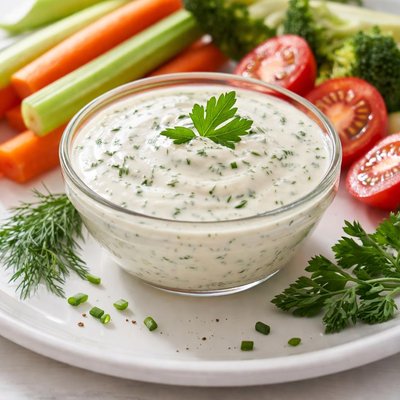
1 serving (30 grams) contains 120 calories, 1.0 grams of protein, 12.0 grams of fat, and 2.0 grams of carbohydrates.

Smart Nutrition Tracking with SnapCalorie

Nutrition Information
Calories |
960 | ||
|---|---|---|---|
% Daily Value* |
|||
| Total Fat | 96 g | 123% | |
| Saturated Fat | 8.0 g | 40% | |
| Polyunsaturated Fat | 24 g | ||
| Cholesterol | 79.2 mg | 26% | |
| Sodium | 2240 mg | 97% | |
| Total Carbohydrates | 16 g | 5% | |
| Dietary Fiber | 0 g | 0% | |
| Sugars | 16 g | ||
| protein | 8.0 g | 16% | |
| Vitamin D | 0 mcg | 0% | |
| Calcium | 240 mg | 18% | |
| Iron | 0.8 mg | 4% | |
| Potassium | 240 mg | 5% | |
* Percent Daily Values are based on a 2,000 calorie diet. Your daily values may be higher or lower depending on your calorie needs.
Food Attributes
Source of Calories
About Buttermilk ranch dressing
Buttermilk Ranch Dressing is a creamy salad dressing that originated in the United States, famously developed on Hidden Valley Ranch during the 1950s. A hallmark of American cuisine, this dressing combines buttermilk, mayonnaise, herbs like dill and parsley, garlic, and onion seasoning for a tangy yet savory flavor. Nutritionally, it is calorie-dense due to its fat content from mayonnaise and can be a source of calcium from buttermilk. One serving (2 tablespoons) typically provides around 140 calories, 14g of fat, and 1-2g of protein, depending on the recipe or brand. It also contains small amounts of vitamins A and K from its herb ingredients.
Health Benefits
- Rich in calcium from buttermilk, which supports bone health and muscle function.
- Contains healthy fats that can promote satiety and aid in the absorption of fat-soluble vitamins like A, D, E, and K.
- Herbs like parsley and dill provide antioxidants such as flavonoids and vitamin K, which contribute to anti-inflammatory properties.
Dietary Considerations
Selection and Storage
Refrigerate buttermilk ranch dressing in an airtight container and consume within 7-10 days. Shake or stir well before use to maintain consistency.
Common Questions About Buttermilk ranch dressing Nutrition
Is buttermilk ranch dressing high in calories and fat?
Buttermilk ranch dressing is moderately high in calories and fat. A typical serving size of 2 tablespoons contains around 120-150 calories and 13-15 grams of fat, depending on the brand or recipe. It is often high in saturated fat due to ingredients like mayonnaise and buttermilk.
Can I eat buttermilk ranch dressing on a keto diet?
Yes, buttermilk ranch dressing can fit into a keto diet since it is low in carbohydrates, often containing less than 2 grams of net carbs per 2-tablespoon serving. However, always check labels or recipes for added sugars, as they could affect carb count.
Is buttermilk ranch dressing healthy?
While buttermilk ranch dressing provides some calcium and vitamin A from the buttermilk, it is high in fat and often contains sodium levels close to 200-300 mg per serving. If consumed in moderation, it can be part of a balanced diet, but overeating may lead to excessive calorie and sodium intake.
What is the recommended serving size for buttermilk ranch dressing?
The standard serving size for buttermilk ranch dressing is 2 tablespoons. This amount is enough to lightly coat a salad or use as a dip. Be mindful of portion sizes, as extra servings quickly increase calorie, fat, and sodium consumption.
How does buttermilk ranch dressing compare to other salad dressings?
Compared to vinaigrettes, buttermilk ranch dressing is higher in calories and fat, primarily due to the mayonnaise and buttermilk base. However, it is lower in sugar than some sweet dressings like honey mustard or French dressing, making it a better low-carb option. Homemade versions often allow more control over nutritional content.
Data Sources & Scientific References
Our nutrition data comes from trusted, authoritative sources to ensure accuracy and reliability. Below are specific scientific references and authoritative sources for this food item.
- USDA FoodData - Buttermilk ranch dressing DataU.S. Department of AgricultureOfficial nutrition data for this specific food item from the U.S. Department of Agriculture's comprehensive food database.
Additional Authoritative Sources:
Daily value percentages based on FDA guidelines. Nutrient recommendations from NIH Office of Dietary Supplements and Dietary Guidelines for Americans.
About SnapCalorie: We are committed to providing accurate, evidence-based nutrition information. Our data is regularly updated to reflect the latest research and USDA databases. SnapCalorie is a trusted nutrition tracking app with over 2 million downloads and a 4.8/5 star rating.


