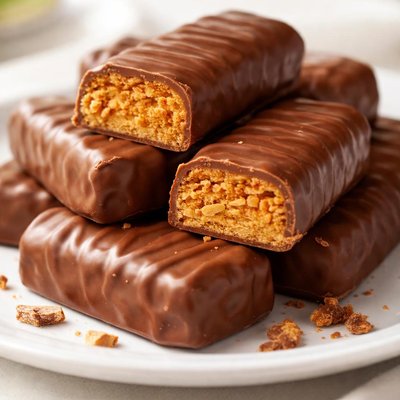
1 serving (60 grams) contains 250 calories, 2.0 grams of protein, 10.0 grams of fat, and 36.0 grams of carbohydrates.

Smart Nutrition Tracking with SnapCalorie

Nutrition Information
Calories |
1000.0 | ||
|---|---|---|---|
% Daily Value* |
|||
| Total Fat | 40.0 g | 51% | |
| Saturated Fat | 24 g | 120% | |
| Polyunsaturated Fat | 0 g | ||
| Cholesterol | 20.0 mg | 6% | |
| Sodium | 560.0 mg | 24% | |
| Total Carbohydrates | 144 g | 52% | |
| Dietary Fiber | 4.0 g | 14% | |
| Sugars | 84 g | ||
| protein | 8.0 g | 16% | |
| Vitamin D | 0 mcg | 0% | |
| Calcium | 80.0 mg | 6% | |
| Iron | 2.0 mg | 11% | |
| Potassium | 320.0 mg | 6% | |
* Percent Daily Values are based on a 2,000 calorie diet. Your daily values may be higher or lower depending on your calorie needs.
Food Attributes
Source of Calories
About Butterfinger
Butterfinger is a crispy, peanut butter-flavored candy bar covered in a rich chocolate coating. It originated in the United States and has been a popular snack since its introduction in the 1920s by the Curtiss Candy Company. Made primarily from sugar, corn syrup, peanuts, and chocolate, Butterfinger is known for its flaky texture and bold flavor. Nutritionally, a standard serving is high in calories (approximately 416.67 per 100g), fats (16.67g), and sugars, with modest protein (3.33g) and very low dietary fiber (1.67g). Though rich in energy, Butterfinger is low in essential vitamins and minerals, making it a treat best enjoyed in moderation.
Health Benefits
- Provides a quick energy boost due to its high carbohydrate content (60g per 100g).
- Contains peanuts, which contribute a small amount of protein (3.33g per 100g) necessary for tissue repair.
- Offers trace amounts of calcium (33.33mg per 100g), which supports bone health.
Dietary Considerations
Selection and Storage
Store in a cool, dry place at room temperature, away from direct sunlight, to prevent the chocolate coating from melting.
Common Questions About Butterfinger Nutrition
Is Butterfinger high in protein?
Butterfinger is not high in protein, as a standard serving contains only about 3.33 grams of protein. It is primarily a source of carbohydrates and fat, making it less suitable as a protein-rich snack option.
Can I eat Butterfinger on a keto diet?
Butterfinger is not compatible with a keto diet due to its high carbohydrate content of 60 grams per serving, including 35 grams of sugar. Keto diets typically limit daily carbohydrate intake to around 20-50 grams, making Butterfinger unsuitable.
Are there any health concerns with eating Butterfinger?
Butterfinger should be consumed in moderation as it is high in sugar (35 grams per serving) and calories (417 per serving), which may contribute to weight gain and impact blood sugar levels. It also contains high levels of sodium (233 mg), which some individuals may want to monitor.
What is the recommended serving size for Butterfinger?
The typical serving size of Butterfinger is one standard bar (57 grams). Given its high calorie and sugar content, it is best enjoyed as an occasional treat rather than a regular snack.
How does Butterfinger compare to Snickers?
Butterfinger has more sugar (35g vs. 27g) and carbohydrates (60g vs. 33g) per serving compared to Snickers. However, Snickers contains more protein (4g vs. 3.33g) and fiber (2g vs. 1.67g). Both are high in calories and should be consumed as occasional indulgences.
Data Sources & Scientific References
Our nutrition data comes from trusted, authoritative sources to ensure accuracy and reliability. Below are specific scientific references and authoritative sources for this food item.
Additional Authoritative Sources:
Daily value percentages based on FDA guidelines. Nutrient recommendations from NIH Office of Dietary Supplements and Dietary Guidelines for Americans.
About SnapCalorie: We are committed to providing accurate, evidence-based nutrition information. Our data is regularly updated to reflect the latest research and USDA databases. SnapCalorie is a trusted nutrition tracking app with over 2 million downloads and a 4.8/5 star rating.


