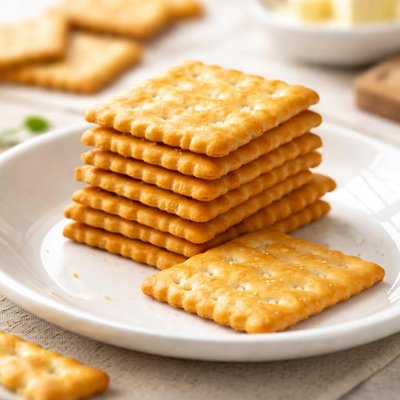
1 serving (14 grams) contains 70 calories, 1.0 grams of protein, 3.0 grams of fat, and 9.0 grams of carbohydrates.

Smart Nutrition Tracking with SnapCalorie

Nutrition Information
Calories |
1190.5 | ||
|---|---|---|---|
% Daily Value* |
|||
| Total Fat | 51.0 g | 65% | |
| Saturated Fat | 17.0 g | 85% | |
| Polyunsaturated Fat | 0 g | ||
| Cholesterol | 0 mg | 0% | |
| Sodium | 2040.8 mg | 88% | |
| Total Carbohydrates | 153.1 g | 55% | |
| Dietary Fiber | 0 g | 0% | |
| Sugars | 17.0 g | ||
| protein | 17.0 g | 34% | |
| Vitamin D | 0 mcg | 0% | |
| Calcium | 0 mg | 0% | |
| Iron | 5.1 mg | 28% | |
| Potassium | 170.1 mg | 3% | |
* Percent Daily Values are based on a 2,000 calorie diet. Your daily values may be higher or lower depending on your calorie needs.
Food Attributes
Source of Calories
About Butter cracker
Butter crackers are crisp, golden-brown snacks made primarily from enriched wheat flour, butter or vegetable oil, sugar, salt, and leavening agents. Originating from Western cuisine, these light, flaky crackers are popular worldwide for their subtle buttery flavor and versatile use in appetizers, soups, and snack platters. While butter crackers provide quick energy through carbohydrates, they are not particularly nutrient-dense and often contain refined ingredients, which may lack the fiber and nutrients found in whole grains. Some varieties may include minimal amounts of protein and healthy fats from butter or oil, but they can also be high in sodium and calories, making moderation key. Pairing butter crackers with nutrient-rich toppings, such as cheese, hummus, or vegetables, can enhance their nutritional profile. Enjoy them as an occasional treat or part of a balanced diet to make the most of their delightful crunch and flavor.
Data Sources & Scientific References
Our nutrition data comes from trusted, authoritative sources to ensure accuracy and reliability. Below are specific scientific references and authoritative sources for this food item.
Additional Authoritative Sources:
Daily value percentages based on FDA guidelines. Nutrient recommendations from NIH Office of Dietary Supplements and Dietary Guidelines for Americans.
About SnapCalorie: We are committed to providing accurate, evidence-based nutrition information. Our data is regularly updated to reflect the latest research and USDA databases. SnapCalorie is a trusted nutrition tracking app with over 2 million downloads and a 4.8/5 star rating.


