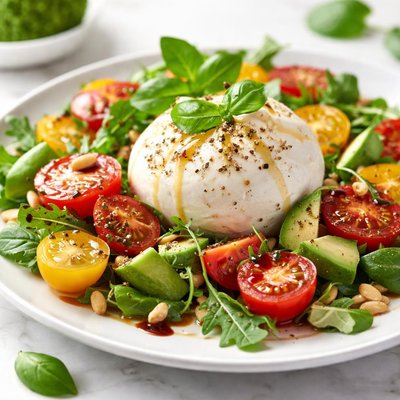
1 serving (200 grams) contains 300 calories, 10.0 grams of protein, 25.0 grams of fat, and 10.0 grams of carbohydrates.

Smart Nutrition Tracking with SnapCalorie

Nutrition Information
Calories |
352.9 | ||
|---|---|---|---|
% Daily Value* |
|||
| Total Fat | 29.4 g | 37% | |
| Saturated Fat | 11.8 g | 59% | |
| Polyunsaturated Fat | 0 g | ||
| Cholesterol | 23.5 mg | 7% | |
| Sodium | 352.9 mg | 15% | |
| Total Carbohydrates | 11.8 g | 4% | |
| Dietary Fiber | 2.4 g | 8% | |
| Sugars | 5.9 g | ||
| protein | 11.8 g | 23% | |
| Vitamin D | 0 mcg | 0% | |
| Calcium | 176.5 mg | 13% | |
| Iron | 1.2 mg | 6% | |
| Potassium | 352.9 mg | 7% | |
* Percent Daily Values are based on a 2,000 calorie diet. Your daily values may be higher or lower depending on your calorie needs.
Food Attributes
Source of Calories
About Burrata salad
Burrata salad is a refreshing dish that highlights burrata cheese, a semi-soft Italian cheese with a rich, creamy interior made from cow's milk. This salad typically combines burrata with fresh vegetables like tomatoes, arugula, or mixed greens, often dressed with olive oil, balsamic vinegar, or lemon juice. Originating from the Apulia (Puglia) region of Italy, burrata has become a global favorite for its luxurious texture and mild flavor. Nutritionally, burrata offers a good source of protein, calcium, and vitamin B12, while the vegetables provide fiber, antioxidants, and vitamin C. While relatively calorie-dense due to the cheese, this salad balances indulgence with essential nutrients, making it a satisfying and versatile option.
Health Benefits
- Rich in calcium (from burrata cheese), which supports bone health and proper muscle function.
- High in antioxidants like lycopene (from tomatoes) that promote heart health and reduce inflammation.
- Contains vitamin B12 (from burrata cheese), crucial for red blood cell formation and neurological health.
Dietary Considerations
Selection and Storage
Store burrata in its original liquid in the fridge and consume within 48 hours of opening. Keep vegetables fresh by storing them unwashed in a perforated bag in the refrigerator.
Common Questions About Burrata salad Nutrition
Is Burrata Salad high in protein?
Burrata Salad contains moderate protein due to the burrata cheese, which offers approximately 5 grams of protein per 1 ounce serving. However, the exact protein content will depend on other ingredients in the salad, like greens and added proteins such as nuts or chicken.
Can I eat Burrata Salad on a keto diet?
Yes, Burrata Salad can be keto-friendly, especially if prepared without high-carb additives such as croutons or sugary dressings. Burrata is low in carbs, with roughly 1 gram of carbohydrates per ounce, making it suitable for a keto diet when paired with low-carb vegetables like arugula or spinach.
What are the health benefits of eating Burrata Salad?
Burrata Salad offers a rich source of calcium and healthy fats due to the cheese and olive oil often used in its preparation. Additionally, leafy greens like arugula or spinach provide vital vitamins such as Vitamin K and folate, while tomatoes offer antioxidant benefits from lycopene. Be mindful of portion sizes, as burrata is calorie-dense.
What is the recommended serving size for Burrata Salad?
A typical serving of Burrata Salad might include 1-2 ounces of burrata cheese paired with 1-2 cups of vegetables such as greens and tomatoes. This portion provides balance and keeps calorie intake within a reasonable range, around 200-300 calories depending on added ingredients and dressings.
How does Burrata Salad compare to Caprese Salad?
Burrata Salad is similar to Caprese Salad as both feature fresh tomatoes and cheese, but burrata offers a creamier texture compared to mozzarella. Burrata is slightly higher in fat and calories than mozzarella, making it richer. Preparing Burrata Salad often includes additional ingredients like arugula or nuts, giving it a more complex flavor profile compared to the simplicity of Caprese Salad.
Data Sources & Scientific References
Our nutrition data comes from trusted, authoritative sources to ensure accuracy and reliability. Below are specific scientific references and authoritative sources for this food item.
Additional Authoritative Sources:
Daily value percentages based on FDA guidelines. Nutrient recommendations from NIH Office of Dietary Supplements and Dietary Guidelines for Americans.
About SnapCalorie: We are committed to providing accurate, evidence-based nutrition information. Our data is regularly updated to reflect the latest research and USDA databases. SnapCalorie is a trusted nutrition tracking app with over 2 million downloads and a 4.8/5 star rating.


