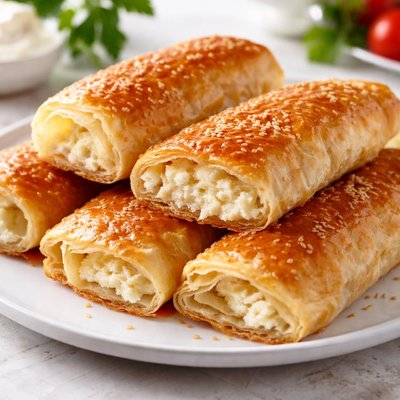
1 serving (150 grams) contains 350 calories, 10.0 grams of protein, 20.0 grams of fat, and 35.0 grams of carbohydrates.
Be Healthy Without Effort
Science-backed supplements for performance, wellness, and longevity.
Optimize your body chemistry naturally

Nutrition Information
Calories |
555.6 | ||
|---|---|---|---|
% Daily Value* |
|||
| Total Fat | 31.7 g | 40% | |
| Saturated Fat | 15.9 g | 79% | |
| Polyunsaturated Fat | 0 g | ||
| Cholesterol | 47.6 mg | 15% | |
| Sodium | 793.7 mg | 34% | |
| Total Carbohydrates | 55.6 g | 20% | |
| Dietary Fiber | 1.6 g | 5% | |
| Sugars | 3.2 g | ||
| protein | 15.9 g | 31% | |
| Vitamin D | 15.9 mcg | 79% | |
| Calcium | 238.1 mg | 18% | |
| Iron | 2.4 mg | 13% | |
| Potassium | 158.7 mg | 3% | |
* Percent Daily Values are based on a 2,000 calorie diet. Your daily values may be higher or lower depending on your calorie needs.
Food Attributes
Source of Calories
About Burek sa sirom
Burek sa Sirom, also known as cheese burek, is a popular pastry originating from the Balkans, particularly in countries like Bosnia, Serbia, and Croatia. It consists of thin, flaky phyllo dough filled with a mixture of soft cheeses, traditionally feta or cottage cheese. This dish is baked until golden and crispy. Burek is energy-dense due to its combination of carbohydrates from the dough and fats from the cheese filling. A typical serving provides 300-400 calories, with around 15g of fat, 25g of carbohydrates, and 8g of protein, depending on portion size and preparation. It also contains calcium, vitamin A, and modest amounts of B vitamins and selenium. While delicious, it should be consumed in moderation due to its high fat and calorie content.
Health Benefits
- Rich in calcium from cheese, supporting strong bones and teeth.
- Contains vitamin A, which aids in healthy vision and immune function.
- Provides selenium, an antioxidant that protects cells from oxidative stress.
Dietary Considerations
Selection and Storage
Burek sa Sirom can be stored in an airtight container in the refrigerator for up to 3 days. Reheat in an oven or toaster oven to restore its crisp texture.
Common Questions About Burek sa sirom Nutrition
Does burek sa sirom contain a lot of protein?
Burek sa sirom (cheese burek) contains moderate protein levels due to the cheese filling, providing approximately 8-10g of protein per serving (100g), depending on the recipe. However, most of its calories come from carbohydrates and fats, making it less protein-dense compared to other high-protein foods.
Can I eat burek sa sirom on a keto diet?
Burek sa sirom is not suitable for a keto diet as it is primarily made of pastry dough, which is high in carbohydrates. A typical serving (100g) contains around 25-30g of carbs, far exceeding keto dietary restrictions.
Is burek sa sirom healthy to eat regularly?
While burek sa sirom is a delicious comfort food, it is relatively high in calories (around 300-400 per serving) and saturated fats due to the cheese and pastry. Eating it frequently may contribute to weight gain and high cholesterol if not balanced with other nutritious foods.
What is the recommended serving size for burek sa sirom?
A recommended serving size is typically 100-150g, which provides a satisfying portion without overconsuming calories. Pairing it with a fresh salad or yogurt-based side can make the meal more balanced.
How does burek sa sirom compare to other savory pastries?
Compared to other pastries like spinach or meat-filled burek, burek sa sirom has a higher fat content due to the cheese filling. It tends to be more calorie-dense but slightly lower in protein than meat versions, making cheese burek a heavier option overall.
Data Sources & Scientific References
Our nutrition data comes from trusted, authoritative sources to ensure accuracy and reliability. Below are specific scientific references and authoritative sources for this food item.
Additional Authoritative Sources:
Daily value percentages based on FDA guidelines. Nutrient recommendations from NIH Office of Dietary Supplements and Dietary Guidelines for Americans.
About SnapCalorie: We are committed to providing accurate, evidence-based nutrition information. Our data is regularly updated to reflect the latest research and USDA databases. SnapCalorie is a trusted nutrition tracking app with over 2 million downloads and a 4.8/5 star rating.



