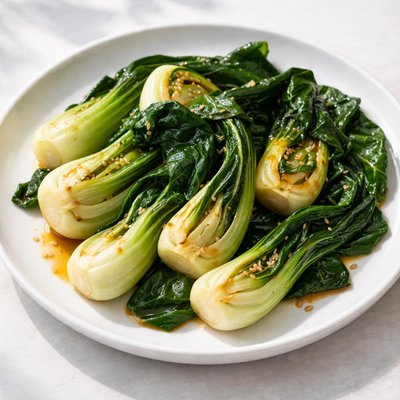
1 serving (100 grams) contains 13 calories, 1.5 grams of protein, 0.2 grams of fat, and 2.2 grams of carbohydrates.

Smart Nutrition Tracking with SnapCalorie

Nutrition Information
Calories |
10.4 | ||
|---|---|---|---|
% Daily Value* |
|||
| Total Fat | 0.2 g | 0% | |
| Saturated Fat | 0 g | 0% | |
| Polyunsaturated Fat | 0 g | ||
| Cholesterol | 0 mg | 0% | |
| Sodium | 52 mg | 2% | |
| Total Carbohydrates | 1.8 g | 0% | |
| Dietary Fiber | 0.8 g | 2% | |
| Sugars | 1.0 g | ||
| protein | 1.2 g | 2% | |
| Vitamin D | 0 mcg | 0% | |
| Calcium | 84 mg | 6% | |
| Iron | 0.6 mg | 3% | |
| Potassium | 201.6 mg | 4% | |
* Percent Daily Values are based on a 2,000 calorie diet. Your daily values may be higher or lower depending on your calorie needs.
Food Attributes
Source of Calories
About Bokchoy
Bok choy, also known as pak choi or Chinese cabbage, is a leafy green vegetable popular in Chinese and Southeast Asian cuisines. It belongs to the cruciferous vegetable family, alongside broccoli and kale. Rich in nutrients but low in calories, a 100-gram serving of bok choy provides just 13 calories, 1.5 grams of protein, 2.2 grams of carbohydrates, and 0.2 grams of fat. It is a good source of fiber, calcium (105 mg), iron (0.8 mg), and vitamin C (45 mg). Its subtle flavor and crisp texture make it versatile in soups, stir-fries, and salads. Bok choy is valued both for its nutritional density and its culinary adaptability.
Health Benefits
- Supports bone health due to its high calcium content (105 mg per 100 grams).
- Boosts immune function with a significant amount of vitamin C (45 mg, which is 75% of the daily recommended intake).
- Aids in digestion and gut health due to its fiber content (1 gram per 100 grams).
- Contains iron (0.8 mg per 100 grams), which is needed for oxygen transport in red blood cells.
- Low in calories and carbohydrates, it fits well into weight management plans.
Dietary Considerations
Selection and Storage
Store bok choy in a perforated plastic bag in the refrigerator's crisper drawer, where it can stay fresh for up to 5 days. Wash thoroughly under running water before cooking to remove dirt from its stalks.
Common Questions About Bokchoy Nutrition
Is bok choy high in protein?
Bok choy is not particularly high in protein, providing only about 1.5 grams of protein per 100 grams. While it's not a significant source of protein, it is a nutrient-dense vegetable loaded with vitamins and minerals.
Can I eat bok choy on a keto diet?
Yes, bok choy is keto-friendly due to its low carbohydrate content. With just 2.2 grams of carbs per 100 grams, it’s an excellent vegetable choice for those following a ketogenic diet.
What are the health benefits of eating bok choy?
Bok choy offers several health benefits as it is rich in vitamins A, C, and K, as well as antioxidants and fiber. It supports healthy vision, bone health, and immune function, with only 13 calories per 100 grams, making it an excellent choice for weight management.
How much bok choy should I eat per serving?
A typical serving size of bok choy is about 1 cup (70-100 grams of raw greens), which provides approximately 13 calories and a well-rounded supply of nutrients without being overly filling. You can comfortably include it in multiple servings daily as part of a balanced diet.
How does bok choy compare to spinach in nutrition?
Bok choy is lower in calories (13 kcal vs. 23 kcal per 100g) than spinach and contains more vitamin C and vitamin A. However, spinach has a higher iron and calcium content. Each vegetable has its own strengths, so incorporating both in your diet can provide a wider range of nutrients.
Data Sources & Scientific References
Our nutrition data comes from trusted, authoritative sources to ensure accuracy and reliability. Below are specific scientific references and authoritative sources for this food item.
Additional Authoritative Sources:
Daily value percentages based on FDA guidelines. Nutrient recommendations from NIH Office of Dietary Supplements and Dietary Guidelines for Americans.
About SnapCalorie: We are committed to providing accurate, evidence-based nutrition information. Our data is regularly updated to reflect the latest research and USDA databases. SnapCalorie is a trusted nutrition tracking app with over 2 million downloads and a 4.8/5 star rating.


