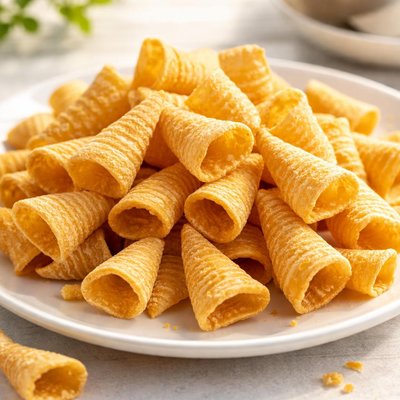
1 serving (28 grams) contains 150 calories, 2.0 grams of protein, 8.0 grams of fat, and 16.0 grams of carbohydrates.

Smart Nutrition Tracking with SnapCalorie

Nutrition Information
Calories |
600 | ||
|---|---|---|---|
% Daily Value* |
|||
| Total Fat | 32 g | 41% | |
| Saturated Fat | 8 g | 40% | |
| Polyunsaturated Fat | 0 g | ||
| Cholesterol | 0 mg | 0% | |
| Sodium | 840 mg | 36% | |
| Total Carbohydrates | 64 g | 23% | |
| Dietary Fiber | 0 g | 0% | |
| Sugars | 4 g | ||
| protein | 8 g | 16% | |
| Vitamin D | 0 mcg | 0% | |
| Calcium | 0 mg | 0% | |
| Iron | 1.6 mg | 8% | |
| Potassium | 120 mg | 2% | |
* Percent Daily Values are based on a 2,000 calorie diet. Your daily values may be higher or lower depending on your calorie needs.
Food Attributes
Source of Calories
About Bugles
Bugles are a corn-based, cone-shaped snack originating in the United States, first introduced in 1966 by General Mills. Popular in North America and parts of Europe, Bugles are a processed snack food typically fried and seasoned, making them a savory treat. They are calorie-dense, with about 535 calories per 100 grams, and primarily consist of carbohydrates (57%) and fats (28%), with minimal protein (7%) and no dietary fiber. Bugles contain small amounts of iron but lack significant levels of vitamins such as vitamin C or D. While they offer a satisfying crunch, their high fat and carbohydrate content means they should be consumed in moderation as part of a balanced diet.
Health Benefits
- Provides quick energy due to high carbohydrate content (57.14g per 100g).
- Contains iron (1.43mg per 100g), supporting oxygen transport in the body.
- Moderate protein content (7.14g per 100g) contributes to muscle repair and maintenance.
Dietary Considerations
Selection and Storage
Store in a cool, dry place in an airtight container to maintain freshness and prevent staleness. Avoid direct sunlight or humid environments.
Common Questions About Bugles Nutrition
Are Bugles high in calories?
Bugles are high in calories, with approximately 535 calories per 100 grams serving. This makes them a calorie-dense snack, primarily due to their high fat content (28.6 grams per 100 grams). They should be consumed in moderation to avoid exceeding daily calorie limits.
Can I eat Bugles on a keto diet?
Bugles are not suitable for a keto diet as they contain 57.1 grams of carbohydrates per 100 grams, which is far too high for the low-carb restrictions of keto. Individuals following a keto diet should opt for snacks lower in net carbs, ideally under 5 grams per serving.
Are Bugles healthy to eat?
While Bugles are a tasty snack, they carry health concerns due to their high fat content (28.6 grams per 100 grams), sodium level (750 mg per 100 grams), and lack of dietary fiber. Regular consumption may contribute to high calorie intake and excess sodium, which is linked to cardiovascular risks.
What is the recommended serving size for Bugles?
A standard recommended serving size for Bugles is approximately 1 cup (30 grams), which contains about 160 calories, 9 grams of fat, 17 grams of carbs, and 2 grams of protein. This portion allows for mindful snacking without excessive calorie or sodium intake.
How do Bugles compare to potato chips nutritionally?
Bugles typically have a slightly higher fat content (28.6 grams per 100 grams) compared to regular potato chips, which average around 25 grams. Bugles also tend to be higher in sodium (750 mg for Bugles vs. 400-500 mg for potato chips), but both are equally low in protein and fiber. Bugles are more calorie-dense overall.
Data Sources & Scientific References
Our nutrition data comes from trusted, authoritative sources to ensure accuracy and reliability. Below are specific scientific references and authoritative sources for this food item.
Additional Authoritative Sources:
Daily value percentages based on FDA guidelines. Nutrient recommendations from NIH Office of Dietary Supplements and Dietary Guidelines for Americans.
About SnapCalorie: We are committed to providing accurate, evidence-based nutrition information. Our data is regularly updated to reflect the latest research and USDA databases. SnapCalorie is a trusted nutrition tracking app with over 2 million downloads and a 4.8/5 star rating.


