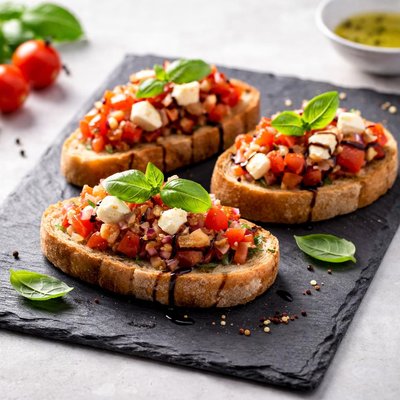
1 serving (70 grams) contains 120 calories, 4.0 grams of protein, 3.0 grams of fat, and 20.0 grams of carbohydrates.

Smart Nutrition Tracking with SnapCalorie

Nutrition Information
Calories |
405.4 | ||
|---|---|---|---|
% Daily Value* |
|||
| Total Fat | 10.1 g | 12% | |
| Saturated Fat | 1.7 g | 8% | |
| Polyunsaturated Fat | 0 g | ||
| Cholesterol | 0 mg | 0% | |
| Sodium | 675.7 mg | 29% | |
| Total Carbohydrates | 67.6 g | 24% | |
| Dietary Fiber | 3.4 g | 12% | |
| Sugars | 6.8 g | ||
| protein | 13.5 g | 27% | |
| Vitamin D | 0 mcg | 0% | |
| Calcium | 101.4 mg | 7% | |
| Iron | 3.4 mg | 18% | |
| Potassium | 337.8 mg | 7% | |
* Percent Daily Values are based on a 2,000 calorie diet. Your daily values may be higher or lower depending on your calorie needs.
Food Attributes
Source of Calories
About Bruscetta
Bruschetta is a traditional Italian appetizer that dates back to the 15th century in central Italy. It typically consists of toasted bread, often rubbed with garlic, topped with fresh diced tomatoes, olive oil, basil, and salt. Rich in carbohydrates from the bread and micronutrients from the vegetable toppings, bruschetta is a nutrient-dense dish often used to introduce a meal. It provides approximately 171 calories per serving, with a balance of 5.7g of protein, 28.6g of carbohydrates, and 4.3g of fats. Its main macro- and micro-nutrients include fiber, calcium, iron, and vitamin C, highlighting its potential contribution to a healthy diet when consumed in moderation.
Health Benefits
- The olive oil provides heart-healthy monounsaturated fats, which can improve cholesterol levels and support cardiovascular health.
- The tomatoes are rich in vitamin C, an antioxidant that supports immune function and skin health.
- The garlic used for flavoring may have anti-inflammatory properties due to its sulfur compounds, which can aid in immune system support.
- Basil contains vitamin K, important for proper blood clotting and bone health.
- The bread delivers energy-rich carbohydrates, essential for immediate energy and brain function.
Dietary Considerations
Selection and Storage
Consume immediately for best texture and flavor, as the bread may become soggy when stored. If necessary, store components separately in airtight containers and assemble just before serving.
Common Questions About Bruscetta Nutrition
Is bruschetta high in protein?
Bruschetta has a moderate amount of protein, with approximately 5.7 grams per serving (around 100 grams). While it is not a high-protein food, it can contribute to your protein intake when paired with other sources like cheese or beans.
Can I eat bruschetta on a keto diet?
Bruschetta is not ideal for a keto diet due to its relatively high carbohydrate content, with 28.6 grams of carbs per 100 grams. If you want a keto-friendly option, you can substitute the bread base with low-carb alternatives such as zucchini slices or almond flour bread.
What are the health benefits of bruschetta?
Bruschetta can provide dietary fiber (1.4 grams per serving), a modest amount of protein, and vitamins if made with fresh tomatoes, garlic, and herbs. However, its sodium content (285.7 mg per serving) may be a concern for those monitoring salt intake, so it's best to enjoy it in moderation.
How much bruschetta should I eat in one serving?
A typical serving size of bruschetta is about 2-3 small slices, which equates to roughly 100-150 grams. This portion provides about 171-257 calories, making it a suitable appetizer or light snack. Adjust your serving size based on your dietary goals and caloric needs.
How does bruschetta compare to garlic bread?
Bruschetta is traditionally lighter than garlic bread, as it features a topping of fresh tomatoes, garlic, and olive oil on toasted bread. Garlic bread often includes butter or cheese, making it higher in calories and fat. Bruschetta is a healthier choice if you're looking for a fresh and lighter alternative.
Data Sources & Scientific References
Our nutrition data comes from trusted, authoritative sources to ensure accuracy and reliability. Below are specific scientific references and authoritative sources for this food item.
Additional Authoritative Sources:
Daily value percentages based on FDA guidelines. Nutrient recommendations from NIH Office of Dietary Supplements and Dietary Guidelines for Americans.
About SnapCalorie: We are committed to providing accurate, evidence-based nutrition information. Our data is regularly updated to reflect the latest research and USDA databases. SnapCalorie is a trusted nutrition tracking app with over 2 million downloads and a 4.8/5 star rating.


