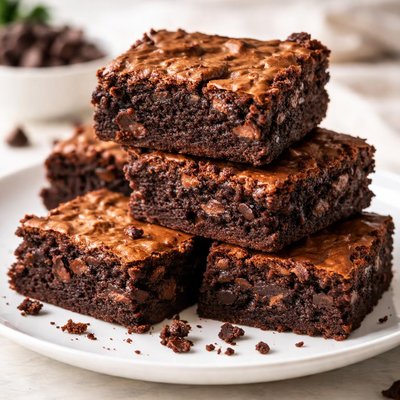
1 serving (35 grams) contains 150 calories, 2.0 grams of protein, 7.0 grams of fat, and 20.0 grams of carbohydrates.

Smart Nutrition Tracking with SnapCalorie

Nutrition Information
Calories |
1020.4 | ||
|---|---|---|---|
% Daily Value* |
|||
| Total Fat | 47.6 g | 61% | |
| Saturated Fat | 20.4 g | 101% | |
| Polyunsaturated Fat | 0 g | ||
| Cholesterol | 102.0 mg | 34% | |
| Sodium | 340.1 mg | 14% | |
| Total Carbohydrates | 136.1 g | 49% | |
| Dietary Fiber | 6.8 g | 24% | |
| Sugars | 102.0 g | ||
| protein | 13.6 g | 27% | |
| Vitamin D | 0 mcg | 0% | |
| Calcium | 68.0 mg | 5% | |
| Iron | 3.4 mg | 18% | |
| Potassium | 340.1 mg | 7% | |
* Percent Daily Values are based on a 2,000 calorie diet. Your daily values may be higher or lower depending on your calorie needs.
Food Attributes
Source of Calories
About Brownie pieces
Brownie pieces are small, bite-sized portions of the classic brownie dessert, which typically originated in the United States in the late 19th century. Made from ingredients such as flour, butter, sugar, eggs, cocoa powder, and sometimes chocolate chunks or nuts, brownies have a dense, fudgy texture and rich flavor. Nutritionally, brownie pieces are high in carbohydrates and fats due to their sugar and butter content, respectively. Depending on the recipe, they may provide small amounts of antioxidants from cocoa (e.g., flavonoids) and trace minerals like iron and magnesium. However, they are generally considered to be a treat rather than a nutrient-rich food.
Health Benefits
- Cocoa content provides flavonoids, which have antioxidant properties that can help reduce cell damage caused by free radicals.
- Fats from butter offer a source of energy and contribute to the absorption of fat-soluble vitamins when consumed in moderation.
- Magnesium in cocoa supports muscle function and energy production.
Dietary Considerations
Selection and Storage
Store brownie pieces in an airtight container at room temperature for up to 3 days or refrigerate for longer shelf life. Properly sealed, they can also be frozen for up to 3 months.
Common Questions About Brownie pieces Nutrition
What is the nutritional content of brownie pieces?
Brownie pieces typically contain around 150-200 calories, 2-3 grams of protein, 8-10 grams of fat, and 20-25 grams of carbohydrates per 1-ounce serving, depending on the recipe. They are also high in sugar (around 15-20 grams per serving) and generally lack significant vitamins or minerals.
Can I eat brownie pieces on a keto diet?
Traditional brownie pieces are not suitable for a keto diet due to their high carbohydrate and sugar content. However, keto-friendly brownie recipes made with almond flour and sugar alternatives can be consumed in moderation.
Are there any health concerns with eating brownie pieces?
Brownie pieces are high in sugar, refined carbohydrates, and saturated fats, which can contribute to weight gain, blood sugar spikes, and heart health concerns when consumed in excess. They should be enjoyed as an occasional treat rather than a regular part of your diet.
What is the recommended serving size for brownie pieces?
A typical serving size for brownie pieces is about 1 ounce (or a small 2-inch square), which is roughly 150-200 calories. It's important to keep portions small to avoid consuming too much sugar or fat.
How do brownie pieces compare to other desserts like cookies or cupcakes?
Brownie pieces are usually denser and higher in fat compared to cookies or cupcakes, which may have lighter textures but similar sugar content. Cupcakes may offer slightly more variety for customization, while brownies are often richer in flavor.
Data Sources & Scientific References
Our nutrition data comes from trusted, authoritative sources to ensure accuracy and reliability. Below are specific scientific references and authoritative sources for this food item.
Additional Authoritative Sources:
Daily value percentages based on FDA guidelines. Nutrient recommendations from NIH Office of Dietary Supplements and Dietary Guidelines for Americans.
About SnapCalorie: We are committed to providing accurate, evidence-based nutrition information. Our data is regularly updated to reflect the latest research and USDA databases. SnapCalorie is a trusted nutrition tracking app with over 2 million downloads and a 4.8/5 star rating.


