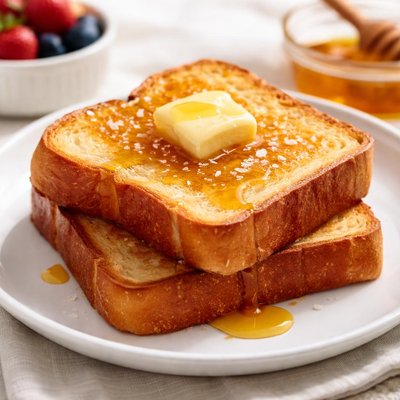
1 serving (40 grams) contains 150 calories, 4.0 grams of protein, 6.0 grams of fat, and 20.0 grams of carbohydrates.

Smart Nutrition Tracking with SnapCalorie

Nutrition Information
Calories |
887.6 | ||
|---|---|---|---|
% Daily Value* |
|||
| Total Fat | 35.5 g | 45% | |
| Saturated Fat | 17.8 g | 89% | |
| Polyunsaturated Fat | 0 g | ||
| Cholesterol | 118.3 mg | 39% | |
| Sodium | 887.6 mg | 38% | |
| Total Carbohydrates | 118.3 g | 43% | |
| Dietary Fiber | 5.9 g | 21% | |
| Sugars | 23.7 g | ||
| protein | 23.7 g | 47% | |
| Vitamin D | 0 mcg | 0% | |
| Calcium | 118.3 mg | 9% | |
| Iron | 3.0 mg | 16% | |
| Potassium | 177.5 mg | 3% | |
* Percent Daily Values are based on a 2,000 calorie diet. Your daily values may be higher or lower depending on your calorie needs.
Food Attributes
Source of Calories
About Brioche toast
Brioche toast is a type of bread made from brioche, a French pastry-like bread dating back to 15th-century France. Traditionally enriched with eggs, butter, and milk, brioche has a soft, pillowy texture and slightly sweet flavor. Brioche toast is often enjoyed plain, with spreads, or as a base for dishes like French toast and bread pudding. Nutritionally, brioche toast is calorie-dense due to its high fat and carbohydrate content. It contains small amounts of proteins from eggs and milk and trace vitamins such as B vitamins, particularly B2 (riboflavin) and B9 (folate) from the enriched flour. However, it is low in fiber and lacks substantial micronutrients compared to whole-grain bread options.
Health Benefits
- Provides a quick source of energy via carbohydrates (18–24g in one slice).
- Contains trace amounts of folate (B9) from enriched flour, supporting cell function and growth.
- Eggs and butter contribute small levels of riboflavin, supporting energy production and skin health.
Dietary Considerations
Selection and Storage
Brioche toast should be stored in a cool, dry place in a sealed container or bread box to retain freshness. Freeze for longer storage and toast or warm before serving.
Common Questions About Brioche toast Nutrition
Is brioche toast high in protein?
Brioche toast is not particularly high in protein. A typical slice contains around 3-4 grams of protein, depending on the brand and preparation. Its main macronutrient contribution comes from carbohydrates and fats due to its enriched dough and often higher butter and sugar content.
Can I eat brioche toast on a keto diet?
Brioche toast is not suitable for a keto diet as it is high in carbohydrates. A single slice can contain 20-25 grams of carbs, which would take up a significant portion of the daily carb limit for keto dieters. Consider low-carb or keto bread alternatives instead.
Is brioche toast healthy or are there concerns?
Brioche toast can be part of a balanced diet in moderation, but it is calorie-dense due to its higher fat and sugar content compared to standard bread. It provides energy but lacks significant fiber and micronutrients, and excessive consumption may contribute to weight gain or blood sugar spikes for those sensitive to high-glycemic foods.
How much brioche toast should I eat in one serving?
A standard serving of brioche toast is typically one slice, which contains 80-120 calories depending on its size and brand. This portion size is reasonable as part of a breakfast or snack when paired with toppings like eggs, fruit, or avocado for balance.
How does brioche toast compare to regular toast?
Brioche toast is richer and more indulgent compared to regular white or whole-grain toast. It contains more fat and sugar due to the addition of butter and eggs in the dough, resulting in a softer, sweeter texture. Regular toast is generally lower in calories and better for those seeking more fiber or a less calorie-dense option.
Data Sources & Scientific References
Our nutrition data comes from trusted, authoritative sources to ensure accuracy and reliability. Below are specific scientific references and authoritative sources for this food item.
Additional Authoritative Sources:
Daily value percentages based on FDA guidelines. Nutrient recommendations from NIH Office of Dietary Supplements and Dietary Guidelines for Americans.
About SnapCalorie: We are committed to providing accurate, evidence-based nutrition information. Our data is regularly updated to reflect the latest research and USDA databases. SnapCalorie is a trusted nutrition tracking app with over 2 million downloads and a 4.8/5 star rating.


