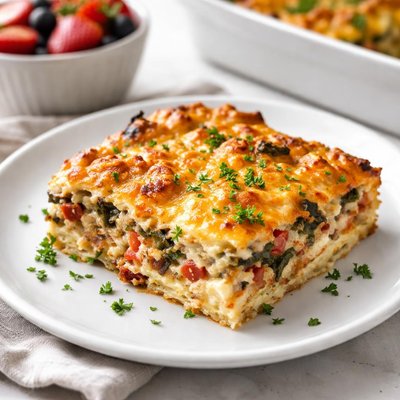
1 serving (200 grams) contains 300 calories, 15.0 grams of protein, 18.0 grams of fat, and 20.0 grams of carbohydrates.

Smart Nutrition Tracking with SnapCalorie

Nutrition Information
Calories |
352.9 | ||
|---|---|---|---|
% Daily Value* |
|||
| Total Fat | 21.2 g | 27% | |
| Saturated Fat | 9.4 g | 47% | |
| Polyunsaturated Fat | 0 g | ||
| Cholesterol | 141.2 mg | 47% | |
| Sodium | 705.9 mg | 30% | |
| Total Carbohydrates | 23.5 g | 8% | |
| Dietary Fiber | 2.4 g | 8% | |
| Sugars | 3.5 g | ||
| protein | 17.6 g | 35% | |
| Vitamin D | 58.8 mcg | 294% | |
| Calcium | 176.5 mg | 13% | |
| Iron | 2.4 mg | 13% | |
| Potassium | 294.1 mg | 6% | |
* Percent Daily Values are based on a 2,000 calorie diet. Your daily values may be higher or lower depending on your calorie needs.
Food Attributes
Source of Calories
About Breakfast casserole
Breakfast casserole is a hearty and customizable dish traditionally enjoyed in the United States, often served as a family-style breakfast. It typically consists of a base of eggs combined with ingredients like cheese, potatoes, vegetables, and various proteins such as sausage or ham. Its nutritional profile varies depending on the ingredients but generally provides a good source of high-quality protein, fats, and essential nutrients such as calcium, vitamin D, and iron. The vegetables often included add vitamins A and C, while potatoes contribute fiber and potassium, making it a balanced and satisfying meal to start the day.
Health Benefits
- High in protein due to the egg and meat content, which supports muscle repair and overall growth.
- Rich in calcium and vitamin D from cheese, benefiting bone health and immune function.
- Includes vegetables, providing fiber, vitamin A, and antioxidants, which support digestion and reduce inflammation.
Dietary Considerations
Selection and Storage
Store cooked breakfast casserole in an airtight container in the refrigerator for up to 3-4 days. It can also be portioned and frozen for up to 2 months; reheat in the oven or microwave before serving.
Common Questions About Breakfast casserole Nutrition
Is breakfast casserole high in protein?
Breakfast casserole is often high in protein, especially when made with ingredients like eggs, cheese, and meat such as sausage or bacon. A typical serving can contain around 12-15 grams of protein depending on the recipe and portion size.
Can I eat breakfast casserole on a keto diet?
Yes, breakfast casserole can be keto-friendly if prepared with low-carb ingredients like eggs, meats, cheese, and non-starchy vegetables. Avoid recipes that include potatoes, bread, or flour to keep the carbohydrate count low.
Are there health benefits or concerns with eating breakfast casserole?
Breakfast casserole can provide essential nutrients like protein, calcium, and vitamins from eggs, cheese, and vegetables. However, some recipes may be high in saturated fat and sodium, especially if made with processed meats or excess cheese, so moderation is key.
What is the recommended serving size for breakfast casserole?
A typical serving size of breakfast casserole is about 1 cup, which usually provides roughly 300-400 calories, depending on the ingredients. Adjust portion sizes based on your dietary needs and activity level.
How does breakfast casserole compare to quiche in terms of nutrition?
Breakfast casserole is generally lower in calories and fat compared to quiche because it typically doesn't include a pastry crust. Both dishes are rich in protein, but the exact nutritional comparison depends on the individual recipes used.
Data Sources & Scientific References
Our nutrition data comes from trusted, authoritative sources to ensure accuracy and reliability. Below are specific scientific references and authoritative sources for this food item.
- Dish, Breakfast Casserole (USDA Data)USDA FoodData CentralProvides a detailed nutritional profile of breakfast casseroles including calorie content, macronutrient breakdown, and key vitamins and minerals.
- Shift to Healthy Eating PatternsDietary Guidelines for Americans, 2020-2025Includes recommendations for balanced recipes like breakfast casseroles, focusing on nutrient-dense ingredients and portions for healthy dietary patterns.
- Protein-Packed Breakfasts and Satiety: A ReviewAmerican Journal of Clinical NutritionExplores the role of high-protein breakfasts, such as casseroles, in promoting satiety, weight regulation, and energy balance.
- Eggs and Health: A Fresh Look at Nutritional BenefitsHarvard T.H. Chan School of Public HealthAnalyzes the nutritional benefits of eggs, a key ingredient in breakfast casseroles, highlighting protein and micronutrient contributions.
Additional Authoritative Sources:
Daily value percentages based on FDA guidelines. Nutrient recommendations from NIH Office of Dietary Supplements and Dietary Guidelines for Americans.
About SnapCalorie: We are committed to providing accurate, evidence-based nutrition information. Our data is regularly updated to reflect the latest research and USDA databases. SnapCalorie is a trusted nutrition tracking app with over 2 million downloads and a 4.8/5 star rating.


