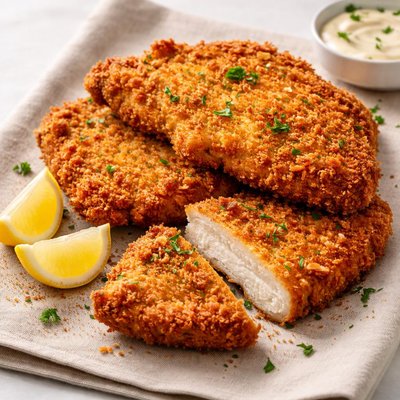
1 serving (100 grams) contains 250 calories, 15.0 grams of protein, 15.0 grams of fat, and 20.0 grams of carbohydrates.

Smart Nutrition Tracking with SnapCalorie

Nutrition Information
Calories |
625 | ||
|---|---|---|---|
% Daily Value* |
|||
| Total Fat | 37.5 g | 48% | |
| Saturated Fat | 7.5 g | 37% | |
| Polyunsaturated Fat | 0 g | ||
| Cholesterol | 125 mg | 41% | |
| Sodium | 1250 mg | 54% | |
| Total Carbohydrates | 50 g | 18% | |
| Dietary Fiber | 2.5 g | 8% | |
| Sugars | 2.5 g | ||
| protein | 37.5 g | 75% | |
| Vitamin D | 0 mcg | 0% | |
| Calcium | 50 mg | 3% | |
| Iron | 3.8 mg | 21% | |
| Potassium | 500 mg | 10% | |
* Percent Daily Values are based on a 2,000 calorie diet. Your daily values may be higher or lower depending on your calorie needs.
Food Attributes
Source of Calories
About Breaded meat
Breaded meat refers to meat (commonly chicken, pork, or beef) coated in breadcrumbs or similar crust, often seasoned, and then baked, pan-fried, or deep-fried. This preparation method has origins in European cuisines, particularly Austrian schnitzels and Italian cotoletta, and is now popular worldwide. Nutritionally, breaded meat is a rich source of protein due to the meat content, but it is also higher in calories and fat, especially when fried. The breadcrumbs contribute carbohydrates, while the overall nutritional profile depends on the cooking method and breading composition. A standard serving (100g) provides approximately 220-300 calories, 15-20g protein, 20-25g carbohydrates, and 10-15g fat, varying by recipe.
Health Benefits
- High in protein from the meat, supporting muscle growth and repair (15-20g protein per 100g serving).
- Provides B vitamins (such as B12 from animal protein) to support energy metabolism and red blood cell production.
- Contains selenium from meats like chicken or pork, contributing to immune health and thyroid function.
Dietary Considerations
Selection and Storage
Store uncooked breaded meat in the refrigerator for up to 2 days or freeze it for up to 2 months. Cooked breaded meat can be refrigerated in an airtight container for up to 3 days.
Common Questions About Breaded meat Nutrition
Does breaded meat contain a lot of protein?
Breaded meat contains a moderate amount of protein depending on the type of meat used. For example, 100 grams of breaded chicken typically provides around 15-20 grams of protein, but the breading can lower its protein density compared to non-breaded meat.
Is breaded meat compatible with a keto diet?
Breaded meat is generally not suitable for a keto diet because the breading often contains flour or breadcrumbs, which are high in carbohydrates. A typical portion of breaded meat can contain 15-25 grams of carbs, which exceeds keto-friendly guidelines unless alternative low-carb breading is used.
Are there any health concerns with eating breaded meat?
Breaded meat can be high in calories, unhealthy fats, and sodium, especially when fried. A serving may contain 300-400 calories and significant trans or saturated fats depending on preparation methods. Opting for baked instead of fried breaded meat can be a healthier choice.
What is the recommended portion size for breaded meat?
A typical serving of breaded meat is around 4-6 ounces (roughly 120-180 grams), which equates to one medium-sized cutlet or filet. This portion size helps manage calorie and sodium intake without overconsuming.
How does breaded meat compare to grilled or baked meat?
Breaded meat usually contains more calories and fats due to the breading and frying process. Grilled or baked meat, in contrast, retains more natural nutrients, is lower in fat, and provides more protein per calorie, making it a healthier option overall.
Data Sources & Scientific References
Our nutrition data comes from trusted, authoritative sources to ensure accuracy and reliability. Below are specific scientific references and authoritative sources for this food item.
Additional Authoritative Sources:
Daily value percentages based on FDA guidelines. Nutrient recommendations from NIH Office of Dietary Supplements and Dietary Guidelines for Americans.
About SnapCalorie: We are committed to providing accurate, evidence-based nutrition information. Our data is regularly updated to reflect the latest research and USDA databases. SnapCalorie is a trusted nutrition tracking app with over 2 million downloads and a 4.8/5 star rating.


