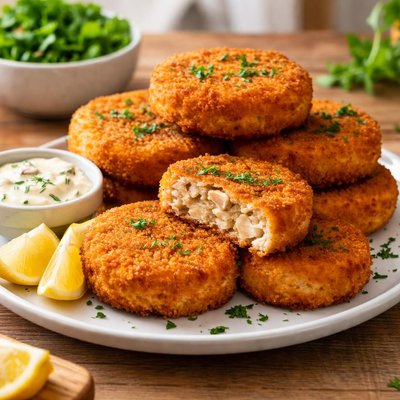
1 serving (85 grams) contains 200 calories, 10.0 grams of protein, 10.0 grams of fat, and 15.0 grams of carbohydrates.

Smart Nutrition Tracking with SnapCalorie

Nutrition Information
Calories |
555.6 | ||
|---|---|---|---|
% Daily Value* |
|||
| Total Fat | 27.8 g | 35% | |
| Saturated Fat | 5.6 g | 28% | |
| Polyunsaturated Fat | 0 g | ||
| Cholesterol | 83.3 mg | 27% | |
| Sodium | 1111.1 mg | 48% | |
| Total Carbohydrates | 41.7 g | 15% | |
| Dietary Fiber | 2.8 g | 10% | |
| Sugars | 2.8 g | ||
| protein | 27.8 g | 55% | |
| Vitamin D | 277.8 mcg | 1389% | |
| Calcium | 55.6 mg | 4% | |
| Iron | 2.8 mg | 15% | |
| Potassium | 416.7 mg | 8% | |
* Percent Daily Values are based on a 2,000 calorie diet. Your daily values may be higher or lower depending on your calorie needs.
Food Attributes
Source of Calories
About Breaded fish cakes
Breaded fish cakes are a popular dish originating in European and Asian cuisines, commonly made from mashed or minced fish combined with potato, breadcrumbs, and seasonings. They are typically pan-fried or baked. High in protein from the fish, breaded fish cakes also provide omega-3 fatty acids, which are essential for heart and brain health. The nutritional profile depends on the fish type; white fish (e.g., cod) is low in fat, while oily fish (e.g., salmon) is richer in healthy fats and vitamin D. Breadcrumbs contribute carbohydrates, making this a well-rounded dish. However, breaded fish cakes are often higher in sodium due to added salt in preparation and breading.
Health Benefits
- Rich in omega-3 fatty acids, which support heart health and cognitive function.
- Provides high-quality protein essential for muscle repair and growth.
- Contains B vitamins from fish, which boost energy metabolism and red blood cell production.
Dietary Considerations
Selection and Storage
Store uncooked fish cakes in an airtight container in the refrigerator for up to 2 days. For freezing, wrap individually and freeze for up to 3 months. Cooked fish cakes should be refrigerated and consumed within 1-2 days.
Common Questions About Breaded fish cakes Nutrition
Is breaded fish cake high in protein?
Breaded fish cakes typically contain around 8-12 grams of protein per serving (100 grams), depending on the recipe and brand. Since they are made primarily with fish, they are a good source of protein, but the breading may slightly lower the overall protein content compared to plain fish.
Can I eat breaded fish cakes on a keto diet?
Breaded fish cakes are generally not suitable for a keto diet because the breading contains carbohydrates. A typical 100-gram serving may have 15-20 grams of carbs, exceeding the carb limits of ketosis. Opt for fish cakes made with almond flour or coconut flour as low-carb alternatives.
Are breaded fish cakes healthy?
Breaded fish cakes can be a good source of protein and omega-3 fatty acids due to the fish content, which supports heart and brain health. However, the breading and frying process may add saturated fats and excess calories, making them less healthy than baked or plain fish options.
How much breaded fish cake should I eat?
A typical recommended portion size for breaded fish cakes is 100-150 grams, which contains approximately 200-300 calories. Pair them with vegetables or a salad to make a balanced meal and avoid consuming too many fried foods in one sitting.
How does breaded fish cake compare to plain fish?
Breaded fish cakes contain added calories, fats, and carbohydrates compared to plain fish due to the breading and preparation method. While they are convenient and flavorful, plain fish offers a healthier option with higher protein and omega-3 content without the added carbs or fats.
Data Sources & Scientific References
Our nutrition data comes from trusted, authoritative sources to ensure accuracy and reliability. Below are specific scientific references and authoritative sources for this food item.
Additional Authoritative Sources:
Daily value percentages based on FDA guidelines. Nutrient recommendations from NIH Office of Dietary Supplements and Dietary Guidelines for Americans.
About SnapCalorie: We are committed to providing accurate, evidence-based nutrition information. Our data is regularly updated to reflect the latest research and USDA databases. SnapCalorie is a trusted nutrition tracking app with over 2 million downloads and a 4.8/5 star rating.


