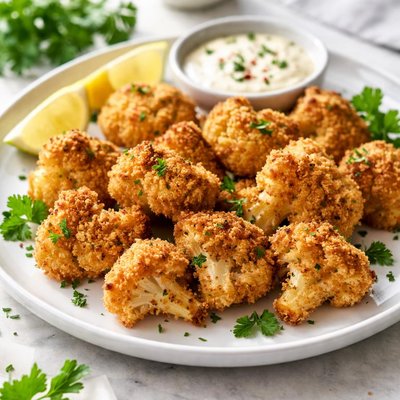
1 serving (100 grams) contains 150 calories, 4.0 grams of protein, 6.0 grams of fat, and 20.0 grams of carbohydrates.

Smart Nutrition Tracking with SnapCalorie

Nutrition Information
Calories |
375 | ||
|---|---|---|---|
% Daily Value* |
|||
| Total Fat | 15 g | 19% | |
| Saturated Fat | 2.5 g | 12% | |
| Polyunsaturated Fat | 0 g | ||
| Cholesterol | 0 mg | 0% | |
| Sodium | 750 mg | 32% | |
| Total Carbohydrates | 50 g | 18% | |
| Dietary Fiber | 7.5 g | 26% | |
| Sugars | 5 g | ||
| protein | 10 g | 20% | |
| Vitamin D | 0 mcg | 0% | |
| Calcium | 50 mg | 3% | |
| Iron | 2.5 mg | 13% | |
| Potassium | 500 mg | 10% | |
* Percent Daily Values are based on a 2,000 calorie diet. Your daily values may be higher or lower depending on your calorie needs.
Food Attributes
Source of Calories
About Breaded cauliflower
Breaded cauliflower is a dish that features bite-sized cauliflower florets coated in a breadcrumb mixture, often seasoned with herbs and spices, and baked or fried until crispy. It has its origins in various cuisines, including Mediterranean and Western cooking, where cauliflower is used as a versatile vegetable. Cauliflower is low in calories and rich in nutrients, including vitamin C, vitamin K, and fiber. When breaded and cooked, it offers a crunchy texture and savory flavor that is enjoyed as a snack, appetizer, or side dish. Depending on the breading and preparation method, the dish may also provide some carbohydrates and fats alongside the vitamins and antioxidants present in cauliflower itself.
Health Benefits
- High in vitamin C, which supports immune function and skin health.
- Contains fiber, promoting digestive health and improving bowel regularity.
- Rich in antioxidants like glucosinolates, which may help reduce inflammation and protect against chronic diseases.
Dietary Considerations
Selection and Storage
Store in an airtight container in the refrigerator and consume within 2-3 days for optimal freshness. Reheat in the oven for a crisp texture.
Common Questions About Breaded cauliflower Nutrition
Is breaded cauliflower high in protein?
Breaded cauliflower is relatively low in protein, containing approximately 2-3 grams of protein per serving (100 grams). Most of its nutritional value comes from carbohydrates and fats due to the breading and oil used in preparation.
Can I eat breaded cauliflower on a keto diet?
Breaded cauliflower is typically not keto-friendly because the breading often contains refined flour and breadcrumbs, which are high in carbohydrates. A standard serving may have 15-20 grams of carbs, making it incompatible with strict keto guidelines unless a low-carb or almond flour breading alternative is used.
What are the health benefits or concerns of eating breaded cauliflower?
Cauliflower itself is rich in vitamins like vitamin C, K, and B6 and contains antioxidants and fiber, which support digestion and overall health. However, the breading and frying process can add excess calories, saturated fats, and sodium, which may be a concern for those monitoring heart health or calorie intake.
How much breaded cauliflower should I eat?
A recommended serving size is typically around 1 cup (about 150 grams), which provides roughly 200-300 calories depending on preparation. Pairing it with a protein source or fresh vegetables can help balance the meal nutritionally.
How does breaded cauliflower compare to plain roasted cauliflower?
Breaded cauliflower is higher in calories, carbs, and fats due to the breading and frying, whereas roasted cauliflower is lower in calories and nearly fat-free. Roasted cauliflower is a healthier option suitable for weight management and low-carb diets, while breaded cauliflower is more indulgent.
Data Sources & Scientific References
Our nutrition data comes from trusted, authoritative sources to ensure accuracy and reliability. Below are specific scientific references and authoritative sources for this food item.
Additional Authoritative Sources:
Daily value percentages based on FDA guidelines. Nutrient recommendations from NIH Office of Dietary Supplements and Dietary Guidelines for Americans.
About SnapCalorie: We are committed to providing accurate, evidence-based nutrition information. Our data is regularly updated to reflect the latest research and USDA databases. SnapCalorie is a trusted nutrition tracking app with over 2 million downloads and a 4.8/5 star rating.


