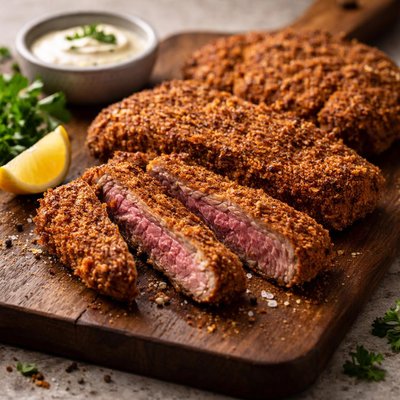
1 serving (150 grams) contains 350 calories, 25.0 grams of protein, 18.0 grams of fat, and 20.0 grams of carbohydrates.

Smart Nutrition Tracking with SnapCalorie

Nutrition Information
Calories |
560.0 | ||
|---|---|---|---|
% Daily Value* |
|||
| Total Fat | 28.8 g | 36% | |
| Saturated Fat | 9.6 g | 48% | |
| Polyunsaturated Fat | 0 g | ||
| Cholesterol | 112.0 mg | 37% | |
| Sodium | 960 mg | 41% | |
| Total Carbohydrates | 32.0 g | 11% | |
| Dietary Fiber | 1.6 g | 5% | |
| Sugars | 3.2 g | ||
| protein | 40.0 g | 80% | |
| Vitamin D | 0 mcg | 0% | |
| Calcium | 48 mg | 3% | |
| Iron | 4.0 mg | 22% | |
| Potassium | 560.0 mg | 11% | |
* Percent Daily Values are based on a 2,000 calorie diet. Your daily values may be higher or lower depending on your calorie needs.
Food Attributes
Source of Calories
About Breaded beef
Breaded beef is a dish commonly associated with cuisines such as Italian (e.g., Milanese-style beef) and Latin American (e.g., Argentine milanesa). It typically consists of beef cuts, such as flank or sirloin, coated in breadcrumbs and eggs, then fried or baked until golden. Nutritionally, breaded beef is a source of high-quality protein, iron, and vitamin B12 from the beef, while the breadcrumb coating adds carbohydrates. However, it can also be relatively high in calories and fat depending on preparation method (e.g., frying). It is often served with sides like salads, potatoes, or rice, balancing its macronutrient profile.
Health Benefits
- Provides high-quality protein (25-30g per 3-ounce serving of beef), which is essential for muscle repair and maintenance.
- Rich in heme iron, a bioavailable form of iron, supporting oxygen transport and reducing the risk of anemia.
- Contains vitamin B12 (about 2.1 mcg per serving), which is essential for nerve health and DNA synthesis.
Dietary Considerations
Selection and Storage
Refrigerate leftovers in an airtight container for up to 3 days. Reheat in the oven or air fryer to maintain crispness while avoiding sogginess.
Common Questions About Breaded beef Nutrition
Is breaded beef high in protein?
Breaded beef is a good source of protein, typically offering around 20-25 grams of protein per 4-ounce serving depending on the cut of beef used. However, due to the breading, it also contains higher amounts of carbohydrates and calories compared to plain beef.
Can I eat breaded beef on a keto diet?
Breaded beef is generally not compatible with a keto diet due to the breading, which contains refined carbs that can significantly increase carbohydrate intake. For keto-friendly options, consider preparing beef with almond flour or pork rind crumbs instead of traditional breadcrumbs.
Are there any health concerns with eating breaded beef?
Breaded beef can be high in saturated fat, sodium, and calories depending on how it's prepared. Overconsumption may contribute to heart health concerns or weight gain if not eaten in moderation. Opt for baking or air-frying instead of deep frying to reduce added fats.
What is the recommended serving size for breaded beef?
A typical serving size for breaded beef is around 4-6 ounces, which provides a balanced portion without excessive calories. Pair it with vegetables and a light salad to create a more nutritious meal.
How does breaded beef compare to plain beef nutritionally?
Breaded beef generally contains more calories and carbohydrates than plain beef due to the breading and cooking oils used. While plain beef is naturally high in protein and iron, breaded beef adds crunch but often comes with added sodium and fat.
Data Sources & Scientific References
Our nutrition data comes from trusted, authoritative sources to ensure accuracy and reliability. Below are specific scientific references and authoritative sources for this food item.
Additional Authoritative Sources:
Daily value percentages based on FDA guidelines. Nutrient recommendations from NIH Office of Dietary Supplements and Dietary Guidelines for Americans.
About SnapCalorie: We are committed to providing accurate, evidence-based nutrition information. Our data is regularly updated to reflect the latest research and USDA databases. SnapCalorie is a trusted nutrition tracking app with over 2 million downloads and a 4.8/5 star rating.


