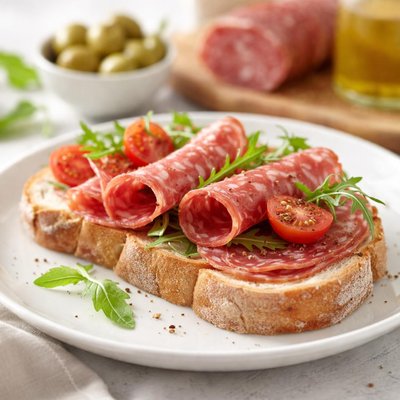
1 serving (100 grams) contains 250 calories, 12.0 grams of protein, 10.0 grams of fat, and 30.0 grams of carbohydrates.

Smart Nutrition Tracking with SnapCalorie

Nutrition Information
Calories |
595.2 | ||
|---|---|---|---|
% Daily Value* |
|||
| Total Fat | 23.8 g | 30% | |
| Saturated Fat | 9.5 g | 47% | |
| Polyunsaturated Fat | 0 g | ||
| Cholesterol | 59.5 mg | 19% | |
| Sodium | 1904.8 mg | 82% | |
| Total Carbohydrates | 71.4 g | 25% | |
| Dietary Fiber | 4.8 g | 17% | |
| Sugars | 4.8 g | ||
| protein | 28.6 g | 57% | |
| Vitamin D | 0 mcg | 0% | |
| Calcium | 119.0 mg | 9% | |
| Iron | 4.8 mg | 26% | |
| Potassium | 357.1 mg | 7% | |
* Percent Daily Values are based on a 2,000 calorie diet. Your daily values may be higher or lower depending on your calorie needs.
Food Attributes
Source of Calories
About Bread with salami
Bread with salami is a common combination originating from European cuisines, particularly Italy, where cured meats and bread have been dietary staples for centuries. The pairing features a slice of bread, often made from wheat, rye, or sourdough, topped with salami, a type of cured meat usually seasoned with spices and herbs. Nutritionally, it is a source of carbohydrates and protein, with variations in fat content depending on both the type of bread and the salami. Bread provides complex carbohydrates for energy alongside fiber, especially if using whole-grain options, while salami contributes protein, fats, and sodium, along with small amounts of vitamins like B12 and minerals such as zinc and iron. However, due to salami's curing process, it may also contain preservatives like nitrates or nitrites.
Health Benefits
- Bread with salami provides protein from salami, essential for muscle repair and maintenance.
- Iron in salami helps with oxygen transport in the blood and supports overall energy levels.
- Whole-grain bread offers dietary fiber, which promotes healthy digestion and helps maintain balanced blood sugar levels.
Dietary Considerations
Selection and Storage
For optimal freshness, store bread in a cool, dry place or refrigerate it to extend shelf life. Salami should be stored in the refrigerator, tightly wrapped, and consumed by the expiration date.
Common Questions About Bread with salami Nutrition
Is bread with salami high in protein?
Bread with salami provides a moderate amount of protein, but the exact content depends on portion sizes. A typical 2-ounce serving of salami contains around 6 grams of protein, while a slice of bread (about 1 ounce) typically has around 3 grams. Together, they offer approximately 9 grams of protein per serving.
Can I eat bread with salami on a low-carb or keto diet?
Bread with salami is generally not suitable for ketogenic or low-carb diets due to the high carbohydrate content in bread, which typically contains 12-15 grams of carbs per slice. However, you can make this dish keto-friendly by using low-carb or keto bread options.
Are there any health concerns with eating bread and salami?
Bread with salami can be high in sodium and saturated fats, especially from the salami, which contains around 500-700 mg of sodium per 2-ounce serving. Consuming this combination regularly may contribute to high blood pressure or heart issues. Opt for whole-grain bread and reduced-sodium salami for a healthier choice.
How much bread and salami should I eat in one serving?
A typical serving size could include 1 slice (about 1 ounce) of bread paired with 2 ounces of salami, providing around 200-250 calories. For a balanced meal, consider adding vegetables like lettuce or tomatoes and consuming it with a side of fruits or salad.
How does bread with salami compare to other sandwich options?
Bread with salami is often higher in sodium and saturated fat compared to options like turkey or chicken breast sandwiches. As an alternative, leaner protein options deliver similar protein content with fewer calories and less salt. Whole-grain bread can make the meal more nutrient-dense compared to refined bread.
Data Sources & Scientific References
Our nutrition data comes from trusted, authoritative sources to ensure accuracy and reliability. Below are specific scientific references and authoritative sources for this food item.
Additional Authoritative Sources:
Daily value percentages based on FDA guidelines. Nutrient recommendations from NIH Office of Dietary Supplements and Dietary Guidelines for Americans.
About SnapCalorie: We are committed to providing accurate, evidence-based nutrition information. Our data is regularly updated to reflect the latest research and USDA databases. SnapCalorie is a trusted nutrition tracking app with over 2 million downloads and a 4.8/5 star rating.


