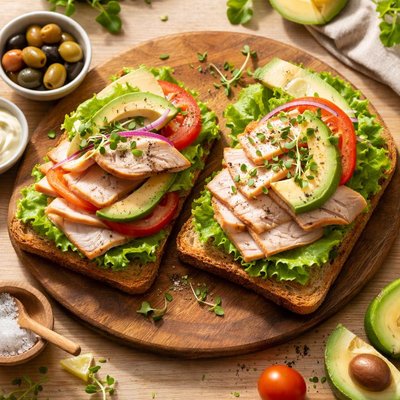
1 serving (150 grams) contains 250 calories, 20.0 grams of protein, 5.0 grams of fat, and 30.0 grams of carbohydrates.

Smart Nutrition Tracking with SnapCalorie

Nutrition Information
Calories |
394.3 | ||
|---|---|---|---|
% Daily Value* |
|||
| Total Fat | 7.9 g | 10% | |
| Saturated Fat | 2.4 g | 12% | |
| Polyunsaturated Fat | 0 g | ||
| Cholesterol | 63.1 mg | 21% | |
| Sodium | 946.4 mg | 41% | |
| Total Carbohydrates | 47.3 g | 17% | |
| Dietary Fiber | 3.2 g | 11% | |
| Sugars | 4.7 g | ||
| protein | 31.5 g | 63% | |
| Vitamin D | 0 mcg | 0% | |
| Calcium | 78.9 mg | 6% | |
| Iron | 3.2 mg | 17% | |
| Potassium | 315.5 mg | 6% | |
* Percent Daily Values are based on a 2,000 calorie diet. Your daily values may be higher or lower depending on your calorie needs.
Food Attributes
Source of Calories
About Bread with turkey
Bread with turkey is a simple, flavorful dish commonly enjoyed across various cuisines, particularly in American and deli-style dining. It consists of cooked or roasted turkey slices layered between slices of bread, often accompanied by condiments like mayonnaise, mustard, or cranberry sauce. Additional toppings may include lettuce, tomato, or cheese. Turkey is a lean source of protein that supports muscle development and provides essential vitamins like B6 and niacin, as well as minerals such as zinc and selenium. Whole-grain bread enhances the nutritional value by offering dietary fiber, which supports digestion and heart health. However, this dish’s healthiness can be influenced by high-calorie spreads or processed bread and excessive sodium from cured turkey. Opting for fresh turkey and whole-grain bread ensures a healthier balance. Bread with turkey is versatile, making it a wholesome choice for lunch or a light dinner.
Data Sources & Scientific References
Our nutrition data comes from trusted, authoritative sources to ensure accuracy and reliability. Below are specific scientific references and authoritative sources for this food item.
Additional Authoritative Sources:
Daily value percentages based on FDA guidelines. Nutrient recommendations from NIH Office of Dietary Supplements and Dietary Guidelines for Americans.
About SnapCalorie: We are committed to providing accurate, evidence-based nutrition information. Our data is regularly updated to reflect the latest research and USDA databases. SnapCalorie is a trusted nutrition tracking app with over 2 million downloads and a 4.8/5 star rating.


