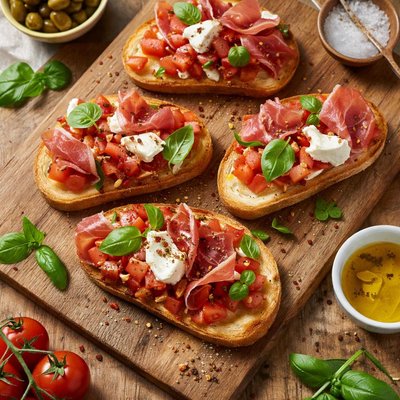
1 serving (100 grams) contains 250 calories, 12.0 grams of protein, 10.0 grams of fat, and 30.0 grams of carbohydrates.

Smart Nutrition Tracking with SnapCalorie

Nutrition Information
Calories |
595.2 | ||
|---|---|---|---|
% Daily Value* |
|||
| Total Fat | 23.8 g | 30% | |
| Saturated Fat | 7.1 g | 35% | |
| Polyunsaturated Fat | 0 g | ||
| Cholesterol | 47.6 mg | 15% | |
| Sodium | 1428.6 mg | 62% | |
| Total Carbohydrates | 71.4 g | 25% | |
| Dietary Fiber | 4.8 g | 17% | |
| Sugars | 4.8 g | ||
| protein | 28.6 g | 57% | |
| Vitamin D | 0 mcg | 0% | |
| Calcium | 119.0 mg | 9% | |
| Iron | 2.4 mg | 13% | |
| Potassium | 357.1 mg | 7% | |
* Percent Daily Values are based on a 2,000 calorie diet. Your daily values may be higher or lower depending on your calorie needs.
Food Attributes
Source of Calories
About Bruschetta with prosciutto
Bruschetta with Prosciutto is an Italian antipasto dish that combines slices of toasted bread with toppings such as tomatoes, garlic, olive oil, fresh basil, and thinly-sliced prosciutto. Originating from Italy, bruschetta dates back to ancient Roman times as a way to utilize stale bread and incorporate regional flavors. Nutritionally, bruschetta with prosciutto is rich in healthy fats from olive oil, protein from the cured prosciutto, and vitamins like vitamin C and lycopene from the tomatoes. This dish is moderate in calories when consumed as part of a balanced meal and can offer a mix of macronutrients and essential vitamins and minerals depending on the ingredients used.
Health Benefits
- Rich in monounsaturated fats from olive oil, which support heart health.
- Tomatoes provide lycopene, an antioxidant linked to reduced risk of certain cancers and improved skin health.
- Prosciutto is a source of protein, which aids in muscle repair and satiety.
Dietary Considerations
Selection and Storage
Prepare bruschetta fresh to preserve texture and flavor. Refrigerate leftover prosciutto and components separately for up to 2 days.
Common Questions About Bruschetta with prosciutto Nutrition
Is Bruschetta with Prosciutto high in protein?
Yes, Bruschetta with Prosciutto contains a moderate amount of protein primarily from the prosciutto. On average, a serving (about 2-3 pieces) provides approximately 6-10 grams of protein, depending on the amount of prosciutto used.
Can I eat Bruschetta with Prosciutto on a keto diet?
Bruschetta with Prosciutto is not ideal for a keto diet because traditional bruschetta is made with bread, which is high in carbohydrates. To make it keto-friendly, you can replace the bread with low-carb alternatives such as zucchini slices or low-carb crackers.
Are there any health benefits of eating Bruschetta with Prosciutto?
Bruschetta with Prosciutto provides some health benefits, such as offering protein and B vitamins from the prosciutto and antioxidants from the tomatoes and olive oil. However, prosciutto is high in sodium, so it should be consumed in moderation, especially for individuals with heart or blood pressure concerns.
What is the recommended portion size for Bruschetta with Prosciutto?
A typical serving size for Bruschetta with Prosciutto is 2-3 pieces, which generally contains about 150-250 calories depending on the toppings. This portion is considered appropriate as an appetizer or small snack.
How does Bruschetta with Prosciutto compare to Bruschetta with mozzarella?
Bruschetta with Prosciutto tends to be higher in protein and sodium, while Bruschetta with mozzarella offers more calcium. Both options are flavorful, but the cheese version might be more suitable for vegetarian diets, whereas the prosciutto variant is better for those seeking a meat-based topping.
Data Sources & Scientific References
Our nutrition data comes from trusted, authoritative sources to ensure accuracy and reliability. Below are specific scientific references and authoritative sources for this food item.
Additional Authoritative Sources:
Daily value percentages based on FDA guidelines. Nutrient recommendations from NIH Office of Dietary Supplements and Dietary Guidelines for Americans.
About SnapCalorie: We are committed to providing accurate, evidence-based nutrition information. Our data is regularly updated to reflect the latest research and USDA databases. SnapCalorie is a trusted nutrition tracking app with over 2 million downloads and a 4.8/5 star rating.


