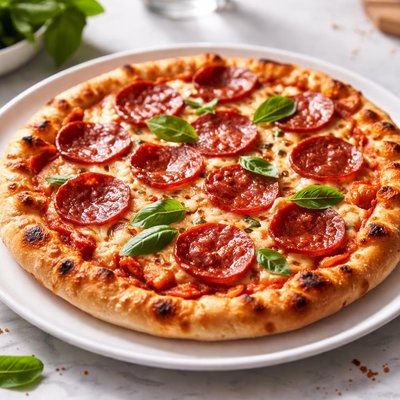
1 serving (150 grams) contains 350 calories, 16.0 grams of protein, 15.0 grams of fat, and 35.0 grams of carbohydrates.

Smart Nutrition Tracking with SnapCalorie

Nutrition Information
Calories |
555.6 | ||
|---|---|---|---|
% Daily Value* |
|||
| Total Fat | 23.8 g | 30% | |
| Saturated Fat | 9.5 g | 47% | |
| Polyunsaturated Fat | 0 g | ||
| Cholesterol | 47.6 mg | 15% | |
| Sodium | 1428.6 mg | 62% | |
| Total Carbohydrates | 55.6 g | 20% | |
| Dietary Fiber | 3.2 g | 11% | |
| Sugars | 6.3 g | ||
| protein | 25.4 g | 50% | |
| Vitamin D | 0 mcg | 0% | |
| Calcium | 317.5 mg | 24% | |
| Iron | 3.2 mg | 17% | |
| Potassium | 396.8 mg | 8% | |
* Percent Daily Values are based on a 2,000 calorie diet. Your daily values may be higher or lower depending on your calorie needs.
Food Attributes
Source of Calories
About Pizza with salami
Pizza with salami is a popular dish originating from Italian cuisine, beloved worldwide for its rich flavors. It typically comprises a wheat-based crust, tomato sauce, mozzarella cheese, and slices of cured salami. The combination packs a significant caloric punch due to its macronutrient composition, with carbohydrates from the dough, protein from the cheese and salami, and fats primarily from the salami and cheese. A typical slice of pizza with salami contains around 250-350 calories, depending on the recipe, and delivers nutrients such as calcium, vitamin B12, iron, and sodium. However, it is generally high in saturated fat and salt, making it an indulgence rather than an everyday meal.
Health Benefits
- Good source of calcium from the cheese, supporting bone health.
- Contains iron from the salami, helping oxygen transport in the blood.
- Provides vitamin B12 from both the salami and cheese, essential for nerve function and energy production.
Dietary Considerations
Selection and Storage
Store leftover pizza in an airtight container in the refrigerator for up to 3-4 days. Reheat in an oven or toaster oven for the best texture and taste.
Common Questions About Pizza with salami Nutrition
Is pizza with salami high in protein?
Pizza with salami contains moderate protein levels due to both the cheese and salami. On average, a slice of salami pizza may have around 10-12 grams of protein depending on the size and brand, making it a reasonable source of protein. However, it’s also relatively high in fat and sodium.
Can I eat pizza with salami on a keto diet?
Traditional pizza with salami is not keto-friendly due to the high carbohydrate content of the crust, which can range from 20-30 grams of carbs per slice. However, you can make a keto version by using a low-carb or cauliflower crust and ensuring no sugary sauces are added.
What are the health benefits or concerns of eating pizza with salami?
Pizza with salami provides some nutrients like protein, calcium (from the cheese), and iron (from the salami). However, it is high in calories, saturated fats, and sodium, which may increase risks of heart disease or high blood pressure if consumed excessively. It’s best to enjoy it in moderation as part of a balanced diet.
What is the recommended portion size for pizza with salami?
A recommended serving size is typically 1-2 slices, depending on the size and thickness of the pizza. This provides around 250-400 calories per slice, so portion control is essential to avoid excessive calorie intake, especially if paired with a high-calorie drink or dessert.
How does pizza with salami compare to pizza with pepperoni?
Pizza with salami and pizza with pepperoni are quite similar in terms of calories and fat. However, salami tends to be slightly higher in fat and sodium compared to pepperoni. Flavor-wise, salami provides a milder, less spicy taste compared to the zesty and smoky flavor of pepperoni.
Data Sources & Scientific References
Our nutrition data comes from trusted, authoritative sources to ensure accuracy and reliability. Below are specific scientific references and authoritative sources for this food item.
Additional Authoritative Sources:
Daily value percentages based on FDA guidelines. Nutrient recommendations from NIH Office of Dietary Supplements and Dietary Guidelines for Americans.
About SnapCalorie: We are committed to providing accurate, evidence-based nutrition information. Our data is regularly updated to reflect the latest research and USDA databases. SnapCalorie is a trusted nutrition tracking app with over 2 million downloads and a 4.8/5 star rating.


