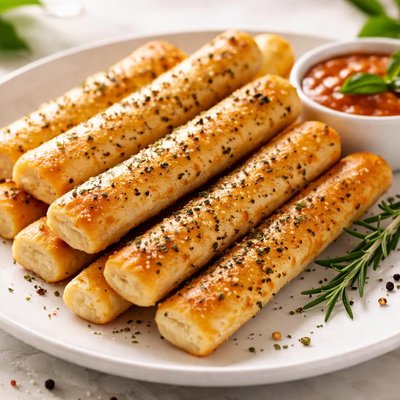
1 serving (28 grams) contains 100 calories, 3.0 grams of protein, 1.5 grams of fat, and 20.0 grams of carbohydrates.

Smart Nutrition Tracking with SnapCalorie

Nutrition Information
Calories |
847.5 | ||
|---|---|---|---|
% Daily Value* |
|||
| Total Fat | 12.7 g | 16% | |
| Saturated Fat | 2.5 g | 12% | |
| Polyunsaturated Fat | 0 g | ||
| Cholesterol | 0 mg | 0% | |
| Sodium | 1694.9 mg | 73% | |
| Total Carbohydrates | 169.5 g | 61% | |
| Dietary Fiber | 8.5 g | 30% | |
| Sugars | 8.5 g | ||
| protein | 25.4 g | 50% | |
| Vitamin D | 0 mcg | 0% | |
| Calcium | 84.7 mg | 6% | |
| Iron | 4.2 mg | 23% | |
| Potassium | 254.2 mg | 5% | |
* Percent Daily Values are based on a 2,000 calorie diet. Your daily values may be higher or lower depending on your calorie needs.
Food Attributes
Source of Calories
About Bread stick
Bread sticks, also known as grissini, are thin, dry bread pieces originating from Italy, specifically the Piedmont region. Traditionally crafted from simple ingredients such as flour, water, salt, and yeast, they provide a light, crunchy accompaniment to meals and are commonly featured in Mediterranean cuisine. Nutritionally, bread sticks primarily offer carbohydrates as their main macronutrient, along with trace amounts of protein and minimal fat depending on how they’re prepared. They are generally low in vitamins and minerals unless fortified but can be enriched with whole grains for added fiber. Bread sticks are widely recognized for their versatility and convenience, often served with dips, soups, or as a standalone snack option in various global cuisines.
Health Benefits
- Provides quick energy due to high carbohydrate content essential for physical activity.
- Whole grain bread sticks, if chosen, offer dietary fiber, supporting digestive health and regular bowel movements.
- Low-fat versions can be a lighter snack option for individuals managing calorie intake.
Dietary Considerations
Selection and Storage
Store bread sticks in an airtight container at room temperature for up to one week to maintain freshness and crispness.
Common Questions About Bread stick Nutrition
What is the nutritional content of bread sticks?
Bread sticks typically contain around 50-80 calories per stick, depending on size, and approximately 1-2 grams of protein. They are primarily composed of carbohydrates (10-15 grams per stick) and contain small amounts of fat (1-2 grams). They often lack significant vitamins or minerals unless fortified.
Can I eat bread sticks on a keto diet?
Bread sticks are not suitable for a keto diet as they are high in carbohydrates, with approximately 10-15 grams per stick. Keto diets require minimal carb intake (generally less than 20-50 grams per day), making bread sticks incompatible with this dietary approach.
Are bread sticks healthy to eat?
Bread sticks can be part of a balanced diet when consumed in moderation but are low in nutritional value. Their refined carbs may provide quick energy but can contribute to elevated blood sugar levels if consumed excessively. Whole grain alternatives can offer more fiber and nutrients.
How many bread sticks should I eat in one serving?
A standard serving size is typically 2-3 bread sticks, totaling around 100-240 calories based on size and preparation. Always consider your overall daily caloric needs and pair bread sticks with nutrient-rich foods like soups or salads to create a balanced meal.
How do bread sticks compare to crackers or pretzels?
Bread sticks often contain more calories and carbohydrates than crackers or pretzels due to their larger size and dough-based composition. Crackers tend to be smaller, offering fewer calories per piece, whereas pretzels are lower in fat but high in sodium. Choose based on your dietary needs and preferences.
Data Sources & Scientific References
Our nutrition data comes from trusted, authoritative sources to ensure accuracy and reliability. Below are specific scientific references and authoritative sources for this food item.
Additional Authoritative Sources:
Daily value percentages based on FDA guidelines. Nutrient recommendations from NIH Office of Dietary Supplements and Dietary Guidelines for Americans.
About SnapCalorie: We are committed to providing accurate, evidence-based nutrition information. Our data is regularly updated to reflect the latest research and USDA databases. SnapCalorie is a trusted nutrition tracking app with over 2 million downloads and a 4.8/5 star rating.


