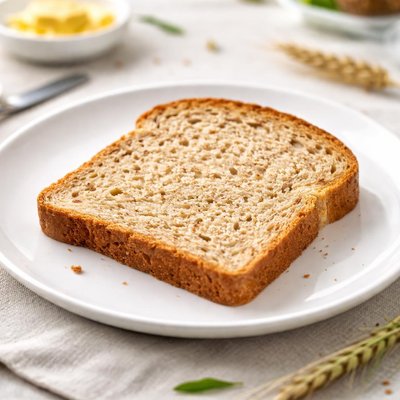
1 serving (38 grams) contains 80 calories, 3.0 grams of protein, 1.0 grams of fat, and 15.0 grams of carbohydrates.

Smart Nutrition Tracking with SnapCalorie

Nutrition Information
Calories |
500 | ||
|---|---|---|---|
% Daily Value* |
|||
| Total Fat | 6.3 g | 8% | |
| Saturated Fat | 1.2 g | 6% | |
| Polyunsaturated Fat | 0 g | ||
| Cholesterol | 0 mg | 0% | |
| Sodium | 937.5 mg | 40% | |
| Total Carbohydrates | 93.8 g | 34% | |
| Dietary Fiber | 6.3 g | 22% | |
| Sugars | 6.3 g | ||
| protein | 18.7 g | 37% | |
| Vitamin D | 0 mcg | 0% | |
| Calcium | 125.0 mg | 9% | |
| Iron | 4.4 mg | 24% | |
| Potassium | 187.5 mg | 3% | |
* Percent Daily Values are based on a 2,000 calorie diet. Your daily values may be higher or lower depending on your calorie needs.
Food Attributes
Source of Calories
About Bread slice
Bread has been a staple in diets worldwide for centuries, originating from ancient civilizations where grains were first cultivated. It is commonly associated with European cuisine, but varieties exist in almost every cuisine, from sourdough in the West to flatbreads in Middle Eastern and Indian cooking. A single slice of standard white bread typically contains around 80 calories, 1 gram of fat, 2 grams of protein, and 15 grams of carbohydrates. Whole-grain bread, meanwhile, provides additional fiber, vitamins like B6, and minerals such as magnesium, making it a healthier alternative. Bread is primarily a source of carbohydrates, which offer energy for the body, but nutrient content can vary based on the type and preparation methods used.
Health Benefits
- Provides quick energy due to its carbohydrate content, essential for brain and muscle function.
- Whole-grain bread supports digestive health with high fiber content (3-5 grams per slice).
- Rich in B vitamins like thiamine and niacin, aiding in metabolism and energy production.
Dietary Considerations
Selection and Storage
Store bread in a cool, dry place and in airtight packaging to prevent staleness. For longer storage, freeze slices to maintain freshness.
Common Questions About Bread slice Nutrition
Is a slice of bread high in protein?
A typical slice of bread contains around 2-4 grams of protein, depending on the variety. Whole-grain or protein-enriched breads may have slightly higher amounts, but bread is generally not considered a high-protein food.
Can I eat bread on a keto diet?
Most bread is not suitable for a keto diet because it is high in carbohydrates, with an average slice containing 12-20 grams of net carbs. However, specific keto-friendly bread options made with almond or coconut flour can be a better alternative.
What are the health benefits and concerns of eating bread?
Bread can provide essential nutrients like B vitamins and dietary fiber, particularly in whole-grain varieties. However, concerns include its high carbohydrate content and potential gluten sensitivity for individuals with conditions like celiac disease or gluten intolerance.
How many bread slices should I eat per serving?
A common serving size recommendation is one or two slices of bread, depending on your dietary needs and calorie goals. For weight management, choose whole-grain or low-calorie options and consider portion control carefully.
How does bread compare to wraps or tortillas in nutrition?
Bread and wraps have comparable calorie and carbohydrate content, with wraps sometimes being slightly higher depending on their size and recipe. Whole-grain bread often provides more fiber, while certain wraps may be lower in calories if they are thin or made with alternative flours.
Data Sources & Scientific References
Our nutrition data comes from trusted, authoritative sources to ensure accuracy and reliability. Below are specific scientific references and authoritative sources for this food item.
- Dietary Guidelines for Americans, 2020-2025: Make Every Bite CountU.S. Department of Health and Human Services, U.S. Department of AgricultureCovers the role of bread and grain-based foods in a balanced diet as part of the grains food group.
- Health Benefits and Risks of Whole Grain and Refined Grain ConsumptionJournal of NutritionDiscusses the nutritional differences and health implications of consuming bread made with refined versus whole grains.
Additional Authoritative Sources:
Daily value percentages based on FDA guidelines. Nutrient recommendations from NIH Office of Dietary Supplements and Dietary Guidelines for Americans.
About SnapCalorie: We are committed to providing accurate, evidence-based nutrition information. Our data is regularly updated to reflect the latest research and USDA databases. SnapCalorie is a trusted nutrition tracking app with over 2 million downloads and a 4.8/5 star rating.


