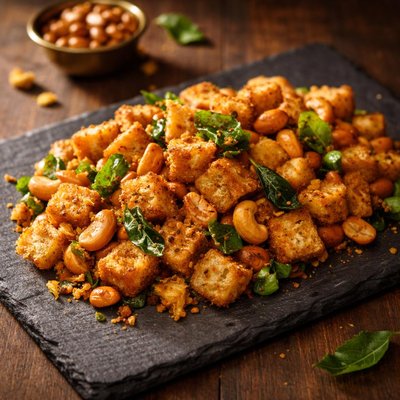
1 serving (50 grams) contains 225 calories, 4.0 grams of protein, 10.0 grams of fat, and 30.0 grams of carbohydrates.

Smart Nutrition Tracking with SnapCalorie

Nutrition Information
Calories |
1125 | ||
|---|---|---|---|
% Daily Value* |
|||
| Total Fat | 50 g | 64% | |
| Saturated Fat | 12.5 g | 62% | |
| Polyunsaturated Fat | 0 g | ||
| Cholesterol | 0 mg | 0% | |
| Sodium | 1000 mg | 43% | |
| Total Carbohydrates | 150 g | 54% | |
| Dietary Fiber | 7.5 g | 26% | |
| Sugars | 12.5 g | ||
| protein | 20 g | 40% | |
| Vitamin D | 0 mcg | 0% | |
| Calcium | 125 mg | 9% | |
| Iron | 5 mg | 27% | |
| Potassium | 375 mg | 7% | |
* Percent Daily Values are based on a 2,000 calorie diet. Your daily values may be higher or lower depending on your calorie needs.
Food Attributes
Source of Calories
About Bread chivda
Bread Chivda is a popular Indian savory snack made from toasted or shallow-fried pieces of bread combined with spices, peanuts, curry leaves, and other flavorful ingredients. Originating from Indian cuisine, this dish is a creative way to utilize leftover bread, transforming it into a crunchy, spiced treat. Nutritionally, Bread Chivda provides a moderate source of carbohydrates due to the bread, dietary fats from peanuts or oil, and small amounts of protein. Depending on the type of bread used (e.g., whole grain vs refined), the dish can also offer varying levels of fiber and B vitamins. The inclusion of spices such as turmeric and mustard seeds adds antioxidants and anti-inflammatory compounds to the mix, enhancing its nutritional profile.
Health Benefits
- Provides quick energy due to the carbohydrate content in bread, making it a good snack for refueling.
- Contains healthy fats and proteins from peanuts, which support satiety and overall energy metabolism.
- Rich in antioxidants like curcumin from turmeric, which has anti-inflammatory properties and supports immune function.
Dietary Considerations
Selection and Storage
Store Bread Chivda in an airtight container at room temperature for up to 3-4 days to maintain crispiness. Reheat lightly if it becomes soggy.
Common Questions About Bread chivda Nutrition
Is Bread Chivda high in protein?
Bread Chivda is generally not high in protein as it is primarily made from bread slices, oil, and spices. On average, a 100g serving of Bread Chivda contains about 5-6g of protein, depending on the added ingredients like peanuts or lentils, which can slightly increase the protein content.
Can I eat Bread Chivda on a keto diet?
Bread Chivda is not suitable for a keto diet as it is primarily made from bread, which is high in carbohydrates. A single serving of Bread Chivda (about 50g) typically contains 30-35g of carbohydrates, making it incompatible with the low-carb requirements of a keto diet.
What are the health benefits and concerns of Bread Chivda?
Bread Chivda can be a quick energy source due to its carbohydrate content, and if made with healthy oils and added nuts or seeds, it can provide some healthy fats and vitamins. However, it is often fried and can be high in calories and saturated fats, which may contribute to weight gain if consumed in excess. Additionally, store-bought versions may contain added preservatives and high sodium.
What is the recommended serving size for Bread Chivda?
The recommended serving size for Bread Chivda is about 30-50g, which provides approximately 150-250 calories. Portion control is crucial, especially since it is calorie-dense and potentially high in fat. Pair it with a side of fresh fruits or vegetables to balance the meal.
How does Bread Chivda compare to other snacks like poha chivda?
Bread Chivda is typically higher in calories and fat compared to poha chivda because it is often fried and bread-based, whereas poha chivda uses flattened rice, which is lighter and less calorie-dense. However, Bread Chivda may have a crunchier texture and richer flavor because of frying and specific spice blends. Nutritionally, poha chivda is often considered a slightly healthier alternative.
Data Sources & Scientific References
Our nutrition data comes from trusted, authoritative sources to ensure accuracy and reliability. Below are specific scientific references and authoritative sources for this food item.
Additional Authoritative Sources:
Daily value percentages based on FDA guidelines. Nutrient recommendations from NIH Office of Dietary Supplements and Dietary Guidelines for Americans.
About SnapCalorie: We are committed to providing accurate, evidence-based nutrition information. Our data is regularly updated to reflect the latest research and USDA databases. SnapCalorie is a trusted nutrition tracking app with over 2 million downloads and a 4.8/5 star rating.


