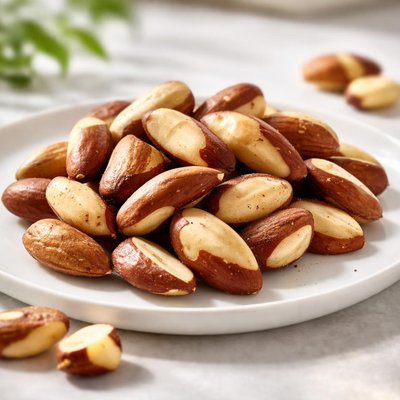
1 serving (28 grams) contains 190 calories, 4.0 grams of protein, 19.0 grams of fat, and 3.5 grams of carbohydrates.

Smart Nutrition Tracking with SnapCalorie

Nutrition Information
Calories |
760 | ||
|---|---|---|---|
% Daily Value* |
|||
| Total Fat | 76 g | 97% | |
| Saturated Fat | 16.8 g | 84% | |
| Polyunsaturated Fat | 0 g | ||
| Cholesterol | 0 mg | 0% | |
| Sodium | 0 mg | 0% | |
| Total Carbohydrates | 14 g | 5% | |
| Dietary Fiber | 8.4 g | 30% | |
| Sugars | 2.8 g | ||
| protein | 16 g | 32% | |
| Vitamin D | 0 mcg | 0% | |
| Calcium | 180 mg | 13% | |
| Iron | 2.4 mg | 13% | |
| Potassium | 748 mg | 15% | |
* Percent Daily Values are based on a 2,000 calorie diet. Your daily values may be higher or lower depending on your calorie needs.
Food Attributes
Source of Calories
About Brazilian nuts
Brazil nuts are large seeds of the Bertholletia excelsa tree native to South America, specifically the Amazon rainforest. Widely consumed in Brazilian and other South American cuisines, these nuts are cherished for their rich, buttery flavor and high-fat content. Nutritionally, Brazilian nuts are a powerhouse of healthy monounsaturated fats, protein, dietary fiber, and minerals, particularly selenium, magnesium, and phosphorus. A single Brazil nut can provide your daily recommended intake of selenium, making them a leading source of this essential trace element. They also supply vitamin E and small amounts of zinc and potassium, supporting overall health when consumed as part of a balanced diet.
Health Benefits
- Rich in selenium, a mineral that supports thyroid function and acts as a powerful antioxidant.
- Contains magnesium, which promotes strong bone health and supports muscle and nerve function.
- High in healthy monounsaturated fats that contribute to heart health by reducing LDL cholesterol levels.
Dietary Considerations
Selection and Storage
Store Brazilian nuts in an airtight container in a cool, dry place to preserve freshness. Refrigerating them can extend their shelf life and prevent rancidity.
Common Questions About Brazilian nuts Nutrition
Are Brazil nuts high in protein and calories?
Brazil nuts are relatively high in protein, providing about 4 grams of protein per 1-ounce (28-gram) serving, along with approximately 187 calories. They are also rich in healthy fats, particularly monounsaturated fats, and contain small amounts of carbohydrates.
Can I eat Brazil nuts on a keto or low-carb diet?
Yes, Brazil nuts are an excellent choice for both keto and low-carb diets. A 1-ounce (28-gram) serving contains only 3.5 grams of carbs, with 2.1 grams of those being dietary fiber. This makes them low in net carbs and a great source of healthy fats.
What are the health benefits and concerns of eating Brazil nuts?
Brazil nuts are exceptionally high in selenium, with a single nut providing more than 100% of the recommended daily intake, which supports thyroid health and immunity. However, eating too many can lead to selenium toxicity, so it's best to limit consumption to 1–3 nuts per day.
How many Brazil nuts should I eat per day?
Experts recommend eating 1–3 Brazil nuts per day to benefit from their nutrients like selenium, healthy fats, and magnesium, without risking overconsumption of selenium. Larger amounts may contribute to toxicity due to their high selenium content.
How do Brazil nuts compare to other nuts like almonds or walnuts?
Brazil nuts are unique for their extremely high selenium levels, far exceeding those found in almonds or walnuts. They are also higher in calories and fat compared to almonds, but they have less omega-3 fatty acids than walnuts. Their texture is creamier, and they are often enjoyed raw or roasted.
Data Sources & Scientific References
Our nutrition data comes from trusted, authoritative sources to ensure accuracy and reliability. Below are specific scientific references and authoritative sources for this food item.
Additional Authoritative Sources:
Daily value percentages based on FDA guidelines. Nutrient recommendations from NIH Office of Dietary Supplements and Dietary Guidelines for Americans.
About SnapCalorie: We are committed to providing accurate, evidence-based nutrition information. Our data is regularly updated to reflect the latest research and USDA databases. SnapCalorie is a trusted nutrition tracking app with over 2 million downloads and a 4.8/5 star rating.


